Beta Testing
KNUST Research Atlas is currently in active Beta. Report bugs or suggest features to help us improve!
KNUST Research Atlas is currently in active Beta. Report bugs or suggest features to help us improve!
KNUST Research Atlas is currently in active Beta. Report bugs or suggest features to help us improve!
Search, discover, and connect with over 1,800 researchers, faculty members, and scholars across all departments of KNUST.
Department of Silviculture and Forest Management
The researcher employs computational modeling to study how neural systems process sensory information and mental phenomena. Their work integrates approaches from neuroscience and psychology to explain perception by developing integrated models that link cognitive processes like attention, decision-making, and sensory encoding.
Department of Industrial Art
The researcher investigates the mechanisms underlying the development of neural networks, focusing on how individuals adapt their structures and functions across time and space while maintaining identity.

Department of Wood Science and Technology
This researcher primarily investigates consumer packaging perceptions and trends within the domain of Social Sciences, as well as their application in Aquaculture Nutrition and Growth in Life Sciences, utilizing triggerfish (Balistes carolinensis) in specific contexts. Their work extends into Food Science and Nutritional Studies, focusing on food processing and consumption patterns in health sciences, particularly across African regions. Notable contributions include research on Ghanaian packaging practices, the utilization of triggerfish in aquaculture, and insights into packaged fish consumption in Africa.
Department of Communication Design
The researcher investigates how adolescents' religious beliefs and spiritual practices influence behaviors linked to HIV/AIDS in Ghana, encompassing both social and health sciences.
Department of Pharmacology
The researcher has made significant contributions to the fields of alkaloid synthesis, traditional medicine, cannabinoids, immune pathways, neuroinflammation, neurogenesis, mental health interventions, genetic and connecton biology, and food additive research. Their work spans synthesizing alkaloids for drug development, applying traditional methods like annnonceae in medicine, exploring cannabinoid effects, investigating IBD mechanisms, studying gut disorders, linking connectons to lens biology, addressing immune pathways, targeting mental health issues, and advancing neuroinflammation and neurogenesis studies through genetic research. Their research also delves into the role of green tea and moringa as food additives in human health, examining their effects on mitochondrial function, and investigating cognitive decline mechanisms linked to trace element interactions.
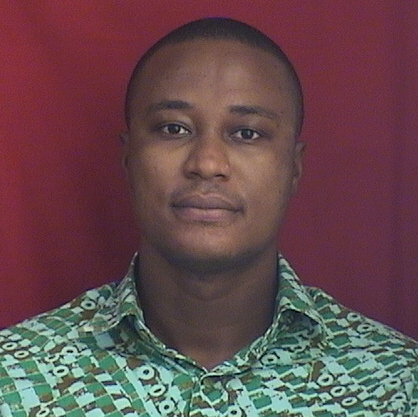
Department of Petroleum Engineering
The researcher integrates hydraulic fracturing techniques with reservoir analysis to develop comprehensive tools for hydrocarbon extraction and storage. Their work spans multiscale processes, analytical solutions, upscaling methodologies, advanced mathematical modeling, enhanced oil recovery strategies, reservoir engineering simulation methods, and groundwater flow studies. The goal is to create robust models that address challenges in these interconnected fields through innovative approaches grounded in physical principles.
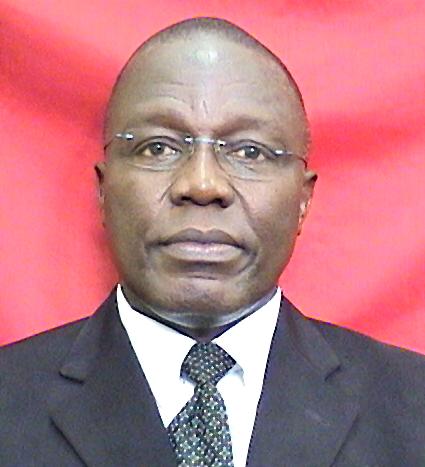
Department of Theoretical and Applied Biology
The researcher has conducted extensive work across multiple domains focused on mosquito-borne diseases and their control, employing approaches that integrate both genetic and social scientific perspectives. Their studies explore the impact of urban agriculture on malaria transmission in Ghana, investigating sex determination genetics and their application to pest management solutions for insecticide-treated livestock fences. Through these investigations, they contribute to a deeper understanding of mosquito dynamics and transmission patterns while bridging theoretical frameworks in Hermeneutics and narrative identity.
Department of Pharmacy Practice
The researcher focuses on integrating digital technologies across physical and service domains to explore how these influences customer experiences, service innovation, and marketing strategies in various contexts.
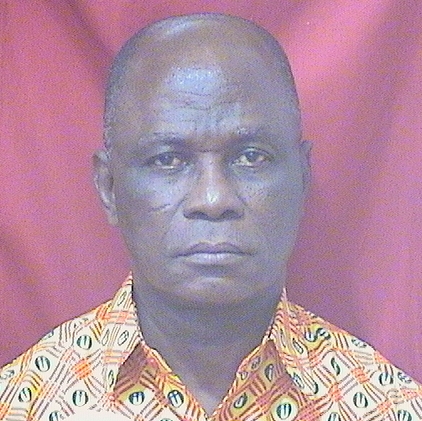
Department of Sociology & Social Work
The researcher has focused on understanding complex systems through interdisciplinary approaches that integrate nonlinear dynamics, network theory, and system stability analysis. Their work employs computational models and large-scale empirical data to investigate feedback mechanisms and emergent behaviors across diverse contexts, aiming to uncover universal principles governing the resilience and adaptability of interconnected systems.
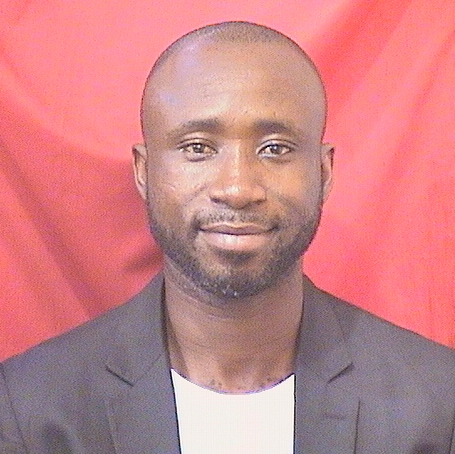
Department of Mechanical Engineering
The researcher's work is centered on advancing energy efficiency and comfort optimization through the development of innovative technologies across diverse domains. This includes enhancing indoor climate systems for improved thermal comfort, optimizing solar thermal and photovoltaic systems for enhanced energy efficiency and environmental impact reduction, investigating geothermal energy systems to maximize resource utilization, exploring heat pump applications in cavity testing facilities, evaluating cavity cooling systems for optimal performance, and addressing social issues through flood risk assessments. The research also emphasizes the role of engineering applied research in benchmarking performance evaluations, particularly in sustainable industrial processes such as oil palm production, solar egg incubators, and transportation infrastructure improvements like belt conveyors.
Department of Architecture
The researcher has developed innovative techniques in facial reanimation, particularly focusing on methods such as the use of temporalis transposition for facial reanimation and the application of microvascular flaps for reconstruction. These techniques aim to improve surgical outcomes and influence social perception and expression through patient-centered experiences.
Department of Anatomy
This researcher has developed a comprehensive interdisciplinary approach that integrates both fundamental principles of quantum mechanics with advanced numerical analysis techniques. Their work emphasizes the application of these theoretical frameworks to address complex problems across diverse scientific and engineering domains, such as materials science and energy systems. The integration of cutting-edge computational methods ensures a deeper understanding of quantum phenomena while enabling precise modeling of real-world systems. This approach underscores both the theoretical depth and practical relevance of their research, highlighting how foundational theories are enhanced through innovative computational techniques to solve significant challenges in diverse scientific contexts.