Beta Testing
KNUST Research Atlas is currently in active Beta. Report bugs or suggest features to help us improve!
KNUST Research Atlas is currently in active Beta. Report bugs or suggest features to help us improve!
KNUST Research Atlas is currently in active Beta. Report bugs or suggest features to help us improve!
Search, discover, and connect with over 1,800 researchers, faculty members, and scholars across all departments of KNUST.
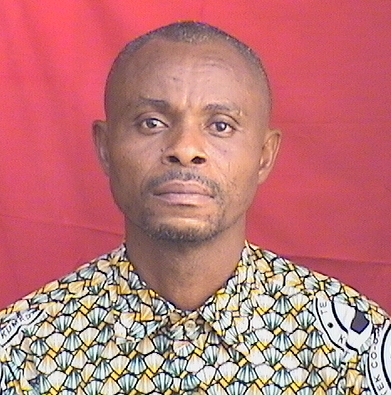
Department of Behavioural Sciences
The researcher focuses on integrating computational modeling, bioinformatics, and system-level studies across multiple biological scales to bridge the gap between biochemical pathways and cellular processes. Their work emphasizes the development of comprehensive models that integrate methodologies from diverse fields such as biochemistry, molecular biology, and systems science to address complex questions in cell biology. Through interdisciplinary approaches, they aim to advance our understanding of cellular behavior by integrating insights from computational modeling and experimental data, contributing to a holistic framework for analyzing dynamic biological systems.
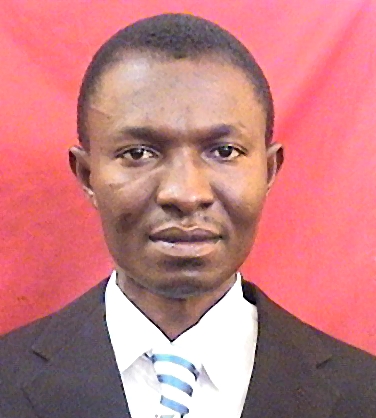
Department of Indigenous Art and Technology
The researcher's work spans multiple domains, focusing on land-use dynamics, social-ecological systems, technological applications, and sustainability challenges in African regions. Their research encompasses themes such as COVID-19 impacts on poverty, inclusive development strategies, climate change assessment from a community perspective, Cocoa and Sweet Potato Agronomy innovations, mining practices, urban development issues, hydropower management, displacement concerns, environmental impact analysis, agricultural risk, and mental health interventions. The researcher's overarching focus is on advancing understanding of agricultural systems, integrating technical solutions with community perspectives, emphasizing resilience-building in land-use, and addressing social well-being.
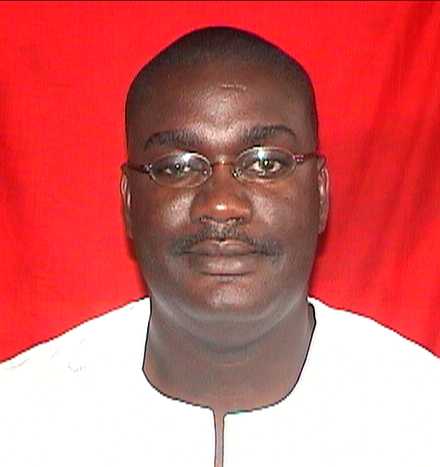
Department of Civil Engineering
The researcher has conducted extensive studies across a wide range of scientific and social sciences, focusing on environmental pollution in the environment, mining practices in resource management, child nutrition and water access issues, and other critical areas such as urban solid waste management, poverty reduction, and vaccination coverage. Their work emphasizes innovative approaches to address challenges related to water quality, sanitation systems, and public health. By integrating findings from these diverse fields, the researcher has developed a comprehensive framework for sustainable development and environmental management across Ghana and beyond.

Department of Sociology & Social Work
This researcher focuses on applying advanced algebraic methods, such as operads and higher categories, to study topological and mathematical physics phenomena. Their work explores the intersection of these fields, particularly through the lens of derived functors in symplectic topology and their interactions with quantum field theories. The research delves into categorical structures within algebraic topology and how higher categorical concepts can unify diverse areas of mathematics and theoretical physics, aiming to address complex problems at the intersection of geometry, topology, and category theory.
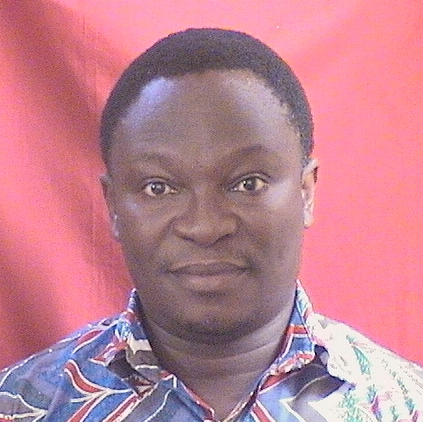
Department of History & Political Studies
The researcher’s work focuses on interdisciplinary approaches that bridge quantum computing for solving complex optimization problems with advancements in materials science for sustainable resource solutions, emphasizing innovation in renewable energy systems, energy storage technologies, waste-to-energy strategies, and biodegradability in material science to address global challenges.
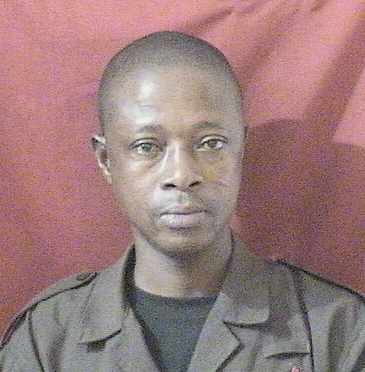
Department of Community Health
The researcher investigates the molecular mechanisms of viral integration into host cells, focusing on the study of RNA and protein interactions that guide viral genome into cellular machinery, particularly in the context of mRNA surveillance systems.
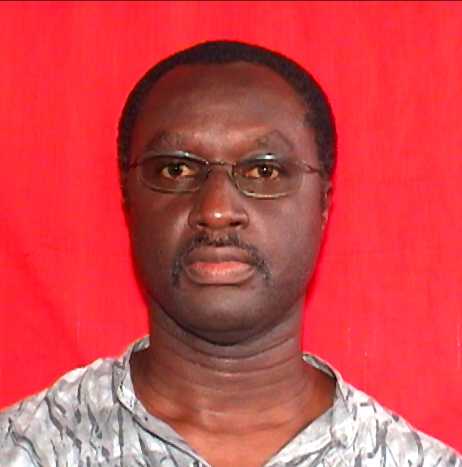
Department of Communication Design
The researcher has focused on integrating machine learning techniques into predictive modeling applications within healthcare medicine, particularly in areas such as binary outcome prediction, multi-omics analysis, and uncertainty quantification in AI decision-making processes. Their work emphasizes leveraging these methods to improve diagnostic accuracy and treatment planning, with significant contributions from publications that highlight the effectiveness of ML-driven approaches in addressing complex medical challenges.
Department of Surgery
This researcher has made significant contributions to advancing healthcare security through an interdisciplinary approach, focusing on patient interactions, incident detection, policy changes, compliance, data privacy, and system resilience in healthcare informatics. Their work addresses critical challenges such as enhancing patient trust, mitigating risks associated with cybersecurity incidents, optimizing resource allocation for healthcare systems, ensuring equitable access to information technologies, and fostering a culture of informed decision-making while maintaining strict adherence to ethical guidelines.
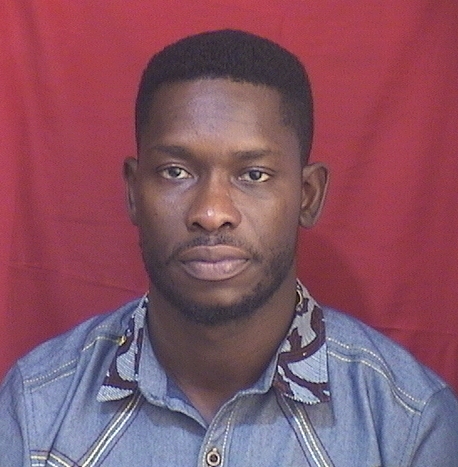
Department of Land Economy
This researcher has conducted extensive work in land administration, governance, and environmental sustainability across multiple domains, from African land reforms to urban development challenges. Their research focuses on participatory land management, land consolidation strategies, and the role of technology in securing land rights and ecosystems. Through case studies of Ghana’s Bui Dam project and other large-scale infrastructure projects, they have explored the complexities of land use, cadastres, and their social impact. In domains like water resources management, the researcher has integrated innovative technologies such as remote sensing and blockchain into land administration processes. Their work also delves into the intersection of Hermeneutics with narrative identity in governance, offering a unique approach to understanding and preserving land rights.

Department of Supply Chain and Information Systems
The researcher conducts a comprehensive study focusing on how societal factors influence technological adoption and policy effectiveness across various sectors in developing communities. Their work encompasses themes such as ICT adoption, maritime port operations, procurement policies, e-governance systems, supply chain management, sustainable supply chain practices, and circular economy principles. The research aims to bridge the gap between societal needs and technological solutions, examining how these technologies impact performance, resilience, and innovation in interconnected domains.
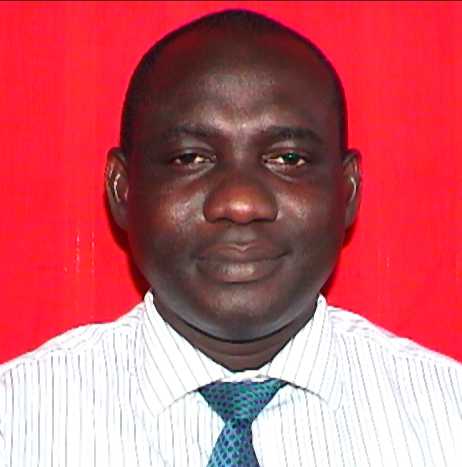
Department of Pharmaceutics
The researcher has made significant contributions across diverse areas of pharmaceutical science, with a primary focus on drug solubility and delivery systems, advanced transdermal drug delivery technologies, and specialty medications targeting chronic health issues. Their work includes the development of extended release matrices for natural gum-based formulations, formulation of sustained-release matrix tablets for colonic or biphasic release, exploration of pectin as a topical excipient in wound healing, and evaluation of cocoa pod husk pectin as a pharmaceutical excipient in antimalarial applications. Additionally, they have contributed to the understanding of pharmacokinetics and bioactive properties of natural products like Hibiscus and Spathodea species. Their research also encompasses the analytical characterization of pharmaceuticals such as Artemether-Lumefantrine, Metformin Hydrochloride, and capparis erythrocarpos roots extract, with a particular emphasis on their pharmacokinetics. The researcher's work integrates novel materials like Albizia and Khaya gums in drug delivery systems, further advancing the field through innovative formulations and analytical techniques.

Department of Computer Science
The researcher's work centers on advancing privacy-preserving technologies across diverse domains, integrating deep learning with privacy techniques to address challenges in distributed computing, AI for cancer detection, cybersecurity, brain tumor classification, network security, smart grid resilience, and food science. Contributions include enhanced robustness against adversarial attacks using advanced neural networks and deep learning frameworks.