Beta Testing
KNUST Research Atlas is currently in active Beta. Report bugs or suggest features to help us improve!
KNUST Research Atlas is currently in active Beta. Report bugs or suggest features to help us improve!
KNUST Research Atlas is currently in active Beta. Report bugs or suggest features to help us improve!
Search, discover, and connect with over 1,800 researchers, faculty members, and scholars across all departments of KNUST.
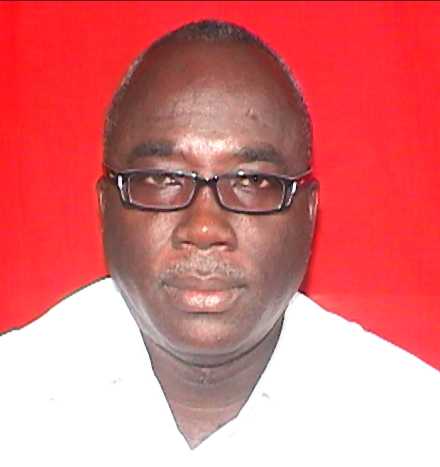
Department of Medicine
The researcher's work is centered on theoretical and mathematical physics, with a focus on quantum mechanics and nonlinear dynamics, exploring their applications to complex systems such as complex fluids and biophysics.
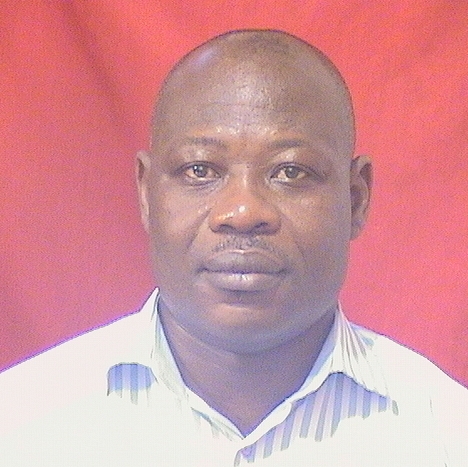
Department of Chemical Engineering
The researcher's work is centered on advancing sustainable practices through innovative research across multiple domains. Their publications span themes such as soil interactions, biogas production, biofuel development, agricultural innovations, vehicle emissions, energy technologies, environmental monitoring, and public health impact assessments, all within the broader context of enhancing sustainability and environmental management systems.
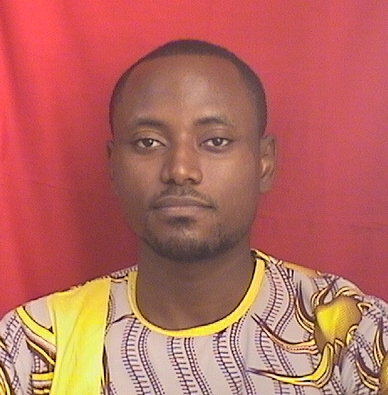
Department of Supply Chain and Information Systems
The researcher's work centers on advancing supply chain optimization through innovative methodologies spanning across traditional, green, ERP, transportation, and logistics domains. By integrating interdisciplinary approaches such as supply chain management, green initiatives, ERP systems, advanced institutional theory, and digitalization, the researcher aims to enhance performance and efficiency in both domestic and international settings, focusing areas like resilience, social capital, data quality, and digitalization.

Department of Indigenous Art and Technology
The researcher’s work is centered on data-driven insights across multiple health domains, particularly emphasizing the use of public health knowledge and data for health promotion efforts in diverse contexts such as pregnant women ( Hepatitis B Virus Studies), cervical cancer prevention using HPV, global public health policies for non-communicable disease prevention, gynecological conditions, and cardiovascular issues in pregnancy. Their focus is on integrating insights from these fields to enhance understanding and improve outcomes across health sectors.
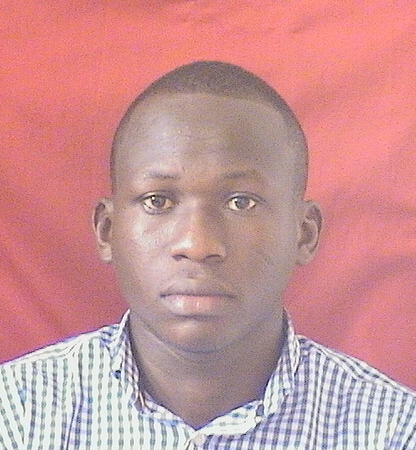
Department of Child Health
The researcher has developed innovative computational methods for addressing complex biological and chemical challenges, particularly in drug discovery and protein engineering, leveraging machine learning and optimization algorithms to enhance predictive capabilities and improve treatment efficacy.
Department of Fisheries and Watershed Management
The researcher's work focuses on integrating climate change research with innovative agricultural practices across African domains, employing methodologies such as GIS, remote sensing, hydrological assessments, and computational physics to address challenges in sustainable development, water management, conservation, and food security. The study explores diverse systems like aquaponics, hydroponics, and traditional knowledge in rural Ghana, Kenya, and Western Cape, aiming to inform policy and practice for adaptation and resilience in the face of climate change and variability.
Department of Chemical Engineering
The researcher investigates fluid dynamics and mixing processes in physical sciences, focusing on steam bubbling regimes and direct contact condensation heat transfer in highly subcooled water systems. This work is critical for advancing energy efficiency, environmental impact assessment, and understanding regulatory oversight in subcooled water resource management. The findings contribute to the broader context of optimizing heat-driven processes while addressing challenges posed by global warming.
Department of Physics
My research examines the intricate relationship between human behavior, technology, and social dynamics within online communities and historical contexts. Recent studies have shown how social media influences perceptions and behaviors, while others highlight technological accessibility in cultural practices. Additionally, my work explores inclusive practices that mitigate bias and foster inclusivity. This integrated approach provides insights into both emerging trends and enduring societal challenges, bridging the gap between technology and human behavior across diverse settings.
Department of Mechanical Engineering
The researcher integrates diverse areas within physical sciences, from energy and environmental impacts through innovative thermochemical processes and renewable energy modeling, using advanced techniques like CFD and thermodynamics to enhance our understanding of complex systems across domains such as biomass conversion, acoustics, solar energy, wood trailer beds, and photovoltaic power cycles.
Department of Fisheries and Watershed Management
This researcher's work focuses on integrating innovative approaches across disciplines to address global challenges in environmental, social, and economic development. Through a combination of observational studies, field investigations, and experimental designs, the researcher explores themes such as flood risk assessment, land use and water management, climate variability impacts, agricultural resilience, marine ecosystems dynamics, and the biological traits influencing livestock production. The research integrates methodologies like statistical modeling, data collection, and case studies to uncover insights into environmental issues, improve resource management practices, and drive sustainable development strategies.
Department of Physics
This researcher employs a comprehensive approach combining geophysical methods such as aeromagnetic and radiometric datasets to map gold mineralization zones in the Kyerano and Sefwi greenstone belts of Ghana. Their work extends into geological mapping, analyzing structures in key areas like the Konongo gold belt for potential deposits using airborne magnetic and radiometric data. The researcher further investigates groundwater implications through remote sensing applications, integrating these methods to advance understanding of mineralization patterns and water resource management strategies in Ghana.
Department of Planning
The researcher's work is centered on examining the interplay between urbanization, health issues, disaster management, resource allocation, and sustainability in low-income and lower-middle-income contexts. This comprehensive study integrates themes from urban development challenges, child nutrition and water access, disaster management, municipal solid waste management, tourism and volunteerism, environmental education, innovation, urban green spaces, and consumer retail behavior. By employing quantitative methods such as fecal contamination assessment and spatial analysis of urban environments, the researcher explores how these interconnected factors influence social equity and environmental sustainability. The goal is to provide a holistic understanding of sustainable practices across multiple dimensions, aiming to inform policy and improve quality of life in developing regions.