KNUST Research Atlas is currently in active Beta. Report bugs or suggest features to help us improve!
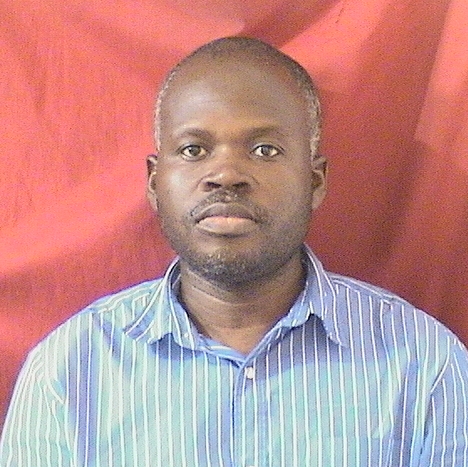
Benjamin Doe
The researcher's work is centered on examining the interplay between urbanization, health issues, disaster management, resource allocation, and sustainability in low-income and lower-middle-income contexts. This comprehensive study integrates themes from urban development challenges, child nutrition and water access, disaster management, municipal solid waste management, tourism and volunteerism, environmental education, innovation, urban green spaces, and consumer retail behavior. By employing quantitative methods such as fecal contamination assessment and spatial analysis of urban environments, the researcher explores how these interconnected factors influence social equity and environmental sustainability. The goal is to provide a holistic understanding of sustainable practices across multiple dimensions, aiming to inform policy and improve quality of life in developing regions.
Faculty Biography
Benjamin Doe holds a Dr.-Ing. in Urban and Regional Planning. He is an experienced planner, researcher and consultant with vast experience in dealing with national, regional and local governments. Benjamin is a Senior Lecturer at the Department of Planning, Kwame Nkrumah University of Science and Technology (KNUST), Kumasi. He has over 10 years post qualification experience working in the fields of Development Planning, Water, Sanitation and Hygiene (WASH), Planning/Institutional Development, GIS for Spatial Analysis and Research and Capacity Building. He is skilled in conducting monitoring, evaluation and learning of development projects; baseline surveys; land use and spatial planning; research and feasibility studies in various sectors including water and sanitation. He is also well vexed in the application of quantitative and participatory qualitative approaches including participatory rural appraisal (PRA), etc. in the implementation of Demand Responsive Approach; WSS governance; and long term sustainability of WSS infrastructure in urban and rural settings. Currently, he is working in the field of Urban Planning and Services with focus on the application of geospatial technologies for urban development and managment. Benjamin received his Bachelor of Science (Hons) in Planning and a Master of Philosophy in Development Studies at Kwame Nkrumah University of Science and Technology, Ghana and a Dr.-Ing. from the Technical University of Dortmund, Germany. He is a DAAD scholar.
Child Nutrition and Water Access
Consumer Retail Behavior Studies
Disaster Management and Resilience
Environmental Education and Sustainability
Innovation and Socioeconomic Development
Land Use and Ecosystem Services
Municipal Solid Waste Management
Tourism, Volunteerism, and Development
Urban and Rural Development Challenges
Urban Green Space and Health
Policy Coherence for the Creation of Sustainable Communities Through Mixed Use Developments in Ghana: Implications for Sustainable Community Development
Open AccessContextualising Sustainable Communities in Sub-sahara Africa: A Systematic Review Protocol
Open AccessHarmonizing sustainability and planning: a novel perspective on sustainable land use planning for sustainable community development
Understanding the gnawing threat of encroachment of urban green spaces in Ghana’s growing urban fabric
Open AccessTowards sustainable solid waste management: nature, operational dynamics and complexities of Informal Waste Service Providers in Kumasi, Ghana
Determinants of Informal Land Transactions in African Cities – a Systematic Literature Review
Open AccessLocal government revenue mobilisation: assessing property rate management potential of peri-urban districts using geospatial technologies
Rethinking the implications of sprawl for sustainable urban development: Insights from the Ejisu Municipality of Ghana between 2003 and 2023
Extending the boundaries of the value-belief-norm theory to off-farm livelihood preferences – Perceptions of food crop farmers in the savanna ecological zone, Ghana
Spatial assessment of intermediate urban towns in Ghana using geospatial technologies: a case study of urbanization and sustainability
How informal ties matter: encroachment on road reservations along the Kumasi–Accra highway in Ghana
Open AccessTriggers of electricity-use efficiency amongst low-income households in Kumasi, Ghana
Open AccessPolicy and practice: Stakeholders’ satisfaction with conventional and participatory land use planning in Ghana
Open AccessLivelihood security in urban slums in Ghana: evidence from the Kumasi Metropolis
Towards Circular Economy and Local Economic Development in Ghana: Insights from the Coconut Waste Value Chain
Resourcing local government in Ghana: the potential of volunteering to deliver basic services
Open AccessQuantitative assessment of exposure to fecal contamination in urban environment across nine cities in low-income and lower-middle-income countries and a city in the United States
Open AccessSpatial expansion and patterns of land use/land cover changes around Accra, Ghana – Emerging insights from Awutu Senya East Municipal Area
Flood Responses and Attachment to Place Within Low-Income Neigbourhoods in Kumasi, Ghana
Fire risks management in emerging Ghanaian cities: land use planning responses for siting petrol and gas stations in the Tamale Metropolis
Sustainability of slum upgrading interventions: Perception of low-income households in Malawi and Ghana
The place of subsidy: affordable sanitation service delivery in slums of Kumasi, Ghana
Variation in E. coli concentrations in open drains across neighborhoods in Accra, Ghana: The influence of onsite sanitation coverage and interconnectedness of urban environments
Open AccessUrban land use planning and the quest for integrating the small-scale informal business sector
Open AccessDepartment of Planning
Kwame Nkrumah University of Science and Technology