Beta Testing
KNUST Research Atlas is currently in active Beta. Report bugs or suggest features to help us improve!
KNUST Research Atlas is currently in active Beta. Report bugs or suggest features to help us improve!
KNUST Research Atlas is currently in active Beta. Report bugs or suggest features to help us improve!
Search, discover, and connect with over 1,800 researchers, faculty members, and scholars across all departments of KNUST.
Department of Chemical Engineering
The researcher has conducted extensive work across diverse domains focusing on advancing sustainable practices and improving environmental health through innovative technologies. Their research encompasses a wide array of areas including carbon dioxide capture, agriculture, energy systems, biotechnology, water management, and renewable resources. Each theme highlights the integration of advanced techniques to enhance environmental sustainability, particularly in agroecology, biochemistry, and renewable energy solutions. The researcher's work demonstrates how cutting-edge technologies can be applied across these fields to achieve a holistic approach to environmental health and sustainable development.

Department of Obstetrics & Gynaecology
The researcher's work focuses on advancing machine learning models for time-series forecasting and energy system modeling, particularly utilizing attention mechanisms to improve predictive accuracy in dynamic environments. Their studies span various applications across different fields, such as financial markets and environmental science, demonstrating the versatility and effectiveness of these computational techniques in real-world scenarios.
Department of Civil Engineering
The researcher's work focuses on the comprehensive integration of various aspects within urban transport systems, examining both individual behaviors (e.g., personal norms, affect) and broader societal impacts (e.g., air pollution, public health). Through a blend of quantitative methods and qualitative insights, they analyze how individuals and communities use transportation modes in contexts ranging from university students to bike sharing services. This research bridges environmental education with sustainability efforts, exploring gender dynamics and equity in transport infrastructure, while also employing advanced technologies for prediction and optimization.
Department of Industrial Art
The researcher's work is centered on theoretical foundations of computer science with a focus on machine learning algorithms, program synthesis, and mathematical analysis, bridging theory with practical applications in software optimization and computational efficiency. Their research emphasizes the importance of integrating theoretical insights with real-world problems, such as enhancing algorithmic effectiveness through rigorous analysis and developing efficient programming methodologies for diverse computational tasks. Ongoing collaborations highlight broader impacts in both academic and industrial settings, underscoring the researcher's pivotal role in advancing theoretical computer science.

Department of Architecture
The researcher investigates the interplay between energy impacts, construction project management performance, and environmental education for sustainability in Sub-Saharan Africa. Their studies employ methodologies such as awareness and assertiveness in energy efficiency, fuzzy approaches in project management, and educational frameworks to examine sustainable energy behavior changes. These lenses are combined to develop a holistic understanding of energy-related issues through adaptive strategies and educational interventions.
Department of Geological Engineering
This research integrates methodologies across diverse fields—mental health, cancer treatment, environmental impact assessments, and evidence-based reviews—to address key societal challenges in mental health and cancer treatment. The study employs systematic reviews, meta-analyses, and randomized controlled trials to provide a comprehensive analysis of these areas.

Department of Behavioural Sciences
The researcher's work centers on understanding the profound interplay of global climate change with ecosystems, addressing both immediate environmental challenges (e.g., deforestation, pollution) and long-term ecological consequences (biological impacts on species diversity).

Department of Child Health
The researcher investigates animal behavior across diverse temporal scales, examining both developmental processes and ecosystem-level biodiversity. Their work explores how early developmental cues shape animal behaviors and how these behaviors contribute to broader ecological patterns and community structure.
Department of Nursing
The researcher has contributed significantly to the development of deep learning models for cancer treatment, advancing optimization techniques in reinforcement learning for real-world applications, and enhancing data security frameworks to address regulatory challenges like GDPR and CCPA. Their work emphasizes building robust models with strong generalization capabilities that can be applied to practical problems across various domains.
Department of Pharmacy Practice
The researcher focuses on advancing computational approaches for solving inverse problems, particularly in neurodegenerative diseases and neuroscience, leveraging machine learning and partial differential equations (PDEs) for dynamic modeling and optimization. Their work integrates computational techniques across simulation, data analysis, and optimization, aiming to develop systematic methods for understanding complex biological systems through interdisciplinary approaches.
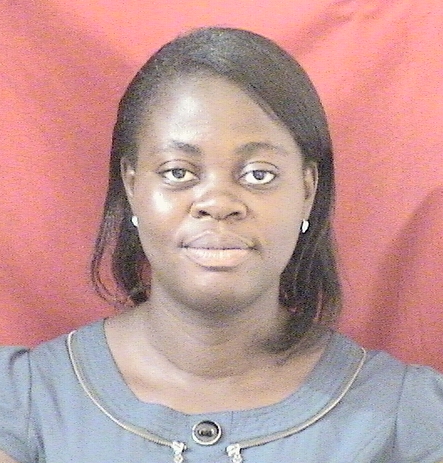
Department of Horticulture
The researcher has focused extensively on Hibiscus Plant Research Studies, exploring how different drying methods affect proximate composition and mineral content in specific accessions of [specific plants or organisms]. Their work in Greenhouse Technology and Climate Control has examined the impact of desiccants on tree seed quality. Further, their research in Banana Cultivation and Research has investigated the effects of 1-MCP storage conditions on tomatoes' physico-chemical properties. Additionally, within the broader context of Herbal Medicine and Trade Cooperation, they have explored the role of crude trona in enhancing antioxidant activity in Ghanaian foods.

Department of Civil Engineering
This researcher investigates the impact of climate change on ecosystems through long-term observational studies and comparative analyses.