Beta Testing
KNUST Research Atlas is currently in active Beta. Report bugs or suggest features to help us improve!
KNUST Research Atlas is currently in active Beta. Report bugs or suggest features to help us improve!
KNUST Research Atlas is currently in active Beta. Report bugs or suggest features to help us improve!
Search, discover, and connect with over 1,800 researchers, faculty members, and scholars across all departments of KNUST.

Department of Mechanical Engineering
The researcher's work centers on the comprehensive exploration of renewable energy technologies, particularly wind turbines and solar photovoltaics. Key themes include the optimization of performance in these domains, the assessment of their environmental impact, and their integration into grid-tied systems for efficiency and sustainability. The research also delves into biofuel production, focusing on potential advancements in biogas utilization and the development of biofuels as sustainable alternatives. Additionally, the study examines global energy security and policy frameworks to address challenges in renewable energy transition. Recent work highlights advancements in hybrid systems, innovative battery technologies, and the environmental benefits of solar energy. The research underscores the importance of sustainable practices in both renewable sectors and their broader societal implications.
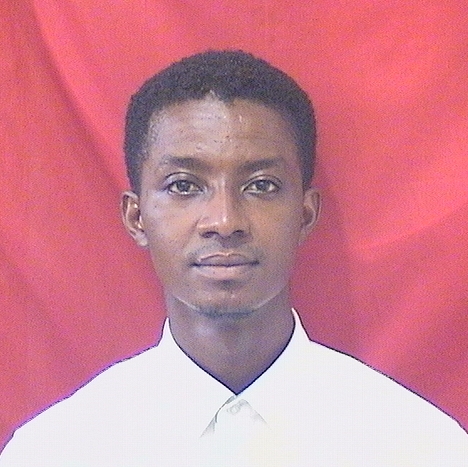
Department of Communication Design
The researcher investigates fundamental physical principles, focusing on dark matter, dark energy, and gravitational wave phenomena, employing advanced theoretical models such as Loop Quantum Gravity to explore their interconnections with quantum mechanics and cosmology. Their work bridges mathematical frameworks with empirical observations, contributing to our understanding of gravity's role in the universe's structure and evolution.
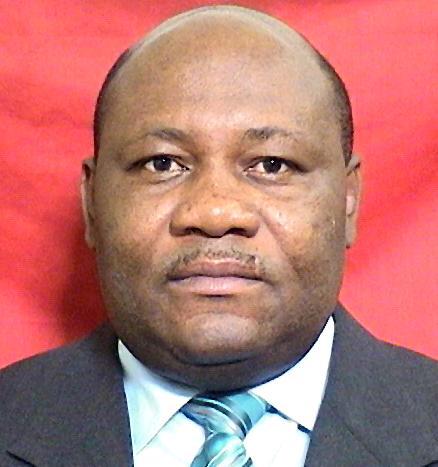
Department of Civil Engineering
The researcher focuses on integrating diverse disciplines across several themes to address challenges and opportunities in Ghana's socio-economic landscape. Their work spans flood risk management, hydrological studies, agricultural innovations, climate change impacts, and educational efforts. Key areas include the application of multi-criteria analysis in water resource management, hydrological drought modeling in the Black Volta Basin, adaptations for agriculture under climate change, sustainable irrigation development strategies, land use changes influenced by mining, and the role of education and remote sensing in rural settings. The researcher also explores computational fluid dynamics as a tool in environmental engineering to model flow processes in agricultural contexts. Their comprehensive approach underscores the multifaceted nature of Ghana's socio-economic needs and opportunities across physical, life sciences, and social sciences.
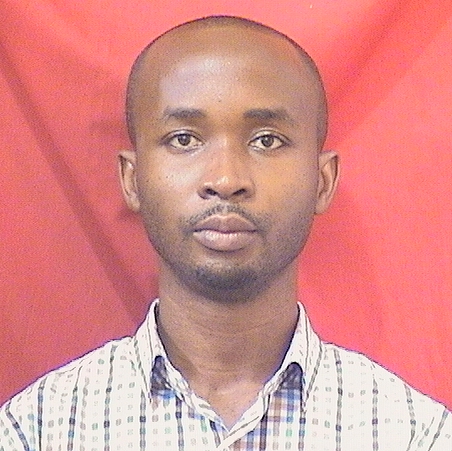
Department of Molecular Medicine
The researcher has made significant contributions across several key health-related fields, focusing primarily on cardiovascular diseases, diabetes, cancer, infectious diseases (HPV), nutritional issues, metabolic disorders, and maternal and child nutrition. Their work encompasses the study of lipid biomarkers in type 2 diabetes and oxidative stress markers in diabetics, innovative treatment approaches for Schistosoma haematobium infections using praziquantel, and advancements in understanding bariatric surgeries and their outcomes. They also investigate global public health policies and the application of artificial intelligence in healthcare settings. Their research underscores the importance of comprehensive approaches to address challenges in nutrition, cardiovascular health, diabetes management, and infectious diseases.
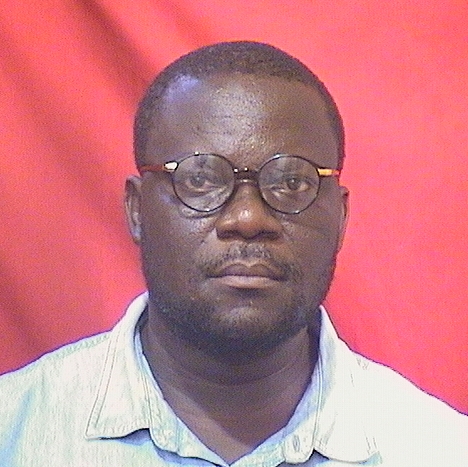
Department of Industrial Art
This researcher has made significant contributions to understanding complex chemical compounds and their biological activities, particularly in the fields of pharmacology, synthetic chemistry, and materials science. Their work spans a wide range of areas, from the development of novel pharmaceutical agents (e.g., topiramate, phenothiazines) to the synthesis of intricate heterocyclic compounds with unique properties. The researcher's research emphasizes innovative methodologies such as structure-activity studies, which have provided deep insights into the interactions between chemical compounds and biological systems. Additionally, their work on bioactive materials, including graphene oxide for drug delivery, highlights their interdisciplinary approach to both fundamental science and applied technologies. This comprehensive study underscores a unified focus on advancing our understanding of complex chemical systems with direct implications for human health and well-being.

Department of Pharmaceutical Chemistry
The researcher's work focuses primarily on the role of pharmaceuticals and their bioactive compounds in health sciences and life sciences. Their studies span themes including the monitoring of antacids and pesticides, antibiotic use and resistance, phenodynamic and pharmacogenetic aspects of plant medicine, analytical methods for drug residue assessment, and its impact on human health and environmental impacts. Key findings include advancements in identifying pharmacophore motifs in plants, rigorous methodologies for analyzing compound bioactivity and pharmacophores, and innovations in assessing antiparasitic residues in herbal products.
Department of Geomatic Engineering
The researcher has made significant contributions across multiple research areas. Their work focuses on enhancing positioning accuracy in physical sciences by developing deep learning models to predict IGS (Intelligence Source System) signals and evaluating the impact of interference effects using GNSS observations. In inertial sensors, they homogenized coordinates through active CORS data in Ghana. For hydrology, their studies involve modeling water budgets using GIS-based remote sensing data. Additionally, they ensured high-quality data from continuously operating reference stations to improve positioning applications globally.
Department of Civil Engineering
The field of [research area] is far-reaching, encompassing a diverse array of topics from [list specific subjects if applicable], but broadly it involves investigating fundamental principles, developing theories, and addressing real-world challenges. My research particularly focuses on applying theoretical frameworks to practical problems across various disciplines, such as materials science, education, biology, and more. Through rigorous investigation and innovative methodologies, my work contributes to advancing knowledge in these areas, while also fostering interdisciplinary collaboration to tackle complex issues.
Department of Pharmacy Practice
The researcher's work is centered around the comprehensive study of diabetes, cardiovascular risks, and its complications across diverse health domains. This includes examining prevalent patterns in Ghana, exploring the biological and clinical implications of diabetes, integrating innovative research methods such as AI-driven services and community-based approaches, and addressing public health disparities related to body composition and customer engagement.

Department of Architecture
The researcher's work focuses on developing frameworks for improving collaborative working in construction projects, particularly employing methodologies such as fuzzy set theory and principal component analysis. Their research encompasses themes including PPP delivery challenges, urban development impacts, project management strategies, noise effects, sustainable development goals, community engagement techniques, and BIM integration.
Department of Mechanical Engineering
This researcher focuses on developing ethical AI systems that enable seamless collaboration between humans and robots. Their work explores societal impacts of AI in healthcare and COVID-19 prediction, emphasizing opportunities for innovation while addressing challenges in human-centric AI development. By synthesizing insights from 2018 publications on ethical AI and 2020 papers on healthcare applications, the researcher highlights a trajectory towards advancing AI that respects human values while fostering transformative societal change.
Department of Pharmacy Practice
This research focuses on advancing our understanding of complex biological systems through interdisciplinary approaches that integrate traditional biological methodologies with cutting-edge computational techniques. By combining deep learning models, sequence analysis, and machine learning algorithms, the researcher explores how these tools can uncover hidden patterns and relationships in biological data, particularly in areas such as transcriptional regulation, protein function, gene regulatory networks, neurodegenerative diseases, epigenetic regulation, multi-scale modeling for metabolic phenotypes, and molecular mechanics.