Beta Testing
KNUST Research Atlas is currently in active Beta. Report bugs or suggest features to help us improve!
KNUST Research Atlas is currently in active Beta. Report bugs or suggest features to help us improve!
KNUST Research Atlas is currently in active Beta. Report bugs or suggest features to help us improve!
Search, discover, and connect with over 1,800 researchers, faculty members, and scholars across all departments of KNUST.

Department of Petroleum Engineering
The researcher's work is centered on advancing technologies and applications in various fields within the physical sciences. Their primary areas of interest include processing celluloses from diverse sources for oil recovery techniques, mineral separation methods, and CO2 sequestration strategies. They explore innovative solutions across these domains to address challenges in energy management, resource development, and geological processes.

Department of Surgery
The researcher's work centers on advancing and refining diagnostic methods in life sciences, particularly emphasizing evaluation and improvement of medical diagnostics under challenging conditions. Their research focuses on evaluating and enhancing diagnostic systems in various domains such as hemodialysis, colonicoscopy, appendicitis management, and other rare condition treatments. These studies are especially relevant in resource-constrained settings, aiming to improve patient outcomes through more accurate and efficient diagnostic processes.

Department of Civil Engineering
The researcher's work is centered around advancing understanding in geotechnical engineering through an interdisciplinary approach that integrates pavement performance evaluation with geomechanical principles. Utilizing sophisticated methodologies such as dynamic cone penetration index testing, electrical resistivity studies, and artificial neural network models, the researcher explores how materials like natural fibers and geotextiles influence soil behavior and pavement characteristics. This research spans themes including underground structures, pavement engineering, geophysical methods, financial risk modeling, logistics, and material processing. The focus is on developing innovative solutions for road construction challenges using advanced analytical techniques to enhance pavement durability and safety across various technical domains.

Department of Wildlife and Range Management
The researcher's work focuses on integrating findings from a diverse range of publications to advance understanding of viral infections in bats and related fields. Key themes include: 1. **Virology of Bats and Related Infections**: Studies on paramyxoviruses, Hepaciviruses, and other coronaviruses highlight their impact on bat populations and human diseases. 2. **Anticipating and Controlling Viral Diseases**: Research explores preventing preventable diseases in humans through environmental and behavioral interventions. 3. **Zoonotic Infections from Bats**: Analysis of zoonotic coronaviruses from African bats, such as Bats worldwide, to understand their role in transmitting diseases like SARS-CoV-2. 4. **Hepatitis Studies**: Contributions on Hepaciviruses and related issues in wildlife and humans are significant, especially in Ghana. 5. **Bats as Vectors for Zoonotic Diseases**: Research examines bat host relationships with coronaviruses to study zoonotic transmission dynamics. 6. **Diversity of Bat Species and Behavior**: Studies on bats worldwide provide insights into their behavior, conservation, and ecological roles. 7. **Conservation and Management of Bats**: Work on bat populations in Ghana emphasizes their importance in wildlife conservation and sustainable agriculture. This integrated approach provides a comprehensive understanding of bat-related viral infections, their biological aspects, and their role in disease transmission, supported by extensive research spanning various domains.

Department of Architecture
The researcher focuses on understanding and comparing various optimization algorithms in machine learning, particularly Adam, RMSprop, GD, AdaGrad, and AdamW. They systematically compare these methods by evaluating their performance through metrics like mean squared error or validation loss, assessing factors such as convergence speed and generalization ability. Their work aims to optimize training dynamics for machine learning models across diverse datasets and tasks.
Department of Medical Diagnostics
The researcher focuses on advancing computational geometry techniques for protein folding prediction using graph-based methods and deep learning models, particularly in integrating geometric neural networks. Their work emphasizes developing optimization frameworks for molecular simulations with deep generative models, aiming to enhance accuracy in predicting protein mechanisms and applications across drug design and biophysical studies.
Department of Anatomy
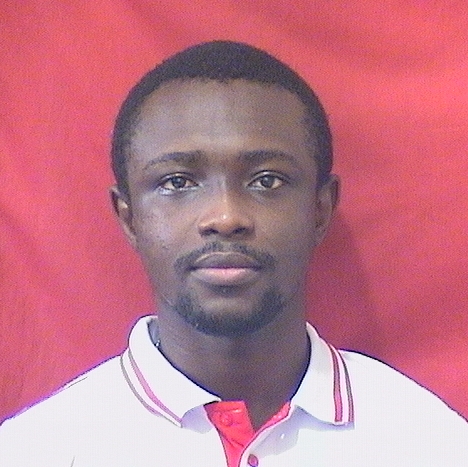
The researcher's work integrates studies in airway, bone, and periodontal studies, focusing on how these structures contribute to health issues. Using non-invasive methods like imaging for airways, anthropometry for bones, and matrix research for periodontals, the researcher applies similar methodologies across diverse fields to better understand human conditions related to asthma, osteoporosis, and independence.

Department of Publishing Studies
The researcher has made significant contributions to the field of scientometrics and bibliometrics by examining the development of open access publishing models in social sciences. Their work employs a variety of metrics, including citation rates, collaboration networks, and academic institutions, to analyze publication trends in developing countries. This approach reveals how research quality and structure evolve over time and identifies key factors influencing these patterns. The researcher’s analyses provide valuable insights into the mechanisms driving the shift toward open access publishing and highlight the importance of institutional support for fostering scholarly communication.
Department of Pharmaceutics
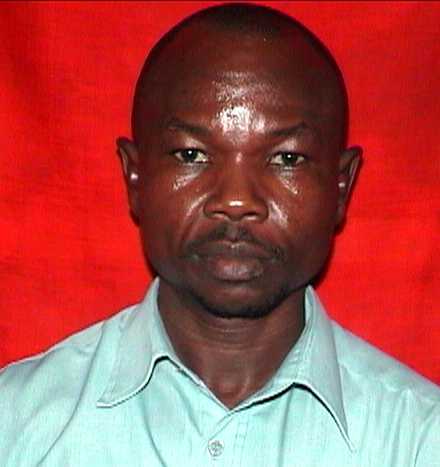
The researcher's work spans a diverse range of pharmaceutical research, encompassing drug delivery systems, herbal extracts, plant-based materials, analytical techniques, economic studies, and polyacrylates. Their research focuses on enhancing drug delivery through innovative formulations, utilizing natural gum-based extended release matrix tablets for model drugs with varying solubilities. In the field of psidium guajava extract research, they explore oral capsule production from herbal decoctions for medical treatments. Hibiscus Plant Research Studies delve into the application of specific plant extracts in pharmaceutical formulations. Their work on analytical methods involves assessing chloroquine phosphate and chlorpheniramine maleate products. The researcher also investigates hydrogels' properties under varying pH conditions, studying polyelectrolyte complexes with chitosan. Additionally, they examine the economic aspects of sustained release antihypertensive preparations in Ghana, surveying physician and patient preferences for these medications in Kumasi. This comprehensive research effort highlights a broad approach to pharmaceutical applications across diverse domains, from formulation development to analytical insights, emphasizing innovative solutions and interdisciplinary approaches.

Department of Surgery
The researcher's comprehensive research focuses on African societal and environmental issues, encompassing HIV/AIDS impact, air pollution, urbanization, noise management, poverty, gender dynamics, education, labor markets, health disparities, energy policies, water access, gender roles, fertility transitions, political participation, electoral systems, insurance, mortality, labor market outcomes, cultural perspectives, and conservation efforts. The goal is to address the complex interplay between health, environment, social equity, urbanization, noise pollution, poverty, gender dynamics, and policy-making in African contexts.
Department of Mechanical Engineering
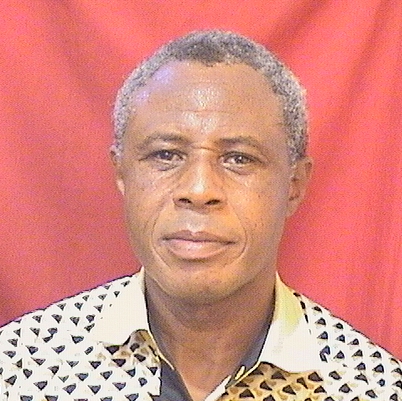
This researcher has focused their work on integrating Industry 4.0 technologies into physical and manufacturing systems, developing sustainable education practices across social sciences, advancing maintenance engineering in industrial settings, and exploring business strategies for innovation in manufacturing industries.
Department of Medical Diagnostics
This researcher has made significant contributions to cancer biology by integrating genome-wide studies with clinical applications across African populations, focusing on cancer genomics and diagnostic techniques. Their work highlights advancements in identifying cancer genomic biomarkers in Ghanaian breast cancer patients and discovering structural changes in breast cancer predisposition genes in the African population. Additionally, they have elucidated the role of NF-κB signaling pathways in breast cancer treatment through a study at Cape Coast Teaching Hospital. Their research also emphasizes global cancer incidence trends using data from 2013–2015, providing insights into screening strategies for black women in Ghana and the US. This integrative approach underscores the importance of translational genomics in oncology and the need to address health disparities in cancer care.