Beta Testing
KNUST Research Atlas is currently in active Beta. Report bugs or suggest features to help us improve!
KNUST Research Atlas is currently in active Beta. Report bugs or suggest features to help us improve!
KNUST Research Atlas is currently in active Beta. Report bugs or suggest features to help us improve!
Search, discover, and connect with over 1,800 researchers, faculty members, and scholars across all departments of KNUST.
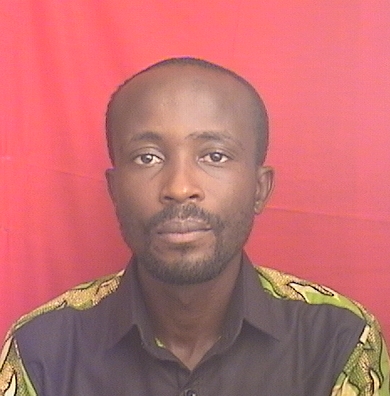
Department of Economics
The researcher's work spans multiple themes, encompassing financial inclusion, economic growth, banking stability, gender dynamics, agricultural resilience, financial policies, and customer service quality. Key findings across these areas highlight significant impacts on poverty reduction, financial inclusion thresholds, credit risk management, and systemic dynamics in African economies. The integration of diverse domains underscores a holistic approach to understanding economic and social challenges, emphasizing the importance of global interconnectedness and policy intervention.
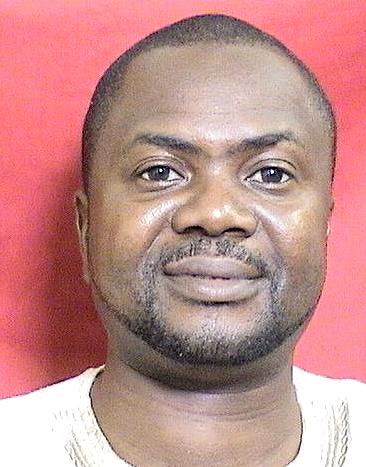
Department of Marketing and Corporate Strategy
This researcher conducts a comprehensive study examining the multifaceted impacts on small and medium-sized enterprises (SMEs) across various economic contexts, including resilience, sustainability, gender dynamics, entrepreneurship, supply chain management, microfinance, and international business. Their work spans themes such as pandemic effects, sustainable practices, gender diversity, innovation, financial inclusion, and global economic influences, aiming to uncover patterns and mechanisms driving performance, resilience, and social equity across these sectors.

Department of Mathematics
The researcher focuses on integrating statistical methods with genetic and genomic data to advance understanding in cancer biology and personalized medicine, particularly exploring connections between epigenetic modifications and disease progression.
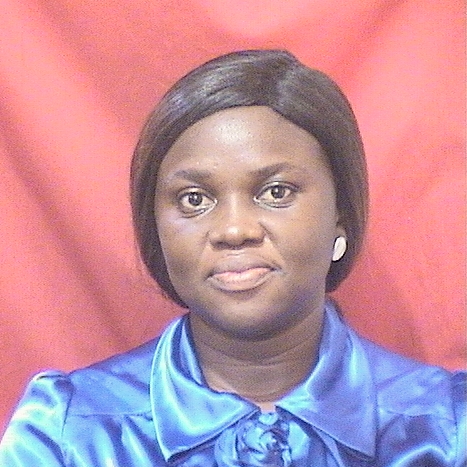
Department of Theoretical and Applied Biology
The researcher has conducted extensive research across multiple domains within public health sciences, focusing on vector-borne infections, malaria control strategies, tick-pathogen studies, vaccine acceptance, insect pest management, and mosquito disease control. His work integrates diverse methodologies to address challenges in disease prevention, control, and community engagement.

Department of Statistics and Actuarial Science
The researcher's work integrates innovative approaches across multiple disciplines, combining advancements in machine learning for imbalanced data classification in fraud detection to study eating disorders post-childbirth with a focus on neonatal respiratory health research.

Department of Child Health
The researcher's work focuses on addressing public health challenges across African domains, with a particular emphasis on air quality, respiratory diseases, and disease treatment. Their research encompasses themes such as the impact of air pollution on chronic respiratory diseases like asthma, the role of vaccines in controlling childhood mALARias, and strategies to prevent tuberculosis in Ghanaian children. The researcher also investigates methods for treating pulmonary diseases, examining factors influencing hospitalization due to pneumonia, hemoglobinopathies, and other gastrointestinal disorders. Their studies highlight the need for global approaches to improve maternal and child health outcomes through innovative interventions and collaborations.
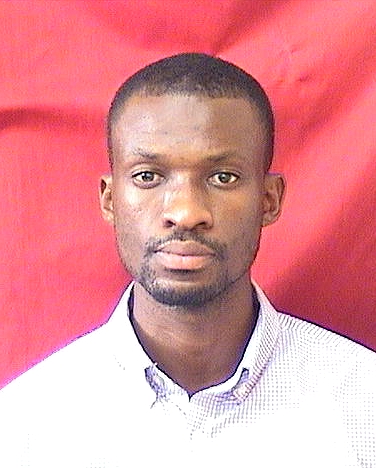
Department of Telecommunications Engineering
The researcher has been advancing the development of advanced circularly polarized antennas, particularly in miniaturized designs with enhanced radiation characteristics using metamaterials for improved isolation. Their work explores applications across various frequency bands, from wideband to ultra-wideband, with a focus on improving efficiency and performance in wireless communication networks.
Department of Anaesthesiology & Intensive Care
The researcher focuses on the theoretical and application-driven exploration of complex systems and network structures, employing empirical data from diverse fields such as biology, social networks, and human behavior. Their work emphasizes modeling real-world phenomena through agent-based simulations and differential equations, bridging theory with practical applications across various domains. Key themes include systemic properties of complex systems, such as resilience, adaptability, and efficiency, observed in natural and engineered systems. The researcher's contributions are characterized by a comprehensive approach that builds bridges between theoretical frameworks and empirical data, showcasing the universality of complex network concepts through case studies from diverse disciplines.
Department of Anatomy
The researcher conducts a comprehensive study examining human development across various themes, including skin protection and aging, gender roles and feminist perspectives, social justice through forensic anthropology, and health disparities in communities like Ghana.
Department of Chemical Engineering
The researcher has focused on advancing computational modeling techniques to address complex systems across diverse domains such as social networks, biological systems, and quantum mechanics. Their work integrates mathematical models and network science to understand intricate interactions in these systems, bridging theory with practical applications that address real-world challenges from disease spread to infrastructure optimization.

Department of Pharmacy Practice
This researcher has dedicated their work to advancing theoretical understanding of complex systems across various domains in physics and quantum mechanics, particularly focusing on developing a unified framework to analyze dynamic processes spanning diverse physical phenomena.
Department of Educational Innovations in Science & Technology
This researcher has made significant contributions to understanding complex nonlinear phenomena at the intersection of biophysics, applied mathematics, and theoretical physics. Their work explores the interplay between physical principles, mathematical modeling, and biological systems, with a particular focus on nonlinear dynamics and chaos theory. Recent research emphasizes the integration of experimental, numerical, and analytical approaches, bridging the gap between traditional soft matter physics and emerging areas in biophysics. Their findings advance our understanding of biological systems through interdisciplinary studies that combine rigorous theoretical frameworks with quantitative empirical investigations.