Beta Testing
KNUST Research Atlas is currently in active Beta. Report bugs or suggest features to help us improve!
KNUST Research Atlas is currently in active Beta. Report bugs or suggest features to help us improve!
KNUST Research Atlas is currently in active Beta. Report bugs or suggest features to help us improve!
Search, discover, and connect with over 1,800 researchers, faculty members, and scholars across all departments of KNUST.
Department of Environmental Science
The researcher has made significant contributions across various themes in physical sciences, focusing on advancements in water and sanitation technologies. Key areas include innovations in treating natural organic matter, application of nanomaterials for environmental remediation, development of chemical sensors for trace metal monitoring, and integration of advanced systems like fire detection and solid waste management. Their work also extends to improving water quality assessment and recovery processes, with notable contributions to COVID-19 impact studies on air quality.
Department of Painting and Sculpture
The researcher integrates advanced signal processing, imaging, and biometrical techniques across healthcare, physics, and engineering to develop deep learning methods for physiological sound detection, wearable device monitoring of bodily functions, advancing geophysical research in ionosphere/magnetosphere, contributing to medical imaging with bioimpedance tomography, and enhancing detection systems using convolutional neural networks in MRI elastography.
Department of Food Science and Technology
This researcher focuses on developing advanced computational mechanics models for predicting complex engineering systems, employing nonlocal damage modeling and topology optimization to address structural integrity challenges. Their work integrates probabilistic uncertainty quantification to enhance reliability, while collaborating with experimentalists to validate theoretical findings through simulations. The research significantly contributes to advancing multiscale modeling techniques across strength, dynamics, and other fields, aiming to bridge the gap between theory and practical applications through interdisciplinary approaches.

Department of Pharmacy Practice
The researcher's work integrates the study of antibiotic resistance in healthcare settings with broader pharmaceutical economics and policy issues, aiming to address both individual behavior and public health outcomes.
Department of Biochemistry and Biotechnology
The researcher investigates the interplay between sleep and cognitive functions across diverse domains, including memory recall, social interactions, problem-solving skills, and language processing, employing a multidisciplinary approach to understand how these elements influence behavior and learning.
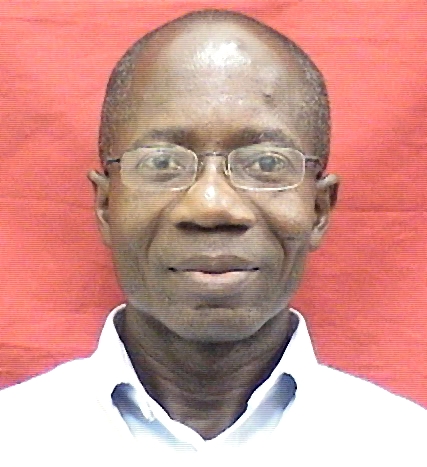
Department of Planning
The researcher's work is centered on addressing Ghana's hydrological challenges by synthesizing a comprehensive approach to flood risk assessment and management. Their research integrates methodologies from various domains, including urban planning, disaster response, education, land policy-making, and community engagement, particularly focusing on gendered roles in agriculture, traditional practices, climate change, and global health. The goal is to develop integrated strategies that address flood risks through a blend of hydrological understanding, community connection, environmental management, and global health solutions.
Department of Medical Diagnostics
This researcher has made significant contributions to both structural equation modeling (SEM) and partial least squares path analysis (PLS-PA), with applications across diverse fields in behavioral and social sciences. Their work integrates advanced statistical techniques with practical research challenges, particularly in handling large datasets and developing robust models for complex relationships among variables. Additionally, their research extends into the realm of big data analysis, offering innovative approaches to variable selection and dimension reduction while enhancing the accuracy and interpretability of predictive models.
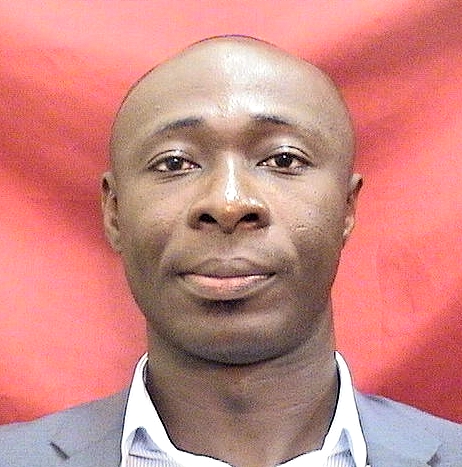
Department of Public Law
This researcher's work is centered on the intricate relationship between international trade and legal frameworks, particularly examining how foreign investment treaties influence the legal rules governing property rights and labor laws in developing host states. The study employs both theoretical exploration and case studies to explore how these agreements shape economic policies within nations, delving into themes like intellectual property law, tax policy, and international relations. By analyzing how foreign investments alter trade rules and affect host governments' economic policies, the research aims to uncover a nuanced understanding of the dynamic interplay between legal systems and cultural contexts in international trade.
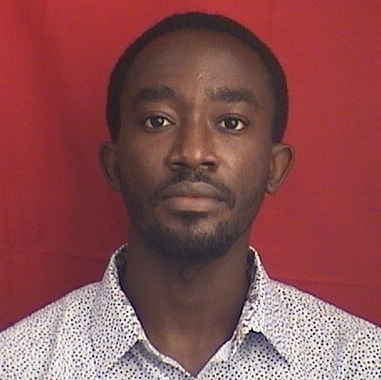
Department of Telecommunications Engineering
The researcher has explored multiple areas within the physical sciences, focusing on network security through deep learning, detection mechanisms for resource-constrained IoT devices using machine learning, MITM attacks, blockchain applications in industrial internet of things, energy-efficient wireless sensor networks, smart agriculture, and software-defined networking. They also investigated theoretical frameworks such as link load balancing with cat swarm optimization and information and cyber security aspects, including secure network architectures and data integrity solutions for IoT and Vehicular Ad Hoc Networks (VANETs). Their work integrates diverse technologies across domains to address challenges in security, efficiency, and performance, highlighting the interdisciplinary nature of modern research.
Department of Child Health
The researcher's comprehensive research focuses on a multidisciplinary approach encompassing infectious diseases (COVID-19, malaria), immunology (malaria vaccine development), maternal health, and nutrition. Their work evaluates the impact of vaccines on child health outcomes, particularly in Ghana, while examining vaccination uptake and child nutrition factors that influence vaccination behavior. The researcher also investigates vector-borne diseases like Kawasaki syndrome and associated complications, contributing to public health strategies aimed at reducing mortality after establishing an emergency unit and decreasing neonatal mortality rates.
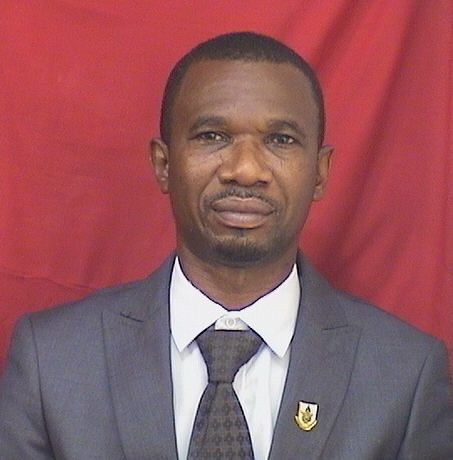
Department of Geography & Rural Development
The researcher conducts interdisciplinary studies at the intersection of complex systems and network science, applying novel computational methodologies to address challenges in biological, social, transportation, and technological domains through empirical data analysis.
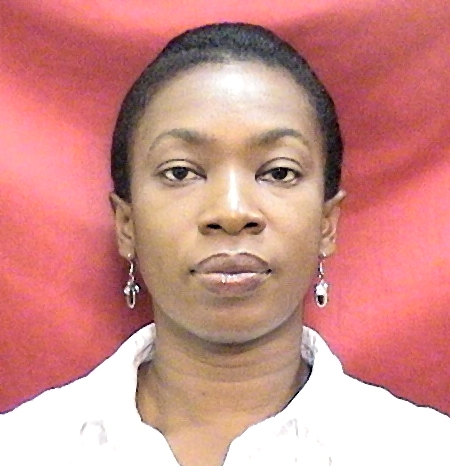
Department of Planning
The researcher's work integrates socio-economic factors with physical and environmental sciences to explore how these elements shape urban, rural, transportation, education, waste management, nutrition, infrastructure, sustainability, and policy-making in Ghana. Through various thematic studies across themes 1 (urban growth), 2, 3, 4, 5, 6-8, 9, 10, 11, 12, 13, the researcher aims to uncover the complexities of socio-economic determinants influencing environmental and social outcomes.