Beta Testing
KNUST Research Atlas is currently in active Beta. Report bugs or suggest features to help us improve!
KNUST Research Atlas is currently in active Beta. Report bugs or suggest features to help us improve!
KNUST Research Atlas is currently in active Beta. Report bugs or suggest features to help us improve!
Search, discover, and connect with over 1,800 researchers, faculty members, and scholars across all departments of KNUST.

Department of Nursing
The researcher focuses on examining how nurses in emergency care administration intravenous medications, using qualitative analysis as a methodology, within the healthcare system. Their study aims to improve patient outcomes by enhancing care delivery efficiency.
Department of English
The researcher examines the interplay between oral traditions and power dynamics in cultural literary works, specifically analyzing how such narratives reflect or challenge traditional systems. Their work bridges postcolonial literary studies with critical theory, focusing on themes of justice, identity, and ethics through examples like Ngugi's "River" and Achebe's "Arrow of God."
Department of Chemistry
The researcher integrates advanced mathematical techniques into modeling and analyzing complex systems across various domains. Their work encompasses mining optimization, epidemiological control strategies, diffusion dynamics, thermodynamic equilibrium modeling, and hydraulic flow analysis, utilizing methods like differential equations, numerical optimization, and stability analysis to develop integrated frameworks that enhance predictive accuracy and decision-making in physical, health, social, and energy systems.
Department of Painting and Sculpture
The researcher has focused on integrating innovative technologies and practices across multiple fields to address global challenges related to climate change, sustainability, and food security. Their work highlights the role of renewable energy in mitigating environmental impacts while exploring how agricultural practices can improve carbon sequestration. The integration of genetic engineering into precision agriculture aims to enhance crop resilience and efficiency. Additionally, the researcher examines the importance of soil health in mitigating water pollution, emphasizing the need for sustainable solutions for agricultural systems.
Department of Human Resource and Organisational Development
The researcher's work focuses on the application of qualitative research methods and ethical considerations within a social sciences framework, exploring themes such as mental health, environmental issues, digital marketing, corporate responsibility, and other socially relevant topics. This interdisciplinary study bridges methodologies in education and business to address challenges across diverse fields including health, urban development, and technological innovation.
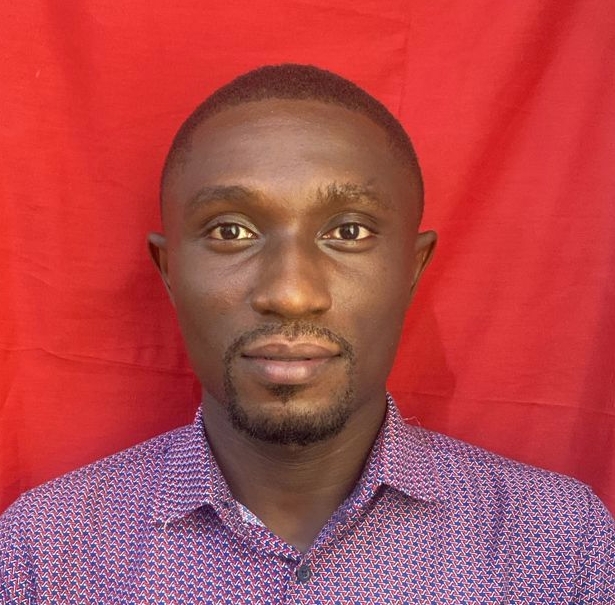
Department of Mathematics
The researcher has focused on developing analytical methods to solve systems of nonlinear fractional partial differential equations across diverse applications in physical sciences. Their work emphasizes the use of techniques such as semi-separation of variables, homotopy analysis, and variational iteration for tackling complex problems involving anomalous diffusion, oscillatory systems, and phenomena with memory effects, contributing significantly to advancing fractional calculus methods in real-world modeling and simulation.
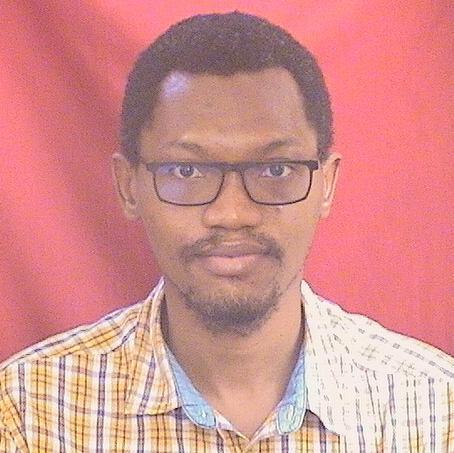
Department of Physics
A researcher has made significant contributions to the study of lepidoptera butterflies, focusing on their evolutionary history and ecological roles. Their work integrates genetic studies with applications across multiple domains, including fungal biology, image processing, and evolutionary dynamics. Key findings include genome-wide evidence for butterfly speciation driven by gene flow, insights into introgression effects mediated by fungal loci, and the evolution of supergenes in hybrid species. The researcher's research highlights the intricate interplay between genetic diversity, ecological interactions, and practical applications such as video game pedagogy and fungal vector-mediated introgression.
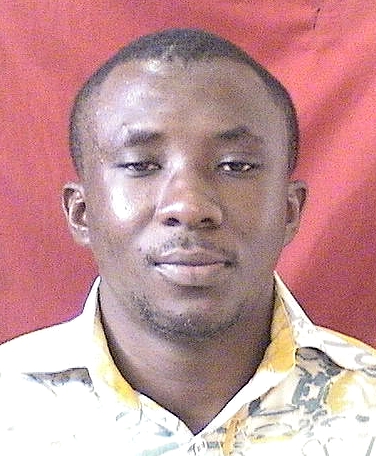
Department of Computer Engineering
The researcher's overall research focus is a comprehensive exploration of advanced computational methods and data analysis techniques across diverse scientific domains, aiming to address challenges in areas such as smart energy systems, networks, healthcare, biology, and technology innovation. The work spans themes like sentiment analysis, software-defined networking, network security, blockchain applications, AI in various fields (e.g., smart agriculture, cancer detection), IoT technologies, and energy management. These studies collectively highlight the integration of innovative computational tools across different disciplines to enhance problem-solving and technological solutions.
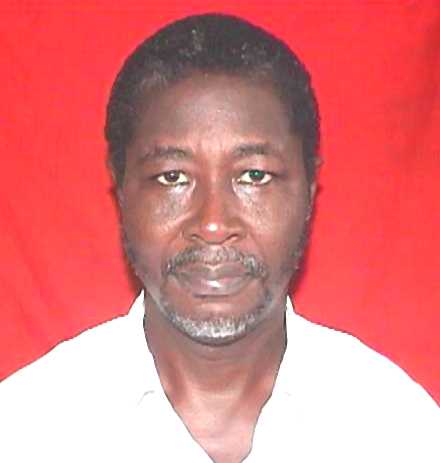
Department of Obstetrics & Gynaecology
This researcher has developed an innovative approach to understanding complex systems through a novel integration of machine learning and network theory, aiming to address global challenges across various domains such as transportation, social networks, and urban planning. Their work emphasizes the importance of scalability and adaptability in designing robust solutions for interconnected systems, leveraging advanced computational techniques to identify patterns and predict behaviors that are critical for effective policy-making and infrastructure development.
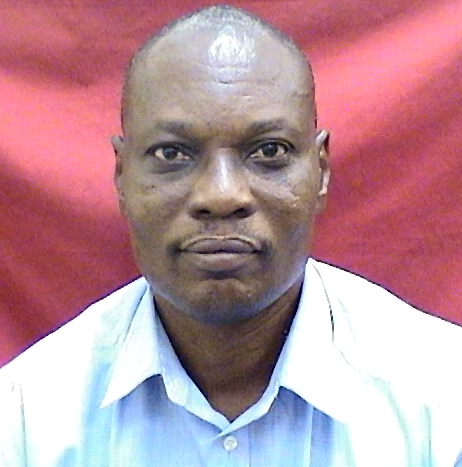
Department of History & Political Studies
The researcher's work focuses on integrating computational modeling and traditional experimental approaches to address complex systems across diverse fields. Their studies apply these methodologies to climate dynamics, biological systems, and geophysical processes, aiming to advance understanding by combining data analysis with predictive models.

Department of Food Science and Technology
This integrated body of work provides a holistic exploration of human nutrition, environmental health risks associated with agricultural inputs, and the application of natural products as health tools. Themes include deficiencies (iron, mango, iodine, zinc), exposure to toxic elements (mercury, cadmium) in cocoa beans and sugarbeets, and benefits from bioactive compounds such as methylmercaptan, zearalenone, and antiviral properties. Furthermore, research highlights the role of food waste reduction, plant growth enhancement techniques, and the economic value of natural products like beta vulgaris powders and Ginger-based herbal infusions. These studies collectively advance our understanding of human health, nutrition, and agricultural practices, emphasizing both the nutritional benefits of nature and the risks associated with improper handling of agricultural resources.
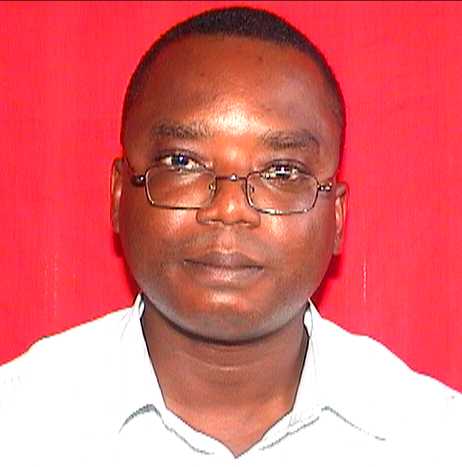
Department of Biochemistry and Biotechnology
The researcher has a comprehensive focus in the field of bioengines and bioproduction, driven by significant contributions to the development of biofuels through fermentation processes. Their work spans multiple domains, including bioethanol production using yeast strains like Saccharomyces cerevisiae, the feasibility of fruit pulp bioconversion for ethanol, and advancements in shea butter production. They emphasize the role of plant-derived microbial communities, particularly those in soil environments, in both plant-based chemistries and environmental bioremediation. Additionally, they explore enzymatic enzymes from diverse fungi to enhance yield and quality in products like lactic acid bacteria involved in fermentation. This research not only contributes to agricultural technologies but also addresses public health through sustainable food production methods, making them a key figure in bioengines for human well-being.