KNUST Research Atlas is currently in active Beta. Report bugs or suggest features to help us improve!
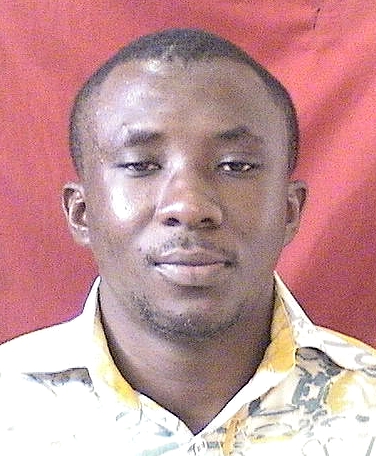
Henry Nunoo-Mensah
The researcher's overall research focus is a comprehensive exploration of advanced computational methods and data analysis techniques across diverse scientific domains, aiming to address challenges in areas such as smart energy systems, networks, healthcare, biology, and technology innovation. The work spans themes like sentiment analysis, software-defined networking, network security, blockchain applications, AI in various fields (e.g., smart agriculture, cancer detection), IoT technologies, and energy management. These studies collectively highlight the integration of innovative computational tools across different disciplines to enhance problem-solving and technological solutions.
Faculty Biography
Ing. Dr. Henry Nunoo-Mensah is a Professional Engineer and Senior Lecturer in the Department of Computer Engineering at Kwame Nkrumah University of Science and Technology (KNUST), Ghana. He is widely recognized for his leadership in Artificial Intelligence (AI), Internet of Things (IoT), and digital innovation, with a strong focus on translating advanced research into practical solutions that address pressing societal challenges.Dr. Nunoo-Mensah leads the AI in Health Theme of the Responsible AI Lab (RAIL-KNUST), a multidisciplinary initiative funded by IDRC and GIZ that drives research and capacity building in AI ethics, governance, and applications for sustainable development. He also leads the Connected Devices (CoDe) Lab and serves as Training and Programmes Coordinator at the DIPPER Lab, where he spearheads projects in wireless sensor networks, IoT, and smart systems. Additionally, he is MSc Programmes Coordinator for the World Bank-supported KNUST Engineering Education Project (KEEP) and a Research Fellow at the Brew-Hammond Energy Centre. He led the team that formulated the FACETS Responsible AI Framework for regulating AI innovations within the AI4D African Initiave Ecosystem and beyond.His research interests include artificial intelligence and machine learning, AI for healthcare diagnostics, blockchain-enabled systems, algorithms design and optimization, computer security and IoT, and wireless sensor networks. With over 2000 academic citations, Dr. Nunoo-Mensah has led and contributed to the development of AI diagnostic platforms (IntelliDiag), rare-disease clinician support tools (Care4Rare), document intelligence systems (ZebraChat), and blockchain-based DeFi identity platforms (AfriLink). Dr. Nunoo-Mensah has attracted significant international funding for research and innovation. He is Co-Investigator on the AI for Sustainable Development project (€1,000,000, French Government through the French Embassy, Ghana) and has co-led two African Agriculture Knowledge Transfer Partnerships (KTP) 2023–24 R1 funded by UK Research and Innovation (UKRI), with grants of £247,166 (Grant No. 13710) and £249,602 (Grant No. 13704) in partnership with Aston University, KNUST, Tropical Growers, and SAYeTech. He is also Co-Investigator on the Data Science for Child Health Now in Ghana (DS-CHANGE) project ($349,854, Fogarty International Center at the U.S. NIH, 2021–2026, Grant No. 1U2RTW012129-01). Under his coordination, the Responsible Artificial Intelligence Lab – KNUST (RAIL-KNUST) has secured an IDRC AI4D Africa Grant (CAD 550,000, Grant No. 81280702) and a GIZ Fair Forward AI Grant (€306,884.60, Grant No. 109832-001). The RAIL-KNUST has also been able to secure about CAD 1,500,000.00 for it's phase II activities from IDRC and FCDO.Dr. Nunoo-Mensah has received national and international recognition for his contributions to AI research and capacity building. His leadership has positioned KNUST at the forefront of responsible AI development in Africa, while his innovative platforms demonstrate a rare ability to move from research to real-world impact.He teaches courses in Computer Networking, Distributed Systems, Digital Systems Design, Artificial Intelligence, and IoT, and supervises both undergraduate and postgraduate research. He has also developed curricula and short-course modules in digital technologies, AI ethics, and applied machine learning, training the next generation of African engineers and researchers.Beyond academia, he consults for local and international organizations on AI, digital governance, and innovation strategy. He actively engages in multi-stakeholder collaborations, bringing together researchers, industry partners, and policymakers to shape Africa’s digital transformation agenda.
Access Control and Trust
Advanced Breast Cancer Therapies
AI in cancer detection
AI in Service Interactions
Autonomous Vehicle Technology and Safety
Blockchain Technology Applications and Security
Brain Tumor Detection and Classification
Cultural Industries and Urban Development
Diabetic Foot Ulcer Assessment and Management
E-commerce and Technology Innovations
Emotion and Mood Recognition
Energy Efficient Wireless Sensor Networks
Energy Load and Power Forecasting
Generative Adversarial Networks and Image Synthesis
Glaucoma and retinal disorders
ICT in Developing Communities
Image Retrieval and Classification Techniques
Indoor and Outdoor Localization Technologies
Induction Heating and Inverter Technology
IoT and Edge/Fog Computing
Mechanical Failure Analysis and Simulation
Microwave and Dielectric Measurement Techniques
Network Security and Intrusion Detection
Opportunistic and Delay-Tolerant Networks
Security in Wireless Sensor Networks
Sentiment Analysis and Opinion Mining
Smart Agriculture and AI
Smart Grid Energy Management
Software-Defined Networks and 5G
Vehicle Noise and Vibration Control
Department of Computer Engineering
Kwame Nkrumah University of Science and Technology