Beta Testing
KNUST Research Atlas is currently in active Beta. Report bugs or suggest features to help us improve!
KNUST Research Atlas is currently in active Beta. Report bugs or suggest features to help us improve!
KNUST Research Atlas is currently in active Beta. Report bugs or suggest features to help us improve!
Search, discover, and connect with over 1,800 researchers, faculty members, and scholars across all departments of KNUST.
Department of Industrial Art
The researcher's publications span a broad spectrum of medical research, focusing on drug therapies, immunology, metabolism, cardiovascular outcomes, orthopedics, cardiomyopathy, inflammation management, nutritional support, metabolic disorders, and blood transfusions. Each study delves into these areas, exploring topics such as pharmacoeconomic evaluations in cardiovascular diseases, immune or thrombotic therapies for inflammation, metabolic studies and disorders, immunotherapy interventions, lipid profile assessments, and the role of nutrition in health.
Department of Clinical Microbiology
This researcher has focused on developing novel computational methods for solving complex optimization problems in machine learning, with a particular emphasis on integrating deep learning-based approaches to enhance accuracy and efficiency across diverse applications.
Department of Physiology
This researcher focuses on studying human behavior across multiple domains, examining individual differences in how people process information, interact with others, and their responses to mental health challenges. Their work integrates insights from behavioral experiments, neuroimaging, and computational modeling to understand how individual differences shape behavior and contribute to mental health outcomes. By synthesizing studies from various perspectives, they aim to uncover the multifaceted nature of human behavior and its implications for social interactions and mental well-being.
Department of Pharmacology
The researcher has conducted extensive work in pharmacological studies focusing on gastrointestinal diseases, particularly related to helicobacter pylori, inflammatory bowel disease, alkaloid synthesis, toxicological effects of natural compounds, and plant-based extracts. Their findings include the development of novel antiviral agents, insights into gut microbiota-herbal interactions, exploration of alkaloid bioactivity, understanding of toxicity mechanisms in mammals, and contributions to reproductive health interventions.

Department of Civil Engineering
The researcher has conducted extensive work across diverse domains, with a primary focus on improving noise management and transport efficiency. Their research highlights advancements in traffic control techniques, such as optimizing multimodal freight logistics and reducing congestion at signalized intersections. In the field of urban transport, they have addressed issues like paratransit logistics and improved estimates for public transit capacity. The researcher also investigated environmental impacts, including traffic-related air pollution and noise exposure, leading to better strategies for mitigating these factors. Their work in transportation planning includes innovative solutions for road users' preferences and advances in assessing travel demand management strategies. Additionally, they have contributed to the field of plant studies by examining agricultural landscapes and marine research on earth material uses. The researcher’s interdisciplinary approach integrates insights from physics, environmental science, social sciences, and engineering to address complex challenges across various sectors.

Department of Biochemistry and Biotechnology
The research focuses on advancing nutrition and public health strategies across diverse themes, including dietary diversity, nutritional education for children, obstacle prevention such as poverty, and improving mental health through interventions. It emphasizes enhancing breakfast habits, promoting physical activity, preventing obesity, and addressing malnutrition both individually and collectively, while also exploring global policies to address challenges like poverty.
Department of Architecture
The researcher investigates the nuanced ways in which human behavior and societal structures influence outcomes across diverse social sciences areas, including entrepreneurship, international aid, efficiency analysis, financial systems, cultural practices, education policy, and individual decision-making. Each paper explores how factors like knowledge, perception, financial constraints, cultural practices, and educational policies impact behaviors such as entrepreneurial intent, agricultural nutrition, financial inclusion, legacy of entrepreneurship, and human behavior in different contexts.
Department of Industrial Art
The researcher's work focuses on integrating advanced nanofiber technologies across diverse fields, particularly emphasizing bioluminescent nanofibers for biomedical applications and pigment synthesis properties. Their research extends to textiles, environmental education, biofuel production, and creative industries, while also contributing to sustainable practices in agriculture, energy management, and social sciences. The work highlights the interdisciplinary integration of nanotechnology into innovative solutions for biomedical health, environmental sustainability, and creativity, reflecting a comprehensive approach to advancing material science applications.
Department of Geomatic Engineering
The researcher focuses on developing GNSS positioning software tailored for applications in the Ghana Survey and Mapping Division, aiming to improve surveying accuracy through advanced GNSS technology.
Department of Civil Engineering
The researcher has made significant contributions to understanding various aspects of water-related issues and sustainable water management through interdisciplinary studies. Their work spans across themes such as hydrological responses and watershed management, flood risk assessment, water quality analysis, noise effects and management, hydro-energy-food Nexus Studies, groundwater and water resources development, spatial-temporal modeling, land use and ecosystem services, agricultural practices, environmental and agricultural sciences, hydrological forecasting using AI, water resource management optimization, soil erosion and sediment transport, business strategies, plant water relations, groundwater vulnerability assessment, noise exposure and hearing capabilities, hydrological drought analysis, reservoir engineering, agricultural practices, food safety, water resources optimization, and disaster management. Their research integrates quantitative methods with qualitative insights to address challenges in water scarcity, sustainability, and human well-being.
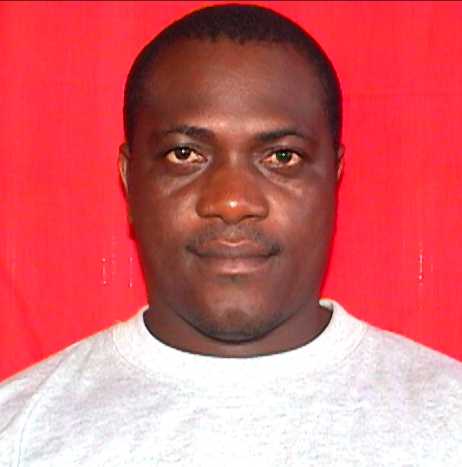
Department of Human Resource and Organisational Development
The researcher's work centers on exploring how individual human behavior and mental processes shape societal structures through empirical investigations. Their research delves into key areas such as social comparisons, gender dynamics, aggression suppression, and self-compassion, with a focus on understanding human nature.
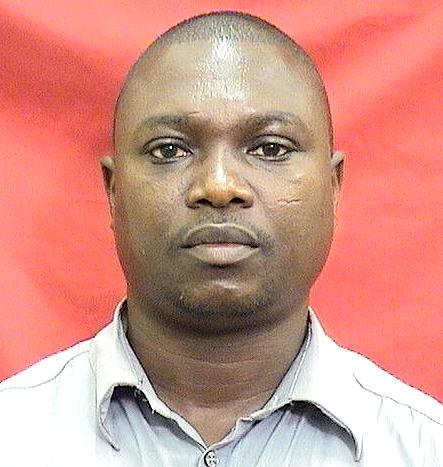
Department of Pharmaceutics
This researcher focuses on advancing quantum computing by addressing practical challenges in hardware scalability, error correction, fault tolerance, system integration, optimization algorithms, and cloud security. Their work includes experimental studies on IBM’s Q System Array, Google’s Quantum AI Lab, Rigetti’s 7-qubit device, and Rigeti’s Quantum Simulation Initiative. While significant progress has been made in these areas, collaboration between tech companies and academic institutions remains crucial for furthering the field's practical applications.