KNUST Research Atlas is currently in active Beta. Report bugs or suggest features to help us improve!
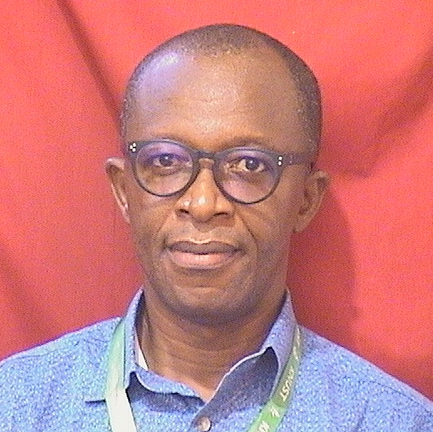
Charles Frimpong
The researcher's work focuses on integrating advanced nanofiber technologies across diverse fields, particularly emphasizing bioluminescent nanofibers for biomedical applications and pigment synthesis properties. Their research extends to textiles, environmental education, biofuel production, and creative industries, while also contributing to sustainable practices in agriculture, energy management, and social sciences. The work highlights the interdisciplinary integration of nanotechnology into innovative solutions for biomedical health, environmental sustainability, and creativity, reflecting a comprehensive approach to advancing material science applications.
Faculty Biography
Prof. Charles Frimpong (PhD) obtained a bachelor’s degree from the Industrial Art Department of the Kwame Nkrumah University of Science and Technology in 1991 with a specialization in Textiles and went on to pursue a post-graduate diploma in Art Education. He subsequently fulfilled a heartfelt dream of pursuing further studies in Textile Technology at the University of Ghent, Belgium, between 1994 and 1996 culminating in his involvement in preliminary studies on carpet performance; an EU sponsored project. His concentration was on Pile Yarn Related Influences on Carpet Resilience. He returned to Ghana in 1996 with a MSc. Textile Technology degree and started a career in teaching with KNUST. His area of specialization has been Fabric Construction, Dyes and Dyeing Technology and Textile Testing. His interest in local textile traditions led to his instrumental involvement in the introduction of “Kente” weaving on table looms in the second year of the Textiles programme. He has also led groups of MFA in Textile Design students, and cohorts of international students and professors to the three textile producing regions of Ghana on study tours of these three traditions. Prof. Frimpong has served on various committees at different levels of the University community and was awarded in 2002 for meritorious work in his role as the International programmes coordinator for College of Art and Social Sciences (CASS).He served as the Head of Department from August, 2011 to July, 2013 as a first term, and again from 2016 to 2018 in a second term. In 2019, he was elected Vice Dean of the Faculty of Art, and currently the Dean of the Faculty of Art. In 2005, he partnered a Kenyan consultant to undertake consultancy work for UNESCO on the conservation of traditional textiles. In 2010, he was awarded a PhD degree in Art Education after completing a research in developing “A User-Friendly Colour Matching System for Tie-dye/Batik producers”. The laboratory work for this study was wholly executed in the wet labs of the School of Textiles, NC State University during the summer of 2005. In November of 2011, he presented a paper extracted from his PhD research at the first Smartex International Conference in Kaferelsheikh, Egypt. He has since then published a number of articles in scholarly journals in the area of African textiles and fashion.In 2014, he was awarded with the ITAA Janet Else Visiting Scholar Award in Charlotte, North Carolina for his dedication and excellence in the teaching and training of students in the area of Textiles and Fashion.Prof. Charles Frimpong (PhD) obtained a bachelor’s degree from the Industrial Art Department of the Kwame Nkrumah University of Science and Technology in 1991 with a specialization in Textiles and went on to pursue a post-graduate diploma in Art Education. He subsequently fulfilled a heartfelt dream of pursuing further studies in Textile Technology at the University of Ghent, Belgium, between 1994 and 1996 culminating in his involvement in preliminary studies on carpet performance; an EU sponsored project. His concentration was on Pile Yarn Related Influences on Carpet Resilience. He returned to Ghana in 1996 with a MSc. Textile Technology degree and started a career in teaching with KNUST. His area of specialization has been Fabric Construction, Dyes and Dyeing Technology and Textile Testing. His interest in local textile traditions led to his instrumental involvement in the introduction of “Kente” weaving on table looms in the second year of the Textiles programme. He has also led groups of MFA in Textile Design students, and cohorts of international students and professors to the three textile producing regions of Ghana on study tours of these three traditions. Prof. Frimpong has served on various committees at different levels of the University community and was awarded in 2002 for meritorious work in his role as the International programmes coordinator for College of Art and Social Sciences (CASS).He served as the Head of Department from August, 2011 to July, 2013 as a first term, and again from 2016 to 2018 in a second term. In 2019, he was elected Vice Dean of the Faculty of Art, and currently the Dean of the Faculty of Art. In 2005, he partnered a Kenyan consultant to undertake consultancy work for UNESCO on the conservation of traditional textiles. In 2010, he was awarded a PhD degree in Art Education after completing a research in developing “A User-Friendly Colour Matching System for Tie-dye/Batik producers”. The laboratory work for this study was wholly executed in the wet labs of the School of Textiles, NC State University during the summer of 2005. In November of 2011, he presented a paper extracted from his PhD research at the first Smartex International Conference in Kaferelsheikh, Egypt. He has since then published a number of articles in scholarly journals in the area of African textiles and fashion.In 2014, he was awarded with the ITAA Janet Else Visiting Scholar Award in Charlotte, North Carolina for his dedication and excellence in the teaching and training of students in the area of Textiles and Fashion.Prof. Charles Frimpong (PhD) obtained a bachelor’s degree from the Industrial Art Department of the Kwame Nkrumah University of Science and Technology in 1991 with a specialization in Textiles and went on to pursue a post-graduate diploma in Art Education. He subsequently fulfilled a heartfelt dream of pursuing further studies in Textile Technology at the University of Ghent, Belgium, between 1994 and 1996 culminating in his involvement in preliminary studies on carpet performance; an EU sponsored project. His concentration was on Pile Yarn Related Influences on Carpet Resilience. He returned to Ghana in 1996 with a MSc. Textile Technology degree and started a career in teaching with KNUST. His area of specialization has been Fabric Construction, Dyes and Dyeing Technology and Textile Testing. His interest in local textile traditions led to his instrumental involvement in the introduction of “Kente” weaving on table looms in the second year of the Textiles programme. He has also led groups of MFA in Textile Design students, and cohorts of international students and professors to the three textile producing regions of Ghana on study tours of these three traditions. Prof. Frimpong has served on various committees at different levels of the University community and was awarded in 2002 for meritorious work in his role as the International programmes coordinator for College of Art and Social Sciences (CASS).He served as the Head of Department from August, 2011 to July, 2013 as a first term, and again from 2016 to 2018 in a second term. In 2019, he was elected Vice Dean of the Faculty of Art, and currently the Dean of the Faculty of Art. In 2005, he partnered a Kenyan consultant to undertake consultancy work for UNESCO on the conservation of traditional textiles. In 2010, he was awarded a PhD degree in Art Education after completing a research in developing “A User-Friendly Colour Matching System for Tie-dye/Batik producers”. The laboratory work for this study was wholly executed in the wet labs of the School of Textiles, NC State University during the summer of 2005. In November of 2011, he presented a paper extracted from his PhD research at the first Smartex International Conference in Kaferelsheikh, Egypt. He has since then published a number of articles in scholarly journals in the area of African textiles and fashion.In 2014, he was awarded with the ITAA Janet Else Visiting Scholar Award in Charlotte, North Carolina for his dedication and excellence in the teaching and training of students in the area of Textiles and Fashion.Prof. Charles Frimpong (PhD) obtained a bachelor’s degree from the Industrial Art Department of the Kwame Nkrumah University of Science and Technology in 1991 with a specialization in Textiles and went on to pursue a post-graduate diploma in Art Education. He subsequently fulfilled a heartfelt dream of pursuing further studies in Textile Technology at the University of Ghent, Belgium, between 1994 and 1996 culminating in his involvement in preliminary studies on carpet performance; an EU sponsored project. His concentration was on Pile Yarn Related Influences on Carpet Resilience. He returned to Ghana in 1996 with a MSc. Textile Technology degree and started a career in teaching with KNUST. His area of specialization has been Fabric Construction, Dyes and Dyeing Technology and Textile Testing. His interest in local textile traditions led to his instrumental involvement in the introduction of “Kente” weaving on table looms in the second year of the Textiles programme. He has also led groups of MFA in Textile Design students, and cohorts of international students and professors to the three textile producing regions of Ghana on study tours of these three traditions. Prof. Frimpong has served on various committees at different levels of the University community and was awarded in 2002 for meritorious work in his role as the International programmes coordinator for College of Art and Social Sciences (CASS).He served as the Head of Department from August, 2011 to July, 2013 as a first term, and again from 2016 to 2018 in a second term. In 2019, he was elected Vice Dean of the Faculty of Art, and currently the Dean of the Faculty of Art. In 2005, he partnered a Kenyan consultant to undertake consultancy work for UNESCO on the conservation of traditional textiles. In 2010, he was awarded a PhD degree in Art Education after completing a research in developing “A User-Friendly Colour Matching System for Tie-dye/Batik producers”. The laboratory work for this study was wholly executed in the wet labs of the School of Textiles, NC State University during the summer of 2005. In November of 2011, he presented a paper extracted from his PhD research at the first Smartex International Conference in Kaferelsheikh, Egypt. He has since then published a number of articles in scholarly journals in the area of African textiles and fashion.In 2014, he was awarded with the ITAA Janet Else Visiting Scholar Award in Charlotte, North Carolina for his dedication and excellence in the teaching and training of students in the area of Textiles and Fashion.
Accounting and Organizational Management
Advanced Sensor and Energy Harvesting Materials
Agricultural and Food Sciences
Agricultural Engineering and Mechanization
Agricultural Innovations and Practices
Aquatic Ecosystems and Phytoplankton Dynamics
Architecture, Art, Education
biodegradable polymer synthesis and properties
Biofuel production and bioconversion
Chemical Synthesis and Analysis
Color perception and design
Crafts, Textile, and Design
Creativity in Education and Neuroscience
Cultural Industries and Urban Development
Dental materials and restorations
Education Systems and Policy
Electrospun Nanofibers in Biomedical Applications
Energy and Environment Impacts
Environmental Education and Sustainability
Fashion and Cultural Textiles
Food composition and properties
Innovation and Socioeconomic Development
Irrigation Practices and Water Management
Material Selection and Properties
MXene and MAX Phase Materials
Pigment Synthesis and Properties
Polymer Foaming and Composites
Textile materials and evaluations
Tribology and Wear Analysis
Analysis of Internal Migration and Multidimensional Energy Poverty in Ghana
Open AccessAdvancing Sustainable Soil Health Practices: Strategies for Quality and Global Competitiveness Among Cotton Farmers in Ghana
Open AccessAdvances in Ti<sub>3</sub>C<sub>2</sub>T<sub>X</sub> MXene‐Integrated Conductive Textiles for Wearable Biomedical Sensors in Health Monitoring
Awareness and perceptions of sustainability and circular strategies among SME fashion producers in Ghana
Influence of Core Build-Up Designs on Preventing Early Failure of Composite Resin Core in Molars Under Traction Forces: A Finite Element Analysis Study
Open AccessProcessing and Strength Characterisation of Banana Fibre Cordage
Open AccessDabbing Technique as a Means of Acquiring Images for Hand-screen Printing
Open AccessThe role of developing countries in the global fashion industry sustainability discourse: Ghana in perspective - A narrative review
Open AccessEvaluation of Circular Srategies and their Effectiveness in Fashion SMEs in Ghana
Open AccessA Review of Sustainable Banana Fibre Production and Usage in West Africa
Evaluation of Edwuma Pa Fibre Extraction Machine for Sisal and Banana Leaves: A Sustainable Approach for Textile Applications
Open AccessExamining the structure of the fashion industry in Ghana in ensuring the successful adoption of sustainable approach
Open AccessThe Influence of Change on Indigenous Strip-Woven Fabrics in Ghana
The implications of energy literacy on energy savings behavior: A model of contingent effects of energy value and attitude
Open AccessPolymer Nanocomposite Foams and Acoustics
List of contributors
Awareness and perceptions of sustainability and circular strategies among SME fashion producers in Ghana
Tribology of hybrid nanofiller/polymer nanocomposites
The Implications of Energy Literacy on Energy Savings Behaviour: A Model of Contingent Effects of Energy Value and Attitude
Open AccessPhotocatalytic degradation of dyes by novel electrospun nanofibers: A review
Theory, Modeling, and Simulation of MXene/Polymer Nanocomposites
Environmental sustainability through recycled polythene textile art
An overview of the science and art of encapsulated pigments: Preparation, performance and application
Harnessing Microalgae Biomass from Lake Taihu as a Natural Biocolorant Source for Sustainable Eco-Friendly Dyeing of Cotton with Ultrasonication
Open AccessA Comparative Study on the Techniques, Tools and Materials for Indigenous Weaving in Ghana
Culturally Influenced Garment Designs: Focused on Ga-Adangbe Cultural Elements in Ghana
The State of <i>Kete</i> Development in the Volta Region
Progress on the Fabrication of Smart Textiles Based on Soft Strain Sensors
Risk assessment of attitudes and practices of students and practitioners toward studio dyeing in Ghana
A Novel Approach to Unzipped Tubes Synthesis Using Sulfanilic Acid as the Backbone Amino Acid
A comparative study of knitted strain sensors fabricated with conductive composite and coated yarns
Synthesis of highly stable bacterial cellulosic pocket for drug storage
Phosphorylation and Octenylsuccinylation of Acid‐Thinned Starch for Enhancing Adhesion on Cotton/Polyester Blend Fibers at Varied Temperature Sizing
Open Access‘Classicon’: Innovative Design from Classical and Contemporary African Textile Print Design Concepts
Open AccessRice Bran, an Alternative Nitrogen Source for Acetobacter xylinum Bacterial Cellulose Synthesis
Open AccessA Combined Material Substitution and Process Change Approach to Sustainable Batik Production
Open AccessA manual beaming device: an improved method for warp winding in broadloom weaving
Open AccessCampus Companies: Harnessing the Potential of Fashion and Textiles Production Units in Ghanaian Polytechnics for Income Generation
Adaptation of Traditional Symbols into Bridal Wear
Open AccessEnhancing the Value of Indigenous Pottery Products with Surface Decoration Methods & Macramé
A Comparative Study of History, Equipment, Materials, Techniques and Marketing Approach of Traditional Weaving in Ghana
ASSESSING THE IMPACT OF INTERNAL CONTROL SYSTEMS ON GHANA POST KUMASI
Department of Industrial Art
Kwame Nkrumah University of Science and Technology