Beta Testing
KNUST Research Atlas is currently in active Beta. Report bugs or suggest features to help us improve!
KNUST Research Atlas is currently in active Beta. Report bugs or suggest features to help us improve!
KNUST Research Atlas is currently in active Beta. Report bugs or suggest features to help us improve!
Search, discover, and connect with over 1,800 researchers, faculty members, and scholars across all departments of KNUST.
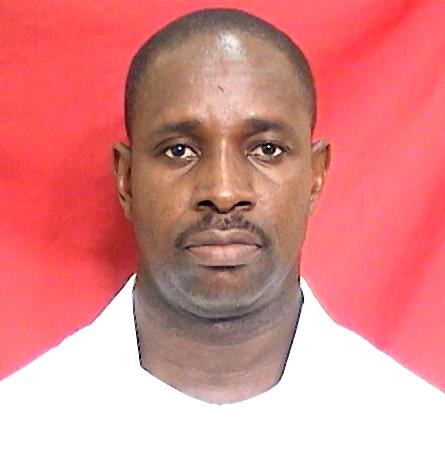
Department of Painting and Sculpture
The researcher's work focuses on the multifaceted examination of African cultural heritage through a blend of academic inquiry and practical application. Their research delves into themes such as the preservation, reimagining, and utilization of cultural artifacts across various domains, including history, education, recycling, and urban development. Through papers that explore the intersection of gender perspectives, materiality in education, and contemporary issues, the researcher aims to understand how cultural heritage is maintained and redefined in different contexts. The goal is to shed light on the ways in which cultural materials contribute to cultural identities and the broader role of culture in daily life, examining both historical and academic dimensions while addressing practical applications in today's globalized world.
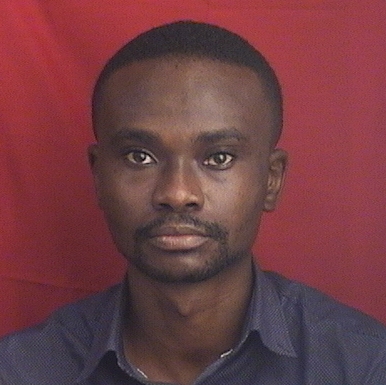
Department of Telecommunications Engineering
The researcher has conducted extensive studies spanning several key areas within construction-related fields. This includes sustainable building design, language strategies within African linguistic communities such as Akan, pandemic impacts on public services and projects, project management techniques, gender issues in construction projects, cultural preservation efforts, environmental materials, education practices, urban development challenges faced by cities like Kumasi, disaster management strategies, material conservation measures, emergency preparedness initiatives, furniture safety standards, and the use of building information modeling principles for effective resource planning. Their research integrates these diverse areas to offer a comprehensive analysis of modern construction practices and their societal impacts across various domains and contexts.
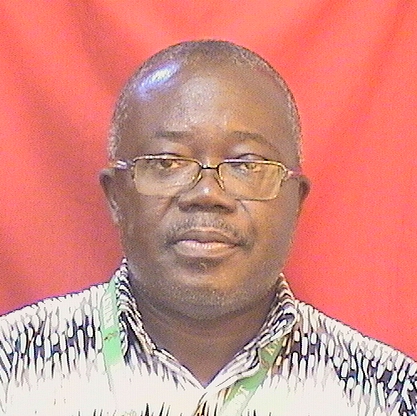
Department of Computer Engineering
The researcher has made significant contributions to technology advancement across diverse domains, particularly in developing robust methodologies and applications that address complex challenges in agriculture, telecommunications, energy systems, and health sciences. Their work spans themes such as pesticide control strategies, image retrieval and classification techniques, VLSI testing methods, energy management practices, smart grid solutions, and wireless sensor networks. The researcher has introduced innovative approaches to image processing, test cost reduction techniques, advanced network technologies, efficient algorithms for power forecasting, and neural network evaluations, all of which have practical applications across various industries. Their comprehensive research integrates methodologies from multiple fields, demonstrating a holistic approach to technological innovation and its real-world impact.
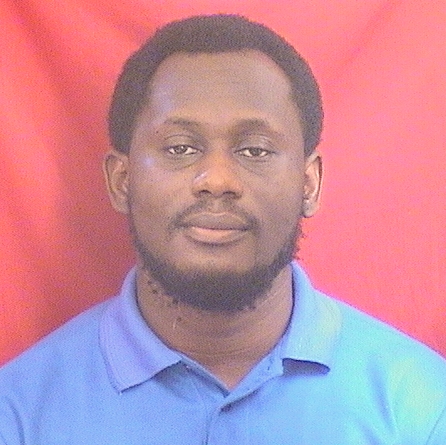
Department of Telecommunications Engineering
The researcher has made significant contributions across multiple areas of wireless communication technology within the domain of physical sciences. Their work extends from advancements in antenna design, such as compact cross-shaped and circularly polarized antennas, to innovations in large-scale MIMO systems optimized for efficiency and performance. They have also explored vehicular ad hoc networks (VANETs) through heterogeneous architectures that leverage reference architectures like DSRC/LTE. Their research on radio frequency integrated circuit design highlights advancements in massive MIMO systems, while their work on software-defined networks (SDNs) and 5G technologies addresses the challenges of network slicing, scalability, and spectral efficiency improvements. Additionally, they have contributed to optimization models for vertical handover decision-making, enhancing mobility and handover capabilities in heterogeneous DSRC/LTE networks. Their comprehensive approach integrates diverse technological areas, showcasing a cohesive effort in advancing wireless communication across various domains.
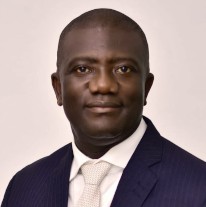
Department of Supply Chain and Information Systems
The researcher investigates how information technology influences user behavior and system adoption in domains such as banking, healthcare, education, and supply chain management. They examine the role of technology in enhancing customer service quality, fostering loyalty, and driving sustainable practices, particularly in contexts where these technologies are crucial for performance and resilience.
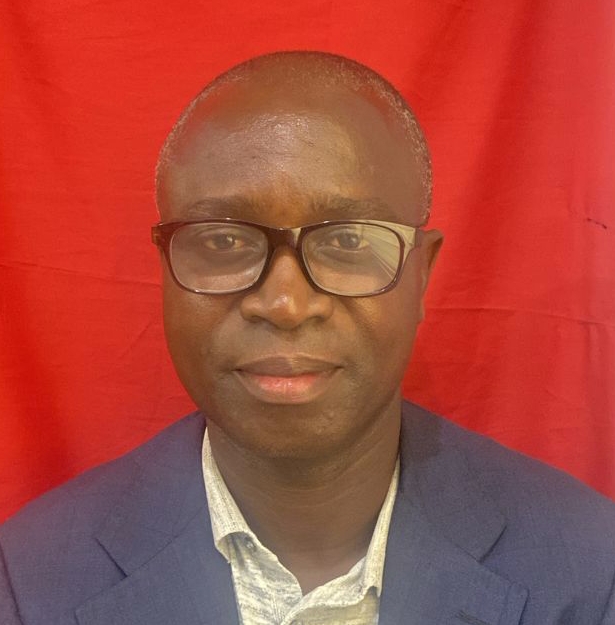
Department of Mathematics
The researcher primarily investigates theoretical questions in quantum gravity, focusing on understanding spacetime at the most fundamental level.
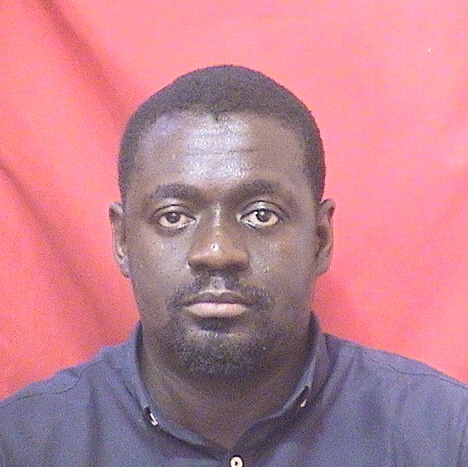
Department of Petroleum Engineering
The researcher's work in physical sciences focuses on innovative techniques for energy storage and flow measurement, which are applied across diverse fields such as oil recovery and reservoir characterization. Techniques like non-intrusive sensing and supervised machine learning are central to advancing methods in hydrocarbon exploration and reservoir simulation. The research emphasizes the practical application of these technologies to address challenges in energy forecasting, geophysical analysis, drilling, corrosion inhibition, thermochemical processes, hydraulic fracturing, and more.
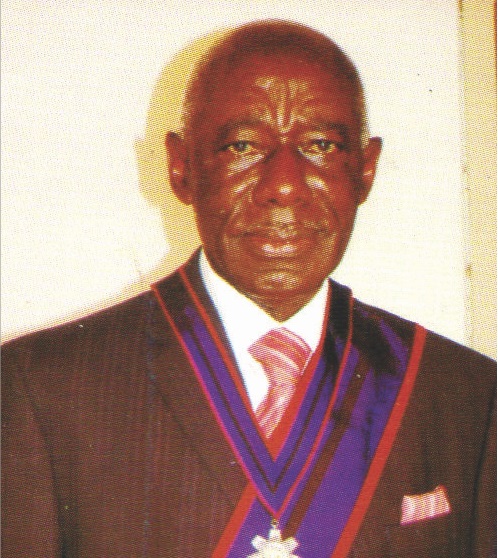
Department of Pharmacognosy
The researcher investigates allelopathy—plant interactions mediated by chemical potentials—and its applications across various domains. From natural to synthetic perspectives, they examine how plants affect each other, from garden studies to soil dynamics, and their role in nutrient cycling and host-parasite interactions. Their work underscores the importance of understanding these interactions for advancing agricultural practices, environmental management, and health through plant-based applications.
Department of Agroforestry
The researcher's research focuses on advancing sustainable agricultural practices, particularly through intercropping systems and land management strategies. They emphasize improving plant and soil health, integrating agroforestry methods, addressing environmental factors such as heavy metals, and exploring sustainable resource use by farmers. The work combines empirical evidence with theoretical models to address challenges in optimizing agricultural sustainability across diverse ecosystems.
Department of Painting and Sculpture
The researcher's work centers on advancing computational approaches to predict protein function through interdisciplinary research combining computer science with biological sciences. Methods such as graph algorithms and tensor networks are employed within the framework of quantum computing for solving intricate equations relevant to protein structure. Additionally, machine learning techniques like deep learning are applied to enhance predictions in brain-computer interfaces and other complex biological problems. The integration of graph theory and reinforcement learning further elevates their approach, enabling more accurate and efficient function prediction across diverse biological contexts.
Department of Agricultural Economics, Agribusiness and Extension
The researcher's work is a comprehensive exploration of environmental, social, economic, technological, policy, and educational dimensions in coastal and maritime systems across African contexts. Through papers on tropical cyclones, coastal dynamics, land-use changes, water resources, and socio-economic impacts, the focus shifts from natural processes to human adaptation and governance. The integration of remote sensing, satellite imagery, UAVs, and hydrology highlights advancements in monitoring and management, while policy insights guide adaptive strategies for climate change. Land rights, erosion, and waste management underscore legal and sustainable practices. Economic studies on productivity and resource allocation provide frameworks for improving development. Each theme is interconnected, emphasizing the need for a holistic approach to address challenges like coastal vulnerability, eroded shorelines, and subsidence in African regions.
Department of Fisheries and Watershed Management
The researcher has focused on advancing aquaculture practices, particularly targeting Nile Tilapia (Oreochromis niloticus) for improved growth, sustainability, and food security. Their work encompasses dietary supplementation strategies, microbial community analysis, physical and biochemical adaptations, and environmental impacts, all aimed at enhancing productivity and resilience in various aquaculture systems, including aquaponics, hydroponics, and aquabiotics.