KNUST Research Atlas is currently in active Beta. Report bugs or suggest features to help us improve!
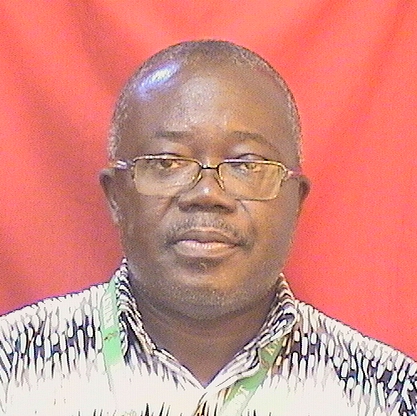
Kwame Osei Boateng
The researcher has made significant contributions to technology advancement across diverse domains, particularly in developing robust methodologies and applications that address complex challenges in agriculture, telecommunications, energy systems, and health sciences. Their work spans themes such as pesticide control strategies, image retrieval and classification techniques, VLSI testing methods, energy management practices, smart grid solutions, and wireless sensor networks. The researcher has introduced innovative approaches to image processing, test cost reduction techniques, advanced network technologies, efficient algorithms for power forecasting, and neural network evaluations, all of which have practical applications across various industries. Their comprehensive research integrates methodologies from multiple fields, demonstrating a holistic approach to technological innovation and its real-world impact.
Faculty Biography
Prof. Kwame Osei Boateng, appointed Director of IDL from 1st August 2018, holds a Doctorate in Systems Engineering from the Graduate School of Engineering and Science of Ehime University, Japan, Masters in Computer Science from the same university and BSc. (Hons.) degree in Electrical/Electronic Engineering from the University of Science and Technology (now Kwame Nkrumah University of Science and Technology), Kumasi Ghana. During the doctorate studies, Prof. Kwame Osei Boateng was engaged, as a research assistant, in the development of computer programs for laboratory experiments.In the first three years of post-doctoral period, he was involved in R&D activities for the development of computer-aided design and test of very large scale integrated (VLSI) circuits at Fujitsu Laboratories Ltd., Japan, where he worked as a researcher. His duties included the modelling of hardware in the C language and conducting model simulations for the purposes of testing hardware.Since March 2003, Prof. Boateng has been working for Kwame Nkrumah University of Science and Technology as a senior lecturer,later as an associate Professor and currently as a Professor . For six years (2003-2009), he doubled as an ICT consultant and exercised a technical and administrative supervisory role in the design/expansion and maintenance of the university internetwork and information system software development and deployment. He has been an instructor of Cisco Certified Network Associate Curriculum of the KNUST Cisco Academy since 2006. He was the first head of the Department of Computer Engineering from 2007 to 2009. Again he was the head of Department of Computer Engineering from 2011 to 2016, and from February 2016 to July 2018 he was the dean of Faculty of Electrical and Computer Engineering of the College of Engineering.Prof. Boateng has since 2004 supervised the undergraduate final-year project work of about two hundred and fifty (250) students, nineteen (19) second degree theses and three (3) PhD theses. Currently he is supervising another three (3) PhD theses. He has mentored two groups of graduates who took projects to Ghana Multimedia Incubator Centre—one of the groups was able to develop its project into a viable security appliance development company.Prof. Boateng headed the Kumasi Virtual Centre of Information Technology (KVCIT) of the KNUST Institute of Distance Learning (IDL) in the 2010/2011 academic year. He is currently a Lead Facilitator/Course Writer of the Computer Engineering Programme of IDL. He was the Coordinator for the same programme from 2007 to 2010. He was a facilitator for RMIT University/African Virtual University at KNUST from 2004 to 2006.Prof. Boateng has been of service to KNUST, the nation Ghana and the international community. He has been a key role player in attracting and maintaining support from Texas Instruments Inc. (TI) for a period from 2005 to 2017. Within the period TI has supported the Faculty of Electrical and Computer Engineering in facilitating a semester’s study at Texas A & M University for sixteen final-year students and also sponsoring eighteen of our graduates for their Master Degree programmes of study at the same University. Also, as part of capacity building in VLSI Design, the TI-Cadence Microelectronics Laboratory was established. All these activities, together with annual monetary gifts over the period amounted to the tune of over Two Million US Dollars (US$2,000,000). Also, as the University ICT Consultant, He played a role under the leadership of Professor K. Singh, in attracting one of the 5 Regional Tele-Education Centres of the Pan-African e-Network Project of the AU to KNUST. Equipment procured were installed to establish the e-Learning Centre, which has now become an integral part of IDL. The Centre was funded by the government of India to the tune of about Four Hundred Thousand US Dollars (US$400,000).Prof. Boateng was Chairman of Central Undergraduate Admissions Committee from September 2016 to August 2018. He has served as chairman of six (6) other committees (ad-hoc and standing) of KNUST and its Colleges. Additionally, he has served as member on about twenty-four (24) committees (ad-hoc and standing) of KNUST and its Colleges. He has been examination officer at department and faculty levels at different periods of service with KNUST. Furthermore he has served as reviewer for KReF proposal submissions.Prof. Boateng has served as chairman of over seven (7) accreditation panels and member of five (5) accreditation panels, all of the National Accreditation Board of Ghana. He was a member of a team tasked by the National Accreditation Board to prepare a subject benchmark for tertiary education in Computer Engineering in 2016. He was the organiser and main resource person of a UNESCO-sponsored Workshop on e-Content Development for Science and Engineering subjects in April 2005. Prof. Boateng has been a moderator and external examiner for non-affiliates and affiliated institutions of KNUST. He has been the KNUST Representative on the Academic Board of All Nations University College since 2016. Also he was Chairman of Programme Advisory Committee for HND Electrical and Electronic Engineering of Koforidua Polytechnic for two years (2008 – 2010). Again from 2004 to 2009 he was a member of a Team of Experts who prepared a concept paper on ideas and proposals for the setting up of a Research and Education Network (REN) in Ghana. Further at the end of the Annual InterCED Conference on ICT and Economic Development (March 3 – 4 2004), held in Accra, he was among twelve participants selected to draft the conference declaration, which was focused on how to use ICT as a tool for meeting the developmental needs of Africa.Prof. Boateng is a member of the GhIE, IEEE and IEEE Computer Society. He has served on technical programme committee for the 11th IEEE Asian Test Symposium (ATS’02) and IEEE VLSI Test Symposium (VTS). He also served as reviewer for Journal of Science and Technology, Annual International Applied Research Conference, 10th IEEE Asian Test Symposium (ATS’01), and IEEE VLSI Test Symposium (VTS’02). He served as member of technical committee and chair of local arrangements for IEEE International Conference on Adaptive Science and Technology (ICAST 2012). Additionally, he has chaired technical sessions at IEEE International Conference on Adaptive Science and Technology (ICAST 2012); 1st International Conference on Engineering, Science, Technology and Entrepreneurship (ESTE 2015); and 2013 Wireless Telecommunications Symposium (WTS 2013). He was a member of a panel of invited guests assembled to discuss the current state of computing curricula in Sub-Saharan Africa with emphasis on their deficiencies at a post-conference event held after the International Conference on Computing and IT Research (August 1-3 2010).Prof. Boateng was a member of Local Organising Committee and Tutor, ICTP Microprocessor Laboratory African Regional Course on Advanced VLSI Design Techniques held on July 25 – August 5 2005. He was a tutor at this training workshop; and again he served as an instructor at ICTP-KNUST Microelectronics Workshop on FPGA and VHDL for Research and Training in Africa held in Ghana on November 24 – December 12 2003.
Advanced Breast Cancer Therapies
Advancements in PLL and VCO Technologies
Cancer Immunotherapy and Biomarkers
Chaos-based Image/Signal Encryption
Cognitive Radio Networks and Spectrum Sensing
Cultural Industries and Urban Development
Energy Efficient Wireless Sensor Networks
Energy Load and Power Forecasting
Fractal and DNA sequence analysis
Genetics, Bioinformatics, and Biomedical Research
Human Mobility and Location-Based Analysis
Image and Signal Denoising Methods
Image Retrieval and Classification Techniques
Insect Pest Control Strategies
Integrated Circuits and Semiconductor Failure Analysis
IoT and Edge/Fog Computing
Mechanical Failure Analysis and Simulation
Network Security and Intrusion Detection
Neural Networks and Applications
Opportunistic and Delay-Tolerant Networks
Pesticide Residue Analysis and Safety
Power System Reliability and Maintenance
Power Systems and Technologies
RNA and protein synthesis mechanisms
Security in Wireless Sensor Networks
Smart Grid Energy Management
Traffic Prediction and Management Techniques
Vehicle Noise and Vibration Control
VLSI and Analog Circuit Testing
Wireless Signal Modulation Classification
DDOSNAS: Efficient Neural Architecture Search With Weight Sharing for Ddos Attack Detection
Energy‐Aware RF Fingerprinting for Device Identification in Ultra‐Low‐Power IoT Systems
Open AccessWavelet‐Based Feature Extraction for Efficient High‐Resolution Image Classification
Open AccessA Real-Time Task Balancing Strategy for IoT Networks Using Ant Colony Optimization
Open AccessAN APPLICATION OF RESIDUE NUMBER SYSTEM (RNS) TO MOLECULAR BIOLOGY
Open AccessResidue Number System (RNS) Sequence Comparison and Mutation (Error) Analysis
Open AccessAn Application of Residue Number System (RNS) to Molecular Biology
Open AccessTHE GENETIC CODE: A CASE OF RESIDUE NUMBER SYSTEM (RNS)
Open AccessA Review of Computational Load-Balancing for Mobile Edge Computing
Knowledge, perception, and pesticide application practices among smallholder cocoa farmers in four Ghanaian cocoa-growing regions
Open AccessDesign of a fully integrated VHF CP‐PLL frequency synthesizer with an all‐digital defect‐oriented built‐in self‐test
Open AccessImidacloprid and Bifenthrin Residues in Cocoa Beans from Four Major Cocoa-Growing Regions of Ghana
Forecasting Electricity Load of Network Infrastructure Sharing Mobile Sites in Ghana
Detection of Cracks in Crankshaft Using an Intelligent Audible Sound-Based Non-Destructive Method
EMPIRICAL MOBILE NETWORK TRAFFIC PREDICTION: STATISTICAL COMPARATIVE PERFORMANCE ANALYSIS USING MIMO RBFN NETWORK MODEL
Prediction of Telecommunication Network Outage Time Using Multilayer Perceptron Modelling Approach
Normal Crankshaft
Open AccessPSTRM: Privacy-aware sociopsychological trust and reputation model for wireless sensor networks
uckbs1.wav
Open Accessuckbs17.wav
Open Accessuckbs8.wav
Open Accessuckas10.wav
Open Accessuckcc1.wav
Open Accessuckcc14.wav
Open Accessuckas14.wav
Open Accessuckcs7.wav
Open Accessuckas4.wav
Open Accessuckcs8.wav
Open Accessuckcc4.wav
Open Accessuckbs23.wav
Open Accessuckac13.wav
Open Accessuckbs20.wav
Open Accessuckbc1.wav
Open Accessuckcs14.wav
Open Accessuckcs4.wav
Open Accessuckac15.wav
Open Accessuckcs1.wav
Open Accessuckbc7.wav
Open Accessuckcs11.wav
Open Accessuckbs25.wav
Open Accessuckac6.wav
Open Accessuckas13.wav
Open Accessuckcc12.wav
Open Accessuckbs9.wav
Open Accessuckac7.wav
Open Accessuckbs24.wav
Open Accessuckcs17.wav
Open Accessuckas11.wav
Open Accessuckbs14.wav
Open Accessuckas15.wav
Open Accessuckbs4.wav
Open Accessuckas8.wav
Open Accessuckcs3.wav
Open Accessuckcs15.wav
Open Accessuckac12.wav
Open Accessuckbc4.wav
Open Accessuckas12.wav
Open Accessuckas1.wav
Open Accessuckbc5.wav
Open Accessuckbs13.wav
Open Accessuckbc2.wav
Open Accessuckbs22.wav
Open Accessuckcs20.wav
Open Accessuckbs16.wav
Open Accessuckcs6.wav
Open Accessuckbc6.wav
Open Accessuckas9.wav
Open Accessuckac14.wav
Open Accessuckcs13.wav
Open Accessuckcs18.wav
Open Accessuckas3.wav
Open Accessuckas6.wav
Open Accessuckac11.wav
Open Accessuckbs10.wav
Open Accessuckbs2.wav
Open Accessuckcc5.wav
Open Accessuckas20.wav
Open AccessEvaluation of Single-Input Single-Output Radial Basis Function Neural Network in Modelling Empirical 4G Traffic
Forecasting Abilities of MIMO and SISO Neural Networks: A Comparative Study using Telecommunication Traffic Data
Untitled
Open AccessInvestigating the influence of seasonality and structural breakpoint on telecommunication network traffic prediction
A Comparative Analysis of Telecommunication Network Traffic Forecasting: A Three Model Approach
Reducing secondary user collisions in TV White Space through a Geolocation Database Middleware
The adoption of socio‐ and bio‐inspired algorithms for trust models in wireless sensor networks: A survey
An algorithm for micro-load shedding in generation constrained electricity transmission network
An algorithm for micro-load shedding in generation constrained electricity distribution network
Tamper‐aware authentication framework for wireless sensor networks
Optimizing the effects of load-shedding through micro-load management in generation constrained power system
A Retrofit Design Science Methodology for Smart Metering Design in Developing Countries
Comparative Analysis of Energy Usage of Hash Functions in Secured Wireless Sensor Networks
Open AccessStatistical analysis of outage time of commercial telecommunication networks in Ghana
DYNAMIC INTELLIGENT MEAN FILTER FOR IMPULSE NOISE SUPPRESSION IN 2D I MAGES
Improving the Effectiveness of the Median Filter
A Smith-Waterman Algorithm Accelerator Based on Residue Number System
BIST-aided scan test - a new method for test cost reduction
Studies on Design,Test and Diagnosis of Logic Circuits
Diagnosing Delay Faults in Combinational Circuits under the Ambiguous Delay Model
A Method of Generating Tests with Linearity Property for Gate Delay Faults in Combinational Circuits
A Method of Test Generation for Iterative Logic Arrays (特集:VLSIプロセッサ及び新アーキテクチャLSI技術,一般)
Multiple Gate Delay Fault Diagnosis Using Test-Pairs for Marginal Delays
Department of Computer Engineering
Kwame Nkrumah University of Science and Technology