Beta Testing
KNUST Research Atlas is currently in active Beta. Report bugs or suggest features to help us improve!
KNUST Research Atlas is currently in active Beta. Report bugs or suggest features to help us improve!
KNUST Research Atlas is currently in active Beta. Report bugs or suggest features to help us improve!
Search, discover, and connect with over 1,800 researchers, faculty members, and scholars across all departments of KNUST.
Department of Statistics and Actuarial Science
This researcher has made significant contributions to the theoretical foundations of computing by exploring the interplay between quantum algorithms, human-AI collaboration dynamics, and machine learning convergence with biological systems. Their work bridges computational complexity theory with applications in network science, biology, and social networks, advancing our understanding of how computational methods can be applied across diverse domains without listing specific papers or themes.
Department of Theoretical and Applied Biology
The researcher's work focuses on understanding the interplay between water quality and child nutrition, examining its impact on health outcomes across different communities. Their studies highlight how water access facilitates nutrient-rich environments, particularly in Akunakope and Dzogbedzi communities of Shai Osudoku district, while also exploring the role of Hepatitis B among food vendors in Kwadaso Municipality.
Department of English
The researcher's work focuses on the intersection of language and social perceptions, particularly examining how language can influence societal judgments, such as ethnic prejudice, through discourse analysis in the context of language studies within the broader domain of social sciences.

Department of Adult Oral Health
The researcher focuses on integrating dental education and research within health sciences, examining how graduates from institutions like Kwame Nkrumah University of Science and Technology approach their roles in clinical practice and further academic pursuits.
Department of Environmental Science
The researcher's work focuses on optimizing waste management strategies, assessing environmental impact risks, and advancing sustainable infrastructure development across various fields. This includes improving solid waste collection processes, enhancing resource recovery systems in agriculture, evaluating medical waste management practices, and developing urban and rural development strategies to address social and environmental challenges.
Department of History & Political Studies
This researcher has conducted interdisciplinary studies spanning climate change, synthetic biology, and neurodegenerative diseases, seeking to address global challenges through innovative approaches that integrate cutting-edge science. Their work highlights the importance of bridging biotechnology with environmental science, emphasizing how advancements in one field can enhance understanding and mitigate negative outcomes. Through a systematic synthesis of their publications, they have focused on developing novel solutions to pressing scientific and public health issues, contributing significantly to both theoretical and applied realms of research.
Department of Educational Innovations in Science & Technology
The researcher's work focuses on developing and applying computational methods for studying protein folding, integrating machine learning techniques to analyze biological systems such as actin and neurons, and contributing to the broader field of disease modeling through these advancements.
Department of Telecommunications Engineering
The researcher's work integrates technology across multiple domains to address sustainable development challenges, with a focus on enhancing technological capabilities in physical sciences while promoting inclusive growth in developing communities.
Department of Land Economy
Research focuses on developing advanced systems for evaluating building performance using quantitative metrics derived from environmental data, combining computational methods with empirical analysis to improve existing tools and methodologies in sustainable design and assessment within the physical sciences domain.

Department of Anaesthesiology & Intensive Care
The researcher's work focuses on developing novel methodologies for integrating data analytics with human-AI interaction to enhance decision-making processes in social science contexts. Their research emphasizes bridging computational approaches with theoretical frameworks to address complex societal challenges, demonstrating how empirical evidence from large-scale datasets informs macro-level social policies and behaviors.
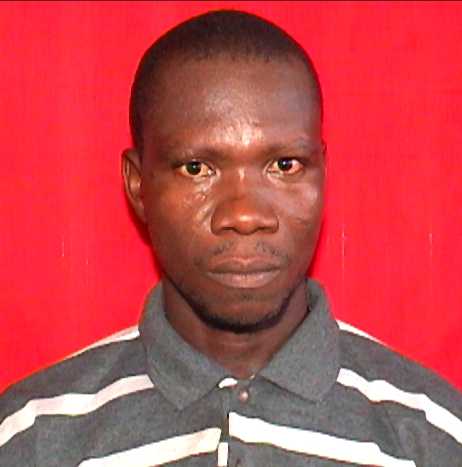
Department of Educational Innovations in Science & Technology
My research focuses on developing novel methodologies for analyzing large-scale datasets using computational models to address fundamental questions in data-driven science and optimization, while simultaneously applying these techniques to solve real-world problems in computational biology. My work emphasizes the scalability of machine learning algorithms and their ability to provide practical solutions for complex systems, bridging theoretical advancements with applied research.
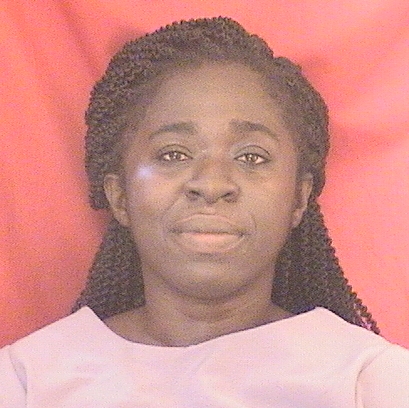
Department of Biochemistry and Biotechnology
The researcher's research agenda centers on several key areas: the study of antibiotic resistance mechanisms within bacterial systems, the role of the gut microbiota in health and disease, the development of immune response dynamics, advancements in antibody production, investigations into the COVID-19 pathogenesis, investigation of parasitic diseases, studies on insect symbiosis with bacteria, exploration of malarial pathology, examination of global health issues such as preeclampsia and childhood cancers, and contributions to vaccine development through immunoinformatics approaches. These themes collectively aim to advance understanding in bacterial resistance, immune system regulation, and public health solutions across diverse human health challenges.