Beta Testing
KNUST Research Atlas is currently in active Beta. Report bugs or suggest features to help us improve!
KNUST Research Atlas is currently in active Beta. Report bugs or suggest features to help us improve!
KNUST Research Atlas is currently in active Beta. Report bugs or suggest features to help us improve!
Search, discover, and connect with over 1,800 researchers, faculty members, and scholars across all departments of KNUST.
Department of Civil Engineering
The researcher has made significant contributions across diverse research areas, focusing on the intersection of zoonotic diseases in public health, materials science in construction-related fields, and critical thinking development in education. Their work encompasses assessing student awareness of zoonotic infections, investigating materials properties for roofings, and examining perceptions of academic performance in integrated science education.
Department of Theoretical and Applied Biology
The researcher's work focuses on integrating ecological and evolutionary studies across various domains within life sciences, emphasizing the intricate interplay between plant species diversity, environmental factors, and host-parasite interactions. Their research examines how human disturbances and environmental stressors shape community structure, particularly in diverse ecosystems such as forest reserves and park areas. Additionally, they investigate parasitic infections and their distribution among species like baboons and warthogs, shedding light on host-parasite dynamics. The researcher also studies the health risks associated with exposure to trace metals from water sources, highlighting vulnerabilities in human populations within ecological contexts. Their work bridges ecosystems, focusing on how living organisms adapt and respond to environmental pressures, offering insights into evolutionary biology and ecological resilience.
Department of Animal Science
The researcher's work centers on advancing understanding of animal welfare, nutritional considerations, and agricultural practices in livestock, particularly focusing on ruminants such as rabbits and chickens. Their research encompasses several key areas: seed choice in ruminants (e.g., effects of false yam in broiler diets), behavioral studies of indigenous beef cattle, and the application of plants like moringa oleifera for agricultural purposes. The researcher investigates stressors on animal growth and reproductive performance, evaluates dietary choices in ruminants, and explores the use of plants in animal nutrition.
Department of Fisheries and Watershed Management
The researcher has focused on integrating conservation practices with sustainable aquaculture in Ghana, examining how land-based strategies can enhance biodiversity and ecosystem health while ensuring water quality remains optimal for aquaculture. Their work also delves into the nutritional aspects of Nile tilapia (Oreochromis niloticus) across diverse environmental inputs, contributing to understanding feed intake, growth performance, and sensory characteristics. Furthermore, the researcher explores the broader implications of these practices on broader social and economic impacts, including microfinance initiatives and financial inclusion efforts in African contexts, while also studying the ecological behavior of aquatic species such as the freshwater clam Galatea paradoxa.

Department of Obstetrics & Gynaecology
The researcher focuses on developing advanced statistical models and computational tools to predict public health outcomes, particularly emphasizing the use of hierarchical Bayesian models and big data analytics for analyzing environmental and spatial-temporal patterns affecting disease incidence and exposure levels. Their work integrates rigorous methodological innovations with applied research to address critical public health challenges, leveraging cutting-edge computational techniques to understand complex human-Environment Interaction processes.
Department of Planning
This researcher's work is centered on advancing the field of sustainable development across multiple thematic dimensions, encompassing urban and rural contexts, environmental challenges, social equity, waste management, education, disaster resilience, and energy sustainability. Their research spans domains such as life sciences, physical sciences, social sciences, and engineering, with a focus on integrating innovative approaches to address global issues. Key themes include the role of urban agriculture in sustainable cities, the interplay between urbanization and environmental challenges, climate change impacts on agricultural systems, the urgent need for land-use planning, disaster management strategies, public policy failures, and the importance of social justice through education and microfinance. Their work emphasizes integrating sustainable development across diverse sectors to foster equitable and resilient communities.
Department of Chemistry
This research examines the relationship between household water access and child nutrition, focusing on the role of water sources in Ghanaian households. Studies highlight both physical access to clean water and potential health risks associated with poor water quality, underscoring the importance of ensuring equitable access to clean water for children.
Department of Marketing and Corporate Strategy
This researcher's work bridges multiple mathematical disciplines—algebraic topology, geometric group theory, homotopy theory, manifolds, category theory, representation theory, algebraic geometry, differential geometry, and non-linear dynamics—to address foundational questions in theoretical physics. Their research integrates tools from these areas to explore complex phenomena in fields ranging from topological quantum field theories to the geometric underpinnings of physical space-time structures.
Department of Fisheries and Watershed Management
The researcher conducts interdisciplinary studies at the intersection of plant biology, microbiology, and applied chemistry, focusing on key processes such as plant-microbe interactions in soil communities, genomic investigations into bacterial ecosystems, and developmental plant tissue culture. Their work explores the effects of transgenic oilseed rape species, their interactions with bacteria, and plant health under herbicide stress, employing a blend of biological analysis and novel chemical frameworks to advance our understanding of these systems.
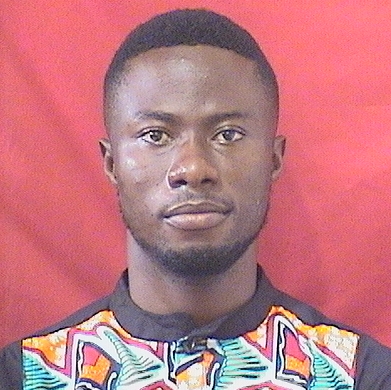
Department of Fisheries and Watershed Management
This researcher's work focuses on advancing understanding through empirical studies that bridge social sciences with financial systems. Their research encompasses themes such as identifying systemic risks, mitigating fraudulent activities, ensuring regulatory compliance, and promoting sustainability within complex financial environments. Methodologically grounded in data analysis techniques enhanced by big data integration, their work aims to uncover patterns and mechanisms that collectively enhance the resilience and ethical governance of financial entities across diverse domains.
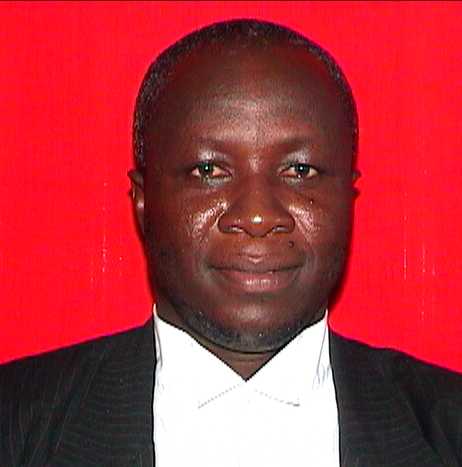
Department of Public Law
The researcher focuses on developing innovative methodologies for analyzing complex networks and applying advanced computational techniques to study dynamic systems across diverse disciplines. Their work emphasizes interdisciplinary approaches that combine graph theory with machine learning to address challenges in social, biological, and technological networks. Recent publications highlight advancements in network modeling and real-time data processing strategies, underscoring the researcher's commitment to advancing understanding through collaborative efforts.
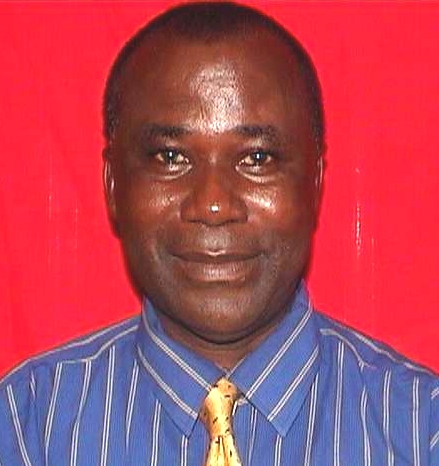
Department of Petroleum Engineering
The researcher's work integrates themes of toxic organic Pollutants Impact in aquatic ecosystems and Mining and Resource Management within Physical Sciences. Through high-resolution records of POPs in Lake Liangzi, they investigate long-term effects on aquatic life, while their focus on resource management explores sustainable practices for extracting and managing extracts, contributing to a unified understanding of environmental impacts from both ecological and economic perspectives.