KNUST Research Atlas is currently in active Beta. Report bugs or suggest features to help us improve!
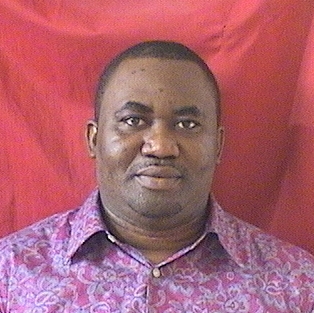
Stephen Appiah Takyi
This researcher's work is centered on advancing the field of sustainable development across multiple thematic dimensions, encompassing urban and rural contexts, environmental challenges, social equity, waste management, education, disaster resilience, and energy sustainability. Their research spans domains such as life sciences, physical sciences, social sciences, and engineering, with a focus on integrating innovative approaches to address global issues. Key themes include the role of urban agriculture in sustainable cities, the interplay between urbanization and environmental challenges, climate change impacts on agricultural systems, the urgent need for land-use planning, disaster management strategies, public policy failures, and the importance of social justice through education and microfinance. Their work emphasizes integrating sustainable development across diverse sectors to foster equitable and resilient communities.
Faculty Biography
Dr. Stephen Appiah Takyi is a planning educator whose research interest is in the area of Environmental Planning, Sustainability, Urban Planning and Development Policy Planning. The complex interrelationship between economic, social and environmental goals makes it necessary to have scholars with strong academic background and research interest that focus on economic, social and environmental policy discourse. Dr. Takyi’s approach to research acknowledges the complexity of societal problems in our world today. He therefore emphasizes on the need to approach complex societal problems from a multidisciplinary and interdisciplinary perspective. The academic background and stream of work of Dr. Takyi at the undergraduate level focused on Development Policy Planning with emphasis on economic planning. Dr. Takyi’s specialization at the master’s degree level was in the area of urban and regional planning whilst his doctoral research focused on environmental planning with the scope being in the area of park planning and management. Dr. Takyi holds a bachelor’s degree in planning specializing in the Development Planning from the Kwame Nkrumah University of Science and Technology, Kumasi, Ghana. He also holds a master’s degree in urban and Regional Planning from Queen’s University, Kingston, Ontario and a Ph.D. in Natural Resource and Environmental Studies from the University of NorthernIn terms of work experience, Dr. Takyi taught Introduction to Planning and Environmental Impact Assessment at the UNBC School of Environmental Planning from 2012 to 2016. Within the same period, he was in charge of the editorial desk of the Journal of Architectural and Planning Research (JAPR), a scholarly blind refereed journal which has published for over 35 years. Stephen also worked as a Writing Tutor at the UNBC Academic Success Center. Additionally, Dr. Takyi has held a number of positions at the consultancy and administrative level. In the area of communication, Dr. Takyi worked as a Marketing and Communication Assistant at the Queen’s University Marketing and Communication Department from 2009 to 2011. This coupled with his experience in public consultation has contributed immensely to my strong communication skills. Dr. Takyi is currently a Senior Lecturer at the Department of Planning, Kwame Nkrumah University of Science and Technology. Through his work as a consultant, Dr. Takyi has worked with local government institutions and international agencies such as the World Bank, Newmont Ghana Gold Limited, USAID, Solidaridad West Africa and District, Municipal and Metropolitan Assemblies in Ghana. In 2025, Dr. Takyi was part of a team of consultants who conducted a perception survey for Newmont Ghana Gold Limited. He also served as a consultant for the mid-term evaluation of the next generation cocoa youth program (MASO) and the assessment of the USAID/Ghana’s improving productivity and income of maize farmers in the SADA Region (IPIMFS). Dr. Takyi has enormous experience in the preparation of strategic plans. He was among a team of consultants who prepared a Strategic Plan for the Fapim Company Limited, the KNUST School of Graduate Studies and the International Programmes Office of KNUST. He has taught and conducted research on Environmental Sustainability, Environmental Impact Assessment, Strategic Planning, Development Policy Planning, Spatial Analysis, Urban Sustainability and Monitoring and Evaluation. He is also a resource person for the AACE Evaluation Training Institute.Dr. Takyi believes in educating the next generation of scholars from an interdisciplinary viewpoint and method. This must be approached by trying to link the complex relationship between economic, social, and environmental goals. Their complexity must be acknowledged and students must be given the necessary skills to negotiate and reconcile these complex goals in the decision-making process. For the society to fully benefit from the expertise of planners, planning programs must introduce and encourage young professionals to shift from the traditional technical role of planners to become advocates, change agents and sometimes politicians based on the context. This will facilitate the ability for planning scholars to link their research outcomes and findings to solving societal problems whilst at the same time informing policy making decisions. Stephen, therefore, focuses on training the next generation of planners in an ideal societal laboratory where students learn how to apply and test particular approaches to planning and community development.In the area of research, Dr. Takyi has published over 70 articles in high impact peer review journals. His work on “Comparative Study of Capital City Elements: The Case of Ghana and Nigeria” received the 2017 African Geographical Review second best paper ward. In 2019, he won the Ghana Institute of Planners best candidate award. Dr. Takyi also received the KNUST Research Fund in 2020 as the Principal Investigator. Dr. Takyi also won an award at 2022 Science and Communications Awards organized by Conversation Africa. In 2023, Dr. Takyi was elected as the Vice President of the Ghana Institute of Planning. Towards this end, Stephen is currently focusing his research on land grabbing in the Ghanaian context, nature-based solutions in urban centers in Ghana, land conflicts in urban centers and environmental planning in the sustainability discourse. Stephen has supervised three (3) Ph.D. students, five (5) MPhil students, 40 MSc. students and 88 undergraduate students.
Agriculture and Rural Development Research
Climate change impacts on agriculture
Cocoa and Sweet Potato Agronomy
Conservation, Biodiversity, and Resource Management
Consumer Retail Behavior Studies
COVID-19 epidemiological studies
Disaster Management and Resilience
Diverse Aspects of Tourism Research
Energy and Environment Impacts
Environmental and Social Impact Assessments
Environmental Education and Sustainability
Flood Risk Assessment and Management
Global Urban Networks and Dynamics
Heavy metals in environment
Hydropower, Displacement, Environmental Impact
Land Rights and Reforms
Land Use and Ecosystem Services
Marine and Offshore Engineering Studies
Microfinance and Financial Inclusion
Migration and Labor Dynamics
Municipal Solid Waste Management
Online and Blended Learning
Poverty, Education, and Child Welfare
Public-Private Partnership Projects
Sustainability in Higher Education
Urban Agriculture and Sustainability
Urban and Rural Development Challenges
Urban Green Space and Health
Urban Heat Island Mitigation
Urban Transport and Accessibility
Reimagining land use planning: mixed residential–agricultural land use as a pathway to sustaining agriculture in Ghanaian cities
Unmasking the realities: issues and experiences of government large-scale land acquisition in Ghana
Open AccessSecuring the future of urban agriculture: Legislative reform and planning for sustainability in sub-Saharan African cities
Open AccessGhana’s educational system in the digital age: an assessment of the responsiveness of Junior High School education to computer-based learning
Co-governance for green infrastructure preservation: Collaborative strategies in customary land tenure cities of Sub-Saharan Africa
Pathways to just conservation: A crisp-set qualitative comparative analysis of environmental defender mobilization in conservation conflicts
Open AccessCapital city functions and sustainable city nexus: Sustainability analysis of major regional capital cities in Ghana
Open AccessThe functionality of urban green spaces in the greater Kumasi Metropolis of Ghana: categorisation of green spaces, prospects, challenges and implications for sustainable management
Open AccessNon-compliance with planning regulations and their implication for the achievement of the sustainable development goals: insights from physical planners in the Ashanti Region of Ghana
Access politics in an emerging economy: evidence from central Kumasi
Kumasi was called the garden city – but green spaces are vanishing in a clash of landuse regulations
Why are ecologically sensitive areas (ESAs) in African cities encroached on? Unveiling the encroachers' outlook
Open AccessUrban planning and the protection of green spaces for climate change adaptation in Ghana and Kumasi. Challenges and strategies in Kumasi's climate adaptation journey
For or against sustainable development? A geospatial analysis of the state of green space ecosystems in West Gonja, Ghana
Situating the compliance with land use regulations within the context of sustainable city development: Lessons from Ho Municipality of Ghana
Open AccessEveryday Governance of NbS: How Local Knowledge, Customary Authorities and State Agencies Co-produce Riparian Restoration in the Densu River Basin
Open AccessPractices in Central Kumasi: Inherent or Objective?
From engineered landfill to uncontrolled dumpsite: situational analysis, extent of buffer zone encroachment and challenges of the Oti Landfill, Kumasi, Ghana
Unveiling Ghana's urban tapestry: satellite-based analysis of Tamale city's spatial expansion and land surface temperature (LST) dynamics
Problematizing street vending: The uncanniness of a disembodied urban policy
Exploring the street economy in African cities: A review of practices, regulatory policies, and challenges of urban governance in Ghana
Urban sprawl, urban form, and urban land use pattern: examining urban planning response to the causes and effects of urban sprawl in Kumasi, Ghana
Spatiality of urban sprawl in the Greater Kumasi Metropolis of Ghana: a spatio-temporal analysis
Planning in Ghana: analysis of the various forms of professional misconduct from the perspective of professional planners
Spatial location of fuel retail outlets and their level of compliance with regulations: lessons from the Kumasi Metropolitan area
Correction to: Investigating the purposefulness of development planning in Ghana through a political economy lens
Open AccessInvestigating the purposefulness of development planning in Ghana through a political economy lens
Ghana: Street vending helps migrants to survive in Accra, but it’s illegal – a solution for all is needed
Urban planning failure in the protection of ecologically sensitive areas: factors that contribute to the ineffective management of ecological resources in Kumasi
Ghana: Kumasi city’s unplanned boom is destroying two rivers – sewage, heavy metals and chemical pollution detected
Demographic Characteristics of Population with Affinity for Wetland Settlements in Ghana
The Effects of Oil Rig Decommissioning on the Livelihoods of Fishermen: Lessons from the Saltpond Oil and Gas Field, Ghana
Open AccessBuilding resilience to flood risks via green space planning in urban Ghana
Sustainable functional roles of ecologically sensitive areas in the Greater Kumasi Metropolis of Ghana: exploring local perceptions and attitudes from a socio-economic purview
Spatio-temporal analysis and level of awareness of Ghana’s buffer regulations on ecologically sensitive areas: lessons from the Kumasi Metropolis
Space use in Central Business District of emerging economies: Regulation or rationale?
Open AccessRethinking sustainable urban management: Effects of urbanization on the socio-spatial structure of the Tamale Metropolis
Open AccessMaking a living out of illegality: effects of street vending on the livelihoods of street vendors in the central business district of Accra
The effects of urban sprawl on the livelihoods of settler communities: lessons from selected municipalities in Ghana
Creating eco-consciousness from the perspective of students: an assessment of the level of environmental literacy among students in Kumasi
Mining-induced displacement and resettlement in Ghana: an assessment of the prospects and challenges in selected mining communities
Insouciant, powerless or helpless: An assessment of the factors that contribute to the non-compliance with the regulations that protect ecologically sensitive areas in the Greater Kumasi Metropolis
Open AccessThe fate of urban green spaces: Assessment of the ownership, availability and conditions of parks in Accra, Ghana
Accra is congested, but relocating Ghana’s capital is not the only option
Review of: "Participatory budgeting for public involvement in environmental sustainability at a Thai university"
Open AccessBeyond just politics and space: A literature review
Open AccessAchieving sustainable cities: analysis of the factors that influence compliance with telecommunication masts siting standards in Ghana
Open AccessUrban parks under siege: the politics and factors influencing park rezoning and decline in urban Ghana
Open AccessUrbanization against ecologically sensitive areas: effects of land use activities on surface water bodies in the Kumasi Metropolis
Open AccessGhana’s efforts to employ young people and regrow forests could work better
Yes, Africa’s informal sector has problems, but the answer isn’t to marginalise it
The dilemma of flood occurrence in Accra: climate change or poor land use planning and practices?
From informal settlements to environmentally sustainable communities: Lessons from Kumasi
A review of experimental informal urbanism initiatives and their implications for sub-Saharan Africa's sustainable cities’ agenda
Location of forest reserves and sustainable natural resource management: evidence from a Ghanaian case study
Examining the Relationship Between Demographic Characters of Green Space Users and the Categorization of Green Spaces
Open AccessA view of urban sprawl through the lens of family nuclearisation
A View of Commercial Motorcycle Transportation in Sub-Saharan African Cities Through the Sustainable Development Lens
Global urban sprawl containment strategies and their implications for rapidly urbanising cities in Ghana
Open AccessLand governance in Ghana and its implications for inclusive city development
The Role of Green Spaces in the Sustainability Discourse: Lessons from the City of Kumasi
Open AccessUrban informalities in sub-Saharan Africa (SSA): A solution for or barrier against sustainable city development
“Going Green” Rhetoric or Reality: An Assessment of the Prospects and Challenges of Ghana’s Youth in Afforestation Programme
Open AccessUrbanizing with or without nature: pollution effects of human activities on water quality of major rivers that drain the Kumasi Metropolis of Ghana
Assessing the level of compliance of telecommunication masts to locational planning standards towards harmonious and orderly city growth
Exploring the effects of rapid urbanization on wetlands: insights from the Greater Accra Metropolitan Area, Ghana
Restoring the school garden programme in Ghana: an exploration of the key issues from the past and implications for the future
Sustaining Ghana’s cocoa sector through smart agricultural practices: an assessment of the environmental impacts of cocoa production in Ghana
An assessment of regulatory compliance and residents’ perceptions of the siting of telecommunication masts: Insights from a rapidly urbanising Ghanaian city
Resilience to climate change in Ghanaian cities and its implications for urban policy and planning
Stakeholder collaboration and irrigation practices in Ghana: issues, challenges, and the way forward
Open AccessUrban planning and public policy responses to the management of COVID-19 in Ghana
Open AccessInformality-sustainable city nexus: The place of informality in advancing sustainable Ghanaian cities
Climate change resilience: lessons from local climate-smart agricultural practices in Ghana
Garden city without parks: an assessment of the availability and conditions of parks in Kumasi
Locational analysis of slums and the effects of slum dweller’s activities on the social, economic and ecological facets of the city: insights from Kumasi in Ghana
Spatial planning in the digital age: the role of emerging technologies in democratising participation in spatial planning in Ghana
Ghana’s cocoa production relies on the environment, which needs better protection
Assessing the practicality of the COVID-19 social distancing guidelines to the urban poor in the Ghanaian context
Open AccessThe effects of multi-track year-round education on the delivery of senior high school education in Ghana. Lessons from global MT-YRE systems
Sustaining Ghana’s cocoa sector through environmentally smart agricultural practices: an assessment of the environmental impacts of cocoa production in Ghana
An overview of Ghana’s educational system and its implication for educational equity
A review of the role of urban agriculture in the sustainable city discourse
Toward sustainable ecotourism development: an assessment of the benefits and environmental threats of Lake Bosomtwe ecotourism facility
A review of practices for sustaining urban and peri-urban agriculture: Implications for land use planning in rapidly urbanising Ghanaian cities
Relationship between the demographic characteristics of park users and intensity of park use: the case of Stanley Park and Queen Elizabeth Park
Open AccessBuilding evidence-based research for park development and design in Canadian cities : cases from the City of Vancouver parks
Open AccessAdaptive management in sustainable park planning and management: case study of the city of Vancouver Parks
Open AccessComparative study of capital city elements: the case of Ghana and Nigeria
Evolution of Park Planning in the City of Vancouver
Open AccessDepartment of Planning
Kwame Nkrumah University of Science and Technology