Beta Testing
KNUST Research Atlas is currently in active Beta. Report bugs or suggest features to help us improve!
KNUST Research Atlas is currently in active Beta. Report bugs or suggest features to help us improve!
KNUST Research Atlas is currently in active Beta. Report bugs or suggest features to help us improve!
Search, discover, and connect with over 1,800 researchers, faculty members, and scholars across all departments of KNUST.
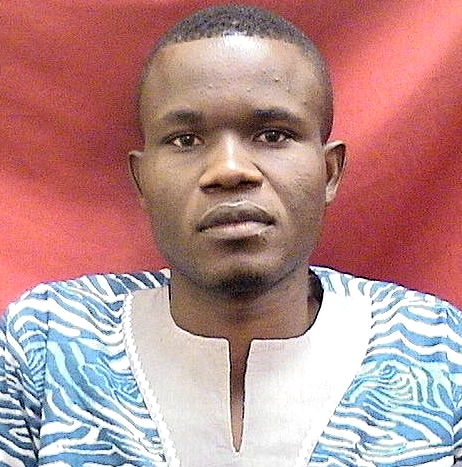
Department of Molecular Medicine
The researcher has made significant contributions across various domains, focusing on metabolic diseases, inflammation, cardiovascular health, and health applications of natural products. Their work includes studies on the effects of adipokines and weightlifting metabolism on metabolic risk factors in university students; the role of oxidative stress in complications of malaria in children; the evaluation of immune responses to Hepatitis B Vaccination in Ghanaian Adolescents; the assessment of anthropometric changes linked to years of weightlifting training; and the biochemico-anthropomorphic properties of vegetable oils derived from coconut, palm, and groundnut. These investigations highlight a multidisciplinary approach to understanding health issues across metabolic diseases, inflammation, cardiovascular risk factors, and natural product applications.
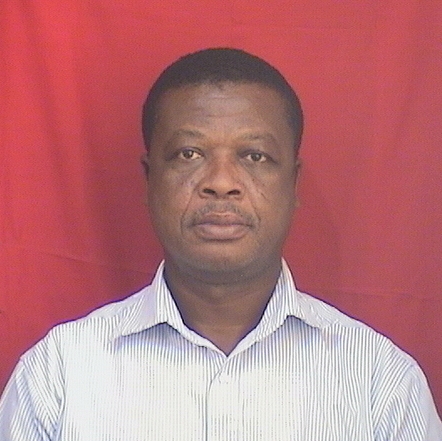
Department of Statistics and Actuarial Science
The researcher's work spans multiple fields of study, focusing on Ghana's unique social and environmental challenges. Their publications explore traffic and road safety in Ghana, analyzing factors influencing pedestrian-vehicle crash severity; heavy metals contamination, employing spatial statistical methods; solar radiation and photovoltaics, examining hourly irradiation patterns; COVID-19 epidemiological studies, exploring its spread and impact; African education and politics, investigating student interest in mathematics; advanced multi-objective optimization algorithms, such as simulated annealing; psychometric methodologies for assessing health outcomes; financial literacy models, including pension fund asset allocation; behavioral studies on epilepsy and hypertension; geographically weighted logistic regression modeling; power grid energy management, focusing on solar plant energy generation; blood pressure research, examining factors influencing mortality rates in Ghana; geographical mapping of vaccination coverage inequalities; banking stability analysis; perceptions ofepilepsy among residents in Adaklu District; survival analysis models for liquidity risk; vaccine distribution patterns and hesitancy towards vaccination; statistical methods for fraud detection; behavioral studies on gender stereotypes in statistics education; optimization techniques for solving assignment problems; geostatistical modeling of soil contamination; financial literacy frameworks; power grid energy management for country-scale applications; immunization dynamics among higher education students; methods for detecting anomalies in data; classification models for misfiling; global health issues, such as under-five mortality rates and gender disparities; crop yield studies; mathematics education and pedagogy; smart-grid energy systems; soil and land use mapping; ethical and legal principles in education; stochastic modeling of solar power systems in Sub-Saharan Africa; comparative analysis of statistical methods for estimating cardiovascular disease risk; behavioral studies on perception and attitude towards people living with epilepsy; models for predicting maternal mortality records; financial literacy frameworks applied to public health facilities; vector autoregressive models for analyzing sex disparities in under-five mortality rates in Ghana.
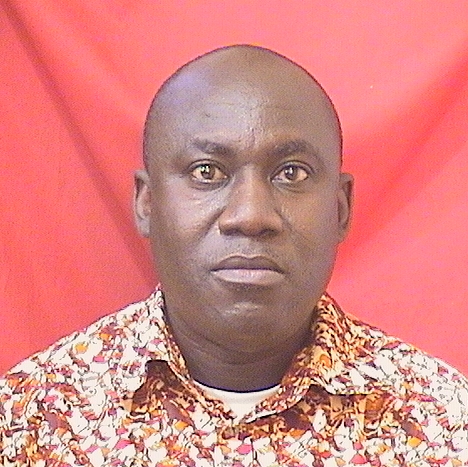
Department of Planning
The researcher's work focuses on addressing urban development challenges in Kumasi, Ghana, where they examine issues such as citizens' perceptions of land security, flood risk management, informal economic activities, place attachment, environmental sustainability, and livelihood dynamics across multiple domains. Their research highlights the complexities of integrating innovative approaches with traditional practices to foster sustainable development in an urban context.

Department of Mechanical Engineering
The researcher's work centers on the development of efficient algorithms that can effectively manage and analyze complex, high-dimensional, and heterogeneous datasets. Their primary goal is to create scalable and adaptive solutions for real-world problems, ensuring robustness across diverse domains where data complexity often poses significant challenges.
Department of Chemical Engineering
This researcher integrates interdisciplinary approaches across high-dimensional statistics, machine learning, optimization, and bioinformatics, with a particular emphasis on computational methods for genomics and personalized medicine.

Department of Physics
The researcher focuses on optimizing power grid operations through advancements in IoT devices and microgrid control systems, leveraging principles from physical sciences to enhance energy efficiency and reliability.
Department of Animal Science
The researcher investigates how herbicide applications affect weed communities in row crops across varying input levels within the context of life sciences. The study employs field experiments combined with regression analysis to assess the relationship between herbicide use and weed proliferation patterns. Findings reveal that weed community structure is sensitive to the intensity of herbicide application, highlighting the need for precise control measures to mitigate long-term ecological damage in agricultural systems.
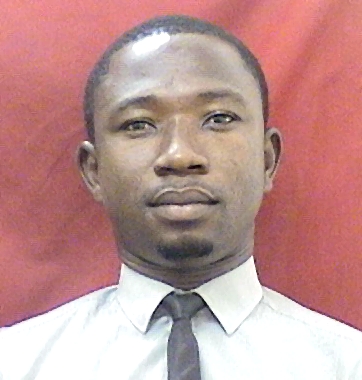
Department of Optometry and Visual Science
The researcher investigates the interplay between connectivities in the eye and their impact on developmental disorders (connectivities and lens biology), retinal diseases ( Retinal Development and Disorders), and ocular Morbidity associated with blood diseases (Digital Imaging for Blood Diseases).
Department of Geological Engineering
The researcher's work spans multiple disciplines within earth and environmental sciences, with a focus on advancing understanding and managing complex systems through interdisciplinary approaches. Their research is centered around several key themes: soil stabilization techniques in geotechnical engineering, the environmental impacts of heavy metals, hydrological forecasting using artificial intelligence, integration of geochemistry and geology for environmental monitoring, waste management practices in tailings treatments, innovative methods in groundwater exploration, and comprehensive studies on root stability and seepage flow. Their work integrates advanced technologies such as machine learning algorithms, probabilistic seismic hazard analysis, and geophysical techniques to address challenges in soil stability, water resource management, contamination prevention, hydrological modeling, waste recycling, and coastal environment monitoring. This research underscores a unified approach to tackling multifaceted environmental issues across various scales.
Department of Obstetrics & Gynaecology
The research focuses on identifying and integrating theoretical frameworks from nonlinear dynamics, self-organization, agent-based modeling, and complex adaptive systems across various disciplines. The overarching goal is to develop a unified approach to model and analyze how collective behaviors emerge at multiple scales in complex systems, utilizing multi-scale analysis alongside theoretical innovations that bridge different fields.
Department of Child Health
This researcher has conducted extensive research across multiple areas within health sciences, includingAdrenal Hormones and Disorders, Developmental Dysregulation, and Obesity/Angiogenesis. Their work focuses on advancing understanding of these interconnected fields through comprehensive studies that explore the role of adrenal glands in various conditions.

Department of Petroleum Engineering
The researcher's work across various domains of social and health sciences highlights significant contributions, including: 1. **Global Maternal and Child Health**: Focus on healthcare policies and domestic violence in Ghana, emphasizing the importance of robust services and addressing abuse promptly. 2. **Intimate Partner and Family Violence**: Highlights studies on male-to-female violence, exploring both medical and emotional aspects, underscoring the need for comprehensive interventions. 3. **Parasitic Diseases Research and Treatment**: Provides insights into lymphatic filariasis and related studies in Ghana's northern regions, offering practical approaches to managing parasitic diseases. 4. **Healthcare Systems and Reforms**: Examines reforms in public health systems, particularly Additional Duty Hours Allowance in Ghana, as a model for efficient governance. 5. **Cultural and Social Themes**: Emphasizes the role of African psychology in understanding personhood and agency, contributing to ethical and social development theories. 6. **Child and Adolescent Health**: Discusses school-based anthelmintic delivery systems, highlighting their importance in early childhood health. 7. **Psychological Well-being and Life Satisfaction**: Connects mental health issues with social networks, underscoring the interplay between personal and societal factors affecting well-being. 8. **Takotsubo Cardiomyopathy**: Includes a clinical note on disease management, providing practical applications for researchers in cardiology. 9. **Global Health and Surgery**: Reports from a tertiary hospital setting emphasize the necessity of specialized surgical practices. 10. **Religion and Society**: A paper on improving human resources through religious interventions, blending spiritual practices with governance. 11. **Primary Care and Health Outcomes**: Explores data-driven improvements in primary care services, influencing health management systems. 12. **Child Nutrition and Water Access**: Discusses school-level programs for water access, focusing on early childhood nutrition. 13. **Interpreting and Communication in Healthcare**: Reflects on methodological challenges in healthcare communication, offering insights into effective practices. 14. **Culture, Economy, and Development**: Examines socio-political contexts through various country reports, contributing to cultural understanding and development strategies. 15. **Healthcare Reforms**: Highlights reports from Ghanans, showcasing international efforts towards systemic reforms. 16. **Psychological Development**: Discusses personality theories in diverse cultures, emphasizing the universal aspects of human development. 17. **Gender, Labor, and Family Dynamics**: Focuses on gender roles in Akan culture, underscoring intersecting gender dynamics in family relationships. 18. **Emotional Intelligence and Performance**: Conducts a study linking corruption to mental health among students, providing critical insights into human behavior. Each paper contributes uniquely to their respective fields, offering valuable insights into social, cultural, and healthcare contexts.