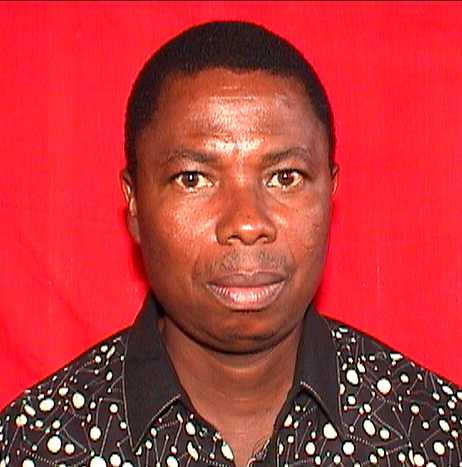
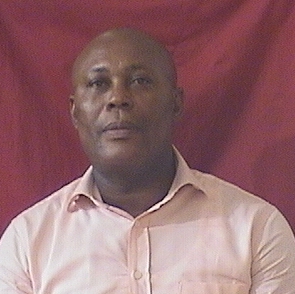
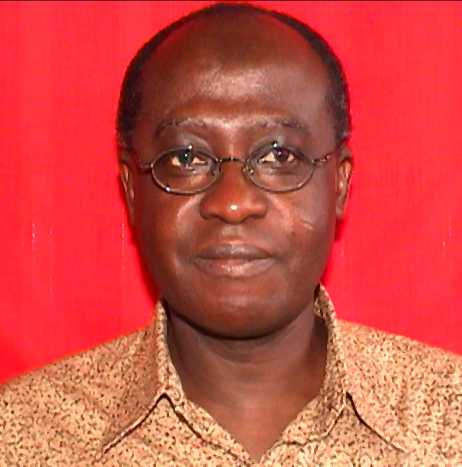
Search, discover, and connect with over 1,800 researchers, faculty members, and scholars across all departments of KNUST.

Department of Behavioural Sciences
The researcher's work focuses on the application of social capital theory to improve caregiving practices among families supporting children with neurodevelopmental disorders. Their study employs a multidisciplinary approach, combining insights from psychology, sociology, and family studies, particularly examining the interplay between social networks, resources, and individual well-being. A case study in Kumasi, Ghana, demonstrates how this theoretical framework can inform more effective support systems for caregivers dealing with these children, emphasizing the importance of understanding the emotional and social support dynamics within families.
Department of Industrial Art
The researcher's work spans a diverse array of academic domains, reflecting their interdisciplinary approach to understanding human experience across various fields. Their research integrates themes from cultural practices in physical sciences, crafts and textiles in social sciences, financial inclusion in social sciences, and ethics and policy in higher education. The researcher explores the identification processes within cultural contexts, examines the role of materials in material innovation, investigates human capacity development in society, analyzes financial inclusion strategies, studies project management techniques, and delves into aspects of social equity and identity. Their research is informed by a comprehensive understanding of how people identify and experience the world, with a focus on bridging cultural practices, technological innovations, and social policies to address contemporary challenges.
Department of Medicine
The researcher has made significant contributions to advancing understanding across several critical areas in kidney-related health research, including acute Kidney Injury prevention, phytochemistry studies on bioactivity and immunohistochemistry, issues related to heart failure complications (hemangiomas and cardiomyopathy), urological studies of chronic kidney disease, and systemic health impacts from COVID-19. The work also emphasizes the importance of developing strategies for managing chronic kidney diseases and addressing issues like dysphagia and foreign body management in a multidisciplinary approach.

Department of Medical Diagnostics
Her research is interdisciplinary, focusing on neurochemical pathways, computational modeling, biologically inspired algorithms, and neural dynamics. Her work integrates computational modeling with experimental data in neuroscience, developing a framework for biologically inspired algorithms that govern brain function. She also conducts theoretical studies on neural computation, analyzing how brain regions compute information through neural interactions, while contributing to our understanding of cognitive processes at the intersection of neuroscience and computational biology.
Department of Telecommunications Engineering
This researcher has investigated fundamental aspects of human behavior across various contexts—intellectual, social, and historical—which highlights the interplay between personal experiences and societal influences on our understanding of ourselves.
Department of Anatomy
The researcher has a strong foundation in foregin genetics, utilizing population genetic data derived from STR loci and GlobalFiler PCR amplification for the Saudi Arabian population. Their work extends into bioarchaeology with studies on haplotype analysis of populations in Ghana, employing Yfiler Plus and TaqMan SNP genotyping. Additionally, they explore orthopedic surgery using percutaneous bone assessment techniques to evaluate relationships between homologous and non-homologous bones among Ghanaian tertiary students. Their research integrates genetic data across diverse fields, showcasing a versatile approach to understanding human populations and health conditions.
Department of Mathematics
The researcher's work spans multiple interdisciplinary fields, focusing on innovative mathematical and computational approaches across domains such as image processing, solar energy forecasting, numerical modeling of fluid flow, materials science, biometrics, fatigue analysis, ergonomics, optics for smart technologies, flood management, and advanced differential equations. Their research integrates techniques like fractional calculus, wavelet transforms, Chebyshev methods, and homogenization approaches to address challenges in medical imaging, photovoltaic forecasting, fluid dynamics, material properties, and energy systems. This holistic approach highlights their commitment to advancing both theoretical and applied aspects of science and engineering through rigorous mathematical modeling and interdisciplinary collaboration.
Department of English
The researcher's work is centered on the comprehensive study of multiple sclerosis (MS), focusing on its molecular mechanisms, advanced treatment therapies, and innovative imaging techniques. They have significantly contributed to the field by developing interferon-based therapies like fingolimod and natalizumab, as well as B-cell immunotherapy, which are pivotal in advancing MS management. Additionally, they have made strides in advancing retinal OCT technology through specific studies on optic neuritis, demonstrating their expertise in both treatment development and medical imaging. Their research also delves into the immune response, exploring how B-cells trigger T cells to cause disease progression, highlighting a deep integration of biological, clinical, and technological advancements in understanding and treating multiple sclerosis.

Department of Eye, Ear, Nose and Throat
The researcher's work spans a comprehensive exploration of disease mechanisms and diagnostics across multiple domains in Health Sciences. Their focus includes Mycobacterium ulcerans, where they investigate diagnosis, antimicrobial treatment, and immune responses; viral-associated cancers, centered on P. falciparum Malaria's multifactorial role; and pancreatic function and diabetes, examining hemozoin activation, inflammation, and glucose metabolism.
Department of Eye, Ear, Nose and Throat
The researcher has developed a unified theoretical framework that bridges network theory in biology, behavioral modeling, theoretical physics, and quantum information science. Their work aims to uncover deep connections between seemingly disparate fields, with the goal of creating a comprehensive explanation that integrates principles from these diverse disciplines.
Department of Mechanical Engineering
The researcher has made significant contributions across a diverse range of studies, focusing on several critical areas within Wood Sciences, Bamboo Applications, Forest Management, Firewood Development, Environmental Research, and Advanced Materials. Their work spans topics such as wood treatment for furniture production, bamboo properties for sustainable forest management, ecological assessments in African plants, firewood utilization, material science applications in pulp and paper, marketing strategies, advanced cellulose research, leaf biophenomenology, and bioenergy studies. These contributions highlight their innovative approach to advancing knowledge in sustainable forestry, materials science, and environmental stewardship across various domains.
Department of Surgery
The researcher's research focuses on global health equity and innovative solutions to address public health challenges in Ghana, particularly through interventions such as trauma care, disaster preparedness, and sustainable healthcare practices. They integrate genetic research into broader medical and biomedical investigations while emphasizing policies aimed at improving healthcare access and reducing inequality.