Beta Testing
KNUST Research Atlas is currently in active Beta. Report bugs or suggest features to help us improve!
KNUST Research Atlas is currently in active Beta. Report bugs or suggest features to help us improve!
KNUST Research Atlas is currently in active Beta. Report bugs or suggest features to help us improve!
Search, discover, and connect with over 1,800 researchers, faculty members, and scholars across all departments of KNUST.
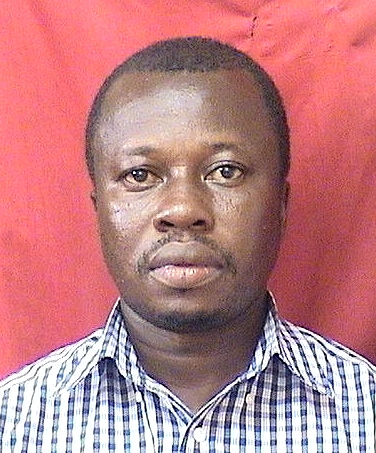
Department of Food Science and Technology
The researcher's work spans two primary domains: agricultural practices and plant genetics, as well as food chemistry and fat analysis. Their research employs advanced genetic techniques to optimize processes involving Okra pectin, which exhibits unique physicochemical properties. This work intersects with broader efforts in improving product performance through innovative processing methods across diverse scientific fields, emphasizing the application of genetic manipulation across agricultural and food science domains.
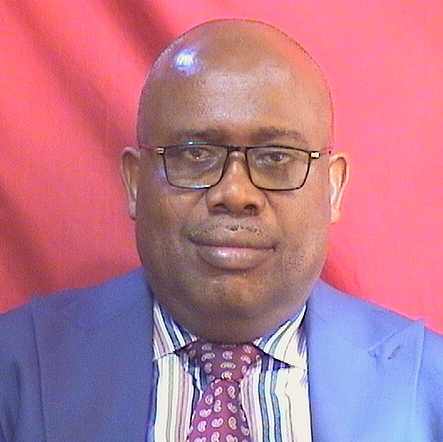
Department of Meteorology and Climate Science
The researcher has conducted extensive work across various themes in Ghana and West Africa, focusing on themes such as climate variability and models, land use changes, precipitation patterns, mosquito-borne diseases, hydrological systems, and sustainable development efforts. Through a combination of satellite data, General Circulation Models (GCMs), and in situ measurements, the researcher has explored key aspects of these areas. Work in climate variability and models has highlighted the impacts of climate change on agricultural productivity and粮食 security. Land use and land cover changes have been studied extensively, particularly regarding their effects on water balance and habitat alteration. The researcher's hydrological studies have focused on rainfall patterns, soil erosion, and groundwater management. Their research on mosquito-borne diseases, particularly malaria transmission seasonality and vector-borne disease modeling, has contributed significantly to understanding ecological dynamics in the region. Work in hydrological forecasting and remote sensing techniques has enhanced drought analysis and water resource management. The researcher's integrated approach to water resources, energy load studies, and solar radiation contributions underscores their commitment to sustainable development and renewable energy solutions. Their findings on solar radiation impacts and agricultural practices have emphasized the importance of adopting climate-resilient strategies for food security in Ghana and West Africa.

Department of Medical Diagnostics
The researcher has conducted extensive medical studies focusing on integrating methodologies such as systematic reviews, case-control studies, and mathematical modeling to address various aspects of healthcare. Their work spans a broad range of topics including immune system research (e.g., antierythropoietin antibodies), cardiovascular diseases, neurological disorders, and nutritional conditions. The researcher's approach is interdisciplinary, applying these methods across diverse patient populations such as children, young professionals, and the elderly, reflecting a comprehensive exploration of healthcare systems and their applications in different demographics.

Department of Nursing
The researcher’s work focuses on Hepatitis B Virus Studies, examining perceptions of supportive care needs among resource-limited Adolescents with chronic hepatitis B. Simultaneously, they investigate Elder Abuse and Neglect through qualitative studies in diverse social settings, such as the South, exploring the physical impacts on older adults.

Department of Chemistry
The researcher's work is a comprehensive study in environmental science, focusing on the interplay between resource extraction practices, water quality assessment, and environmental pollution linked to heavy metals contamination. Their research integrates themes of gold mining impacts, water quality monitoring, and public health risks due to metal exposure, with a broader aim to understand ecological and health implications in diverse climatic zones.

Department of Molecular Medicine
The researcher has conducted extensive studies across several key areas in health sciences, including preeclampsia, diabetes, vitamin D metabolism, and global cancer incidence. Their work integrates diverse methodologies such as preeclampsia assessments, glucose testing, vitamin D levels, and global health trends. The research also extends to infections like actinomycetes and herpes viruses, reflecting a holistic approach to understanding and addressing various health issues globally. A consistent theme is the focus on improving healthcare outcomes and public health strategies across these domains.

Department of Computer Science
The researcher focuses on advancing methods for detecting cyber threats such as man-in-the-middle (MITM) attacks using convolutional neural networks (CNNs), particularly in network security contexts within the physical sciences domain. Additionally, they investigate sentiment analysis and opinion mining techniques applied to sports analytics, with a specific example of analyzing Ghanaian football tweets from the 2022 FIFA World Cup to understand public sentiment on sports events. Their work bridges cybersecurity challenges with social behavior analysis, demonstrating interdisciplinary applications in both network security and sports analytics.

Department of Theoretical and Applied Biology
The researcher's work focuses on a comprehensive exploration of environmental hazards in agricultural systems, with a particular emphasis on heavy metals in food production and their ecological impacts. Their research delves into the metabolic characteristics of microbial metabolites derived from fermented foods, highlighting antibiotic resistance issues and their implications for public health. The study also examines external bacterial infections, particularly ocular infections, and evaluates their treatment patterns. Additionally, the researcher investigates the effects of wastewater on ecosystem functioning, including its impact on biodiversity and water quality. Their work extends to studies related to Mycobacterium tuberculosis and MERS-CoV, emphasizing the importance of understanding these pathogens in combating global health challenges. Collaborations for healthcare management are also a focal point, addressing public health initiatives. The researcher's research underscores the critical role of microbial metabolites in both environmental processes and public health issues, providing insights into the complexities of food safety and disease control.

Department of Clinical Microbiology
parasitic diseases such as onchocerciasis, lymphatic filariasis, mobius bugs, toxoplasma gondii, and mycobacterium are studied across various domains in health sciences. research focuses on understanding the biological, immunological, and therapeutic aspects of these diseases, with a strong emphasis on parasitic microbiology, host-pathway interactions, and immunodynamic factors. lymphatic filariasis is closely linked to microfilarial loads and immune responses, as evidenced by studies showing reduced lymphatic Filariasis Immune profiles in Wolbachia endobacteria-treated individuals. These findings highlight the importance of antifilarial treatments in reducing macrofilaricidal activity and improving disease management. Additionally, research explores the role of onchocerciasis-specific microRNAs in diagnosing infections and monitoring treatment response, emphasizing their potential as non-invasive diagnostic biomarkers. these studies also investigate the impact of parasitic microcomponents on immunosuppressant therapy, particularly in lymphatic filariasis management. the interplay between parasitic immune responses (such as Th1 and Th17 cytokines) and disease progression is explored through clinical trials and genetic studies, providing insights into effective vaccination strategies for various parasitic diseases. meanwhile, research highlights the integration of bioinformatics and clinical trials in advancing immunopathological understanding, particularly focusing on how microfilaria contribute to disease transmission and treatment efficacy. these findings underscore the need for continuous efforts in developing data-driven surveillance systems for parasitic infections. finally, studies emphasize the importance of vector-borne animal diseases in shaping public health strategies, with a focus on mobile health tools for community-based infectious disease surveillance. research also explores immunology and inflammation mechanisms, particularly as they influence TB treatment response and immune modulator pathways.

Department of Chemical Engineering
This researcher has made significant contributions to the field of computational intelligence, focusing on integrating deep learning techniques with optimization algorithms for solving complex problems in generative modeling, healthcare inverse problems, and industrial applications. Their work bridges theoretical foundations with practical implementations, advancing methodologies that enhance decision-making and problem-solving across diverse domains.
Department of Obstetrics & Gynaecology
The researcher has focused on the interplay between human activities and environmental change, particularly in marine ecosystems and soil degradation, with a emphasis on the restoration efforts and technological innovations that address climate change impacts.
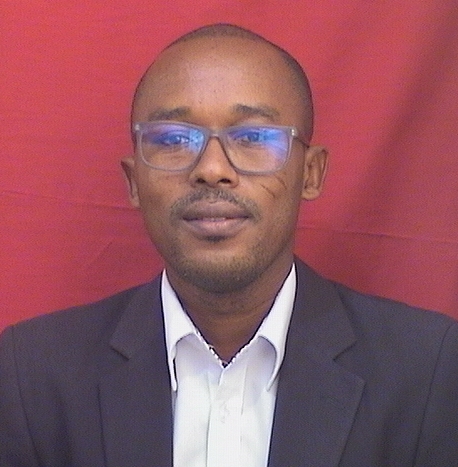
Department of Physics
My research focuses on advancing materials science for sustainable energy storage systems, integrating innovative 2D materials and advanced adsorption technologies. Through first-principles calculations of properties such as electronic and magnetic characteristics in transition metal-doped monolayers of Möbius graphene (MoS₂), I investigated the unique electronic and magnetic behaviors that enable novel heat energy storage solutions. My work also emphasizes the practical application of these materials in environmental remediation, particularly through adsorption processes like zeolite-based removal of ammonium ions from water samples affected by mining activities in Ghana. Additionally, I explored the fabrication of high-capacitive materials using Zeolite A synthesized from wassa kaolin for thermal energy storage and hybrid systems combining adsorption heat pumps with heat engines. On a broader scale, my research extends to optimizing material recovery and lifecycle management in spent lithium-ion batteries using AI-based technologies, further enhancing their energy density and safety standards.