Beta Testing
KNUST Research Atlas is currently in active Beta. Report bugs or suggest features to help us improve!
KNUST Research Atlas is currently in active Beta. Report bugs or suggest features to help us improve!
KNUST Research Atlas is currently in active Beta. Report bugs or suggest features to help us improve!
Search, discover, and connect with over 1,800 researchers, faculty members, and scholars across all departments of KNUST.

Department of Land Economy
Research focuses on developing advanced systems for evaluating building performance using quantitative metrics derived from environmental data, combining computational methods with empirical analysis to improve existing tools and methodologies in sustainable design and assessment within the physical sciences domain.
Department of Land Economy
The researcher focuses on advancing knowledge in public services, technology adoption, architectural design, environmental education, and sustainable building practices across diverse communities. By synthesizing themes such as microfinance, technology integration, cultural influences, environmental education, and sustainable design, the study aims to enhance understanding of how these factors shape community engagement and operational efficiency.
Department of Land Economy
Higher education research in Ghana has focused on students' access to higher education participation, equity, and disparity across various universities. Studies have examined student opportunities from 2015 onwards, highlighting challenges and equitable experiences. The researcher has contributed significantly to critical thinking development among undergraduate students through papers on essential ingredients for successful research proposals and hedonic price indices in Ghana. However, these studies also highlight the need for addressing housing supply challenges, particularly in urban contexts like Ghana. Their research has explored the constraints faced by housing supply, using methodologies such as fuzzy numbers for real estate valuation. The researcher's work extends to diverse areas, including banking, finance, and policy-making. They have examined financial reporting practices and the use of advanced techniques in Ghana, contributing to a global understanding of these areas.
Department of Land Economy
The researcher integrates complex systems, biological systems, network analysis, computational modeling, machine learning, biodeviance, and cognitive science in their work. Their integrated research across these areas contributes to solving complex real-world problems by bridging different fields, promoting a holistic understanding of interconnected processes.
Department of Land Economy
This researcher's work focuses on examining various aspects of Ghanaian land use, real estate policies, cultural heritage, and environmental challenges. They address themes such as mining compensation justice, urban and rural housing dynamics, conservation issues, labor laws, and sustainability. Their research explores how these areas intersect with land reforms, policy frameworks, and sustainable practices in Ghana, emphasizing the complex interplay between environmental impacts, economic development, and social equity.
Department of Land Economy
The researcher investigates the intersection of urban accessibility policies, inclusivity through education, legal advocacy, social justice practices (e.g., land rights, housing reparation), financial valuation methods, green building strategies, and their societal impacts on urban development in Ghana.

Department of Land Economy
The researcher's work focuses on integrating education theory with scientific fields, particularly animal and plant science, to examine how citizens learn about ecosystems through community engagement. Their longitudinal study in Germany revealed how cultural beliefs and societal values influence attitudes towards biodiversity issues, while their broader research underscores the need for educational approaches that foster sustainable practices by connecting theoretical insights with practical applications across disciplines.
Department of Land Economy
The researcher focuses on understanding facilities and workplace management practices in gated communities in Ghana, while also examining urban and rural development challenges through insights from the Accra property market.
Department of Land Economy
The researcher's work is centered on advancing understanding of property valuation practices, with a particular emphasis on housing markets, REITs (Real Estate Investment Trusts), and their intersections with broader economic and social themes. Through rigorous empirical analysis, they explore how factors such as task complexity, debt, land use, joint ventures, and institutional ownership influence real estate values. Their research also delves into financial markets, including REIT pricing dynamics and risk management strategies, while examining regulatory frameworks like audits and governance policies. The researcher's work underscores the importance of both urban development challenges and green building practices in shaping valuation contexts, particularly in regions like Ghana where housing shortages persist.
Department of Land Economy
This researcher's work centers on examining global health disparities and their impacts across various low- and middle-income countries. Their research spans themes like equity, efficiency, sustainability, and policy reform, drawing insights from multiple influential studies that highlight the need for comprehensive approaches to address health challenges in these regions.

Department of Land Economy
The researcher's work integrates principles from the social sciences into construction project management, examining themes such as design for excellence, sustainable energy optimization, and workplace management. Their research focuses on enhancing project performance through innovative applications of these disciplines.
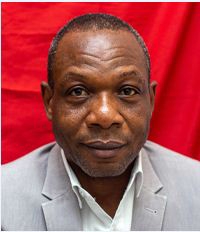
Department of Land Economy
The researcher has made significant contributions to Ghana’s land rights and reforms through a comprehensive study of several themes. Their work spans across various areas, including agricultural production and environmental degradation, youth access to agricultural land, land management practices, disability education, mining, conservation, urban development challenges, project management, transportation, heat mitigation, rights representation, workplace management, global trade sustainability, microfinance, rural development, sustainable building design, and land use. Their research provides valuable insights into governance, land policies, and social justice in Ghana’s land sector, emphasizing the importance of equitable land use and systemic change.