Beta Testing
KNUST Research Atlas is currently in active Beta. Report bugs or suggest features to help us improve!
KNUST Research Atlas is currently in active Beta. Report bugs or suggest features to help us improve!
KNUST Research Atlas is currently in active Beta. Report bugs or suggest features to help us improve!
Search, discover, and connect with over 1,800 researchers, faculty members, and scholars across all departments of KNUST.
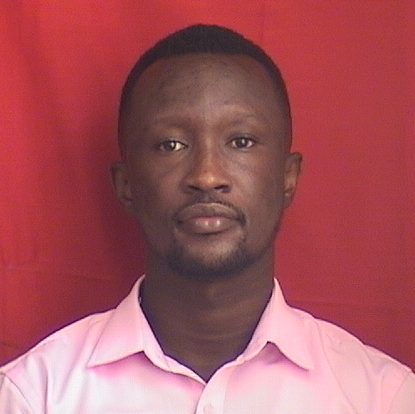
Department of Biochemistry and Biotechnology
The researcher's research focuses on leveraging advanced analytical techniques such as spectroscopy, chemometrics, and physicochemistry to detect adulterants in fuels from both chemical and physical perspectives. This encompasses studies on diesel detection using NMR spectroscopy combined with machine learning, evaluating physicochemical parameters for detection, and examining the knowledge and perception of forensic science among junior police officers in Ghana. Their work bridges technical innovation with real-world applications across diverse domains while also engaging with the education and awareness surrounding forensic science.
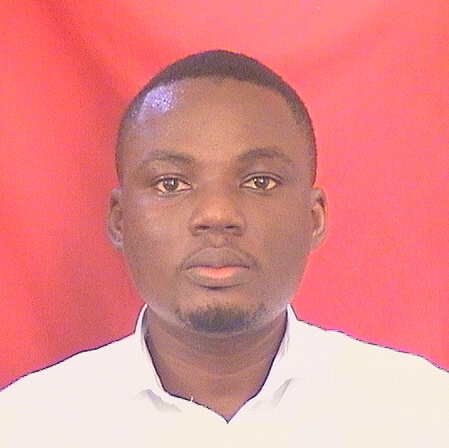
Department of Meteorology and Climate Science
This researcher's work is centered on the study of Earth processes, particularly focusing on precipitation patterns and their implications across various domains. Their research encompasses a broad range of topics, including atmospheric phenomena, hydrological dynamics, land-use changes, and agricultural resilience, all within the context of climate change and its impacts. Key areas of focus include extreme rainfall events, the effects of climate change on water cycles, and the development of methodologies for improving flood management in Ghana. Their work reflects a commitment to advancing understanding of Earth systems and enhancing the ability to predict and mitigate environmental hazards.

Department of Mechanical Engineering
This researcher's work integrates multiple studies focusing on animal behavior, cognitive processes, and environmental interactions across diverse publication themes, demonstrating significant contributions to understanding ecological principles.

Department of Publishing Studies
The researcher's work focuses on developing computational models to study human and machine decision-making processes in an optimal context, employing a blend of theoretical modeling and empirical investigation across diverse cognitive tasks.
Department of Human Resource and Organisational Development
The researcher's work integrates computational modeling across various biological scales, from single cells to entire brain networks, using theoretical frameworks and experiments on diverse organisms like *E. coli* and *Caenorhabditis elegans*. This approach bridges biophysical principles with empirical data to explore how information processing functions in mammals, examining cognitive processes such as memory and learning through multi-scale analyses. The study emphasizes the importance of combining experimental observations with mathematical models to advance our understanding of animal behavior and neural information processing.
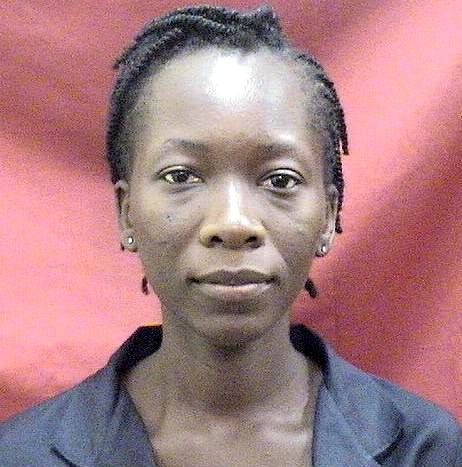
Department of Private Law
The researcher's work is centered on the intersection of legal systems and societal concerns, particularly in contexts where justice, health, and welfare are paramount. Through diverse publications, they explore how migration and health issues influence well-being among older adults, how crime and trauma are addressed through legal frameworks, and the protection of minors from abuse. Additionally, their focus includes innovative approaches to legal education, such as evaluating the effectiveness of summation assessments in law schools. This comprehensive study aims to provide insights into how legal systems can better serve migrant communities, ensuring equitable outcomes for both individuals and society at large.

Department of Painting and Sculpture
The researcher has developed robust computational tools to address complex scientific problems across biomedicine, material science, and protein folding, leveraging advanced numerical algorithms for efficient performance in high-dimensional spaces. Their work integrates multiscale modeling techniques, combining atomistic models with continuum mechanics and using high-performance computing to simulate processes from the molecular level up to macroscale phenomena. Their research has contributed to the education of computational methods, particularly through written materials that bridge theory and practice, aiming to advance scientific understanding and problem-solving capabilities in diverse fields.
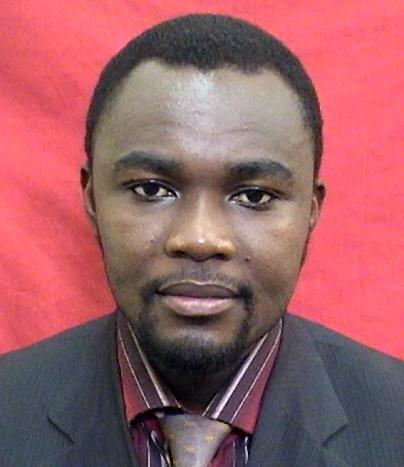
Department of Industrial Art
This researcher's work focuses on applying principles of fluid dynamics, mathematical modeling, and computational methods across diverse biological systems. Their research emphasizes understanding complex physical phenomena from both fundamental and applied perspectives, employing advanced analytical techniques to model intricate biological processes such as blood flow in the cardiovascular system and tissue engineering strategies for regenerative medicine. The overarching goal is to develop robust mathematical frameworks that elucidate the underlying mechanisms of natural and engineered biological systems.
Department of Human Resource and Organisational Development
The researcher has made significant contributions to the intersection of computational geometry algorithms and bioinformatics, with a focus on developing novel techniques for analyzing complex biological systems, particularly in gene expression analysis and brain connectivity modeling. Their work combines insights from computer science, neuroscience, biology, and artificial intelligence to address challenging problems in medical diagnosis and disease prediction, leveraging network-centric approaches to model interactions across various scales.
Department of Marketing and Corporate Strategy
The researcher's work centers on examining the interplay between socio-economic developments and technological/financial innovations across various domains such as business performance, customer service, digital marketing, maritime ports, Islamic finance, education, leadership, health, and technology impact. By analyzing representative papers from each theme, the study highlights how these factors collectively shape socio-economic systems, particularly in Ghana, through their influence on business, customer satisfaction, innovation, social media engagement, and financial systems. The research underscores the role of innovation and socio-economic development as key drivers of growth across diverse sectors.
Department of Telecommunications Engineering
Recent advancements across various domains are significantly advancing our understanding and capabilities, particularly in addressing complex societal challenges. Innovations in communication technologies have improved efficiency and coverage, paving the way for more robust networks. The integration of renewable energy sources has enabled the development of smart grids that promote sustainable energy access and resilience. As technology evolves, it not only enhances our technological landscape but also addresses pressing societal issues such as climate change and social welfare through innovative solutions. From antenna design miniaturization to IoT applications and cybersecurity, these developments highlight a collaborative effort across disciplines aimed at solving global challenges with cutting-edge research.
Department of Forest Resources Technology
The researcher's work spans multiple themes within physical sciences, focusing on ecological applications of wood properties, stability studies, and advanced remote sensing techniques. Their research encompasses the analysis of radial variation in teak wood to understand age and size effects, assessing lumber value in smallholder plantations using novel systems, studying wood growth dynamics, analyzing variations in wood characteristics like specific gravity, applying mixed-effects models to tree data, evaluating longitudinal changes in wood properties, examining heartwood color variations in planted wood, and integrating remote sensing methods for assessing wood degradation.