Beta Testing
KNUST Research Atlas is currently in active Beta. Report bugs or suggest features to help us improve!
KNUST Research Atlas is currently in active Beta. Report bugs or suggest features to help us improve!
KNUST Research Atlas is currently in active Beta. Report bugs or suggest features to help us improve!
Search, discover, and connect with over 1,800 researchers, faculty members, and scholars across all departments of KNUST.

Department of Architecture
Urban transport accessibility is a critical element in sustainable building design, particularly within Ghana. The researcher examines barriers affecting people with disabilities on urban roads and pedestrian infrastructure, alongside factors influencing environmentally sustainable buildings. This integrated study explores the connection between enhancing transportation access and promoting eco-friendly practices, aiming to improve mobility and environmental awareness by balancing these two areas.
Department of Wildlife and Range Management
The researcher has conducted extensive work examining gene regulation across a broad spectrum of biological systems, including early stem cell development, transcriptional regulation in sleep disorders, mechanisms underlying neurodegenerative diseases, studies on cellular interactions during development, and investigations into epigenetic silencing. Their integrated approach bridges developmental biology, neuroscience, and genetics to explore how genes influence processes such as stem cell function, sleep disorders, neurodegenerative diseases, and epigenetic changes.
Department of Petroleum Engineering
This researcher’s work explores the intersections between migration, ethnicity, and economics within social sciences, focusing on how individuals move across borders while grappling with economic policies. By examining survey data and interviews, they analyze the ways in which economic status, cultural identity, and migration experiences interplay. Their study aims to bridge existing research gaps, particularly regarding the disparities in opportunities and rights faced by different ethnic groups as they migrate.
Department of Food Science and Technology
The researcher's research integrates multiple domains to address food safety and health risks from toxic substances. Their focus is multifaceted, encompassing both traditional plant-based foods and more recently processed foods. Key themes include the identification of toxic metals in specific foods (e.g., aluminum, iron, lead), the use of botany to enhance food quality (plant food analysis), the broader impact of heavy metals on ecosystems, and the health consequences from acrylamide exposure. They also explore plant growth techniques, microbial diversity, nutritional compositions of plants, and the effects of radiation. This integrated approach aims to improve public health by understanding toxin sources in our diet, developing safer food processes, and reducing environmental impacts through better food safety practices.
Department of Meteorology and Climate Science
The researcher has focused on developing numerical methods for solving partial differential equations (PDEs) within the context of applied mathematics, collaborating with scientists and engineers to validate these methods across diverse applications such as material science, environmental engineering, quantum mechanics, and biology. Their work emphasizes both practical implementation and theoretical exploration, highlighting the importance of computational techniques in addressing real-world problems.
Department of Civil Engineering
The researcher's work spans a broad range of topics within Geotechnical Engineering and Physical Sciences. Their studies emphasize innovative approaches in engineering applications, including stress-strain analysis of concrete with quarry rock dust (Theme 1), the influence of concrete shrinkage and creep on structural behavior (Themes 2 and 3), and advancements in material science through research into concrete corrosion and durability (Theme 4). Key contributions are demonstrated by investigations into deflection characteristics of reinforced precast structures, reliability analysis of pre-stressed concrete shells, and applications of differential equations in solving engineering problems. These findings contribute significantly to advancing the understanding and practical use of concrete technology in geotechnical systems.
Department of Accounting and Finance
The researcher's work centers on a comprehensive exploration of social and economic development across various domains, examining themes such as working capital requirements, microfinance, financial risks, market dynamics, fiscal policies, public health issues, energy sectors, insurance markets, education financing, and resilience in the face of the COVID-19 pandemic. Through these lenses, the study highlights the interconnectedness of different factors influencing development outcomes. By integrating themes like economic growth through financial innovation and microfinance into broader frameworks that address sustainability, resource distribution, and crisis preparedness, the researcher provides a holistic view of how social sciences can inform policies aimed at fostering resilience and promoting inclusive development in emerging markets.
Department of Civil Engineering
The researcher's work focuses on advancing computational and AI-based methods to address complex challenges across various domains. Their publications highlight efforts in quantum computing for efficient problem solving, machine learning applications in climate science for accurate prediction, and neural networks in medical imaging for early disease detection, aiming to leverage AI technology to make significant contributions across physics, environment, and healthcare.
Department of Chemistry
The researcher has conducted extensive research across multiple domains, focusing on environmental health issues, particularly the impact of pesticides, pharmaceuticals, and pollutants on human health and ecosystems. Their work encompasses a wide range of topics, including heavy metal contamination in Ghana’s environment, antibiotic residues in water and land ecologies, toxicity studies involving hazardous chemicals such as铅, arsenic, cadmium, and mercury, and the integration of analytical techniques to assess trace elements’ bioactivities. The research also explores the physiological and psychological effects of neurotoxins and evaluates the pharmacokinetics of substances like vetropresvernas in animals. Additionally, their studies cover innovative methods for recycling materials with promising applications in agriculture, pharmaceuticals, and waste management.
Department of Chemical Engineering
The researcher has conducted extensive work across various interdisciplinary fields, focusing on innovative hydrogels and bioactive compounds, as well as advanced materials for environmental remediation. Their studies span themes such as bioactive compound synthesis, adsorption techniques, polymer bioplastics, energy recovery systems, and sustainable food processing, demonstrating a deep commitment to advancing material science applications.
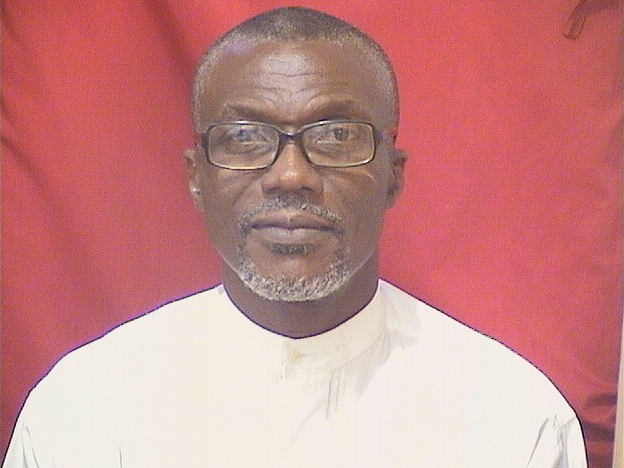
Department of Painting and Sculpture
The researcher has made significant contributions across diverse areas, blending innovation with academic rigor. Their work in **Digital Media and Visual Art** explores the evolution of digital painting techniques, highlighting their role in expressivity within fine art painting. In **Augmented Reality Applications**, they examine color transformations, illustrating how Adobe Photoshop is used to convert grayscale photos into vibrant color modes. For **Problem and Project Based Learning**, the researcher investigates ranking strategies for higher educational institutions like Ghana's HEIs, offering insights on adopting effective pedagogical practices. Their work in **Mobile Learning** involves integrating audio-visuals with lecture notes to enhance online learning experiences in laboratories or studios. In **3D Surveying and Cultural Heritage**, they apply digital tools to preserve cultural heritage through landscape painting. Lastly, their research in **South African History and Culture** uses art as a lens to reflect historical experiences. Together, these works collectively demonstrate the transformative potential of technology across various academic and educational domains.
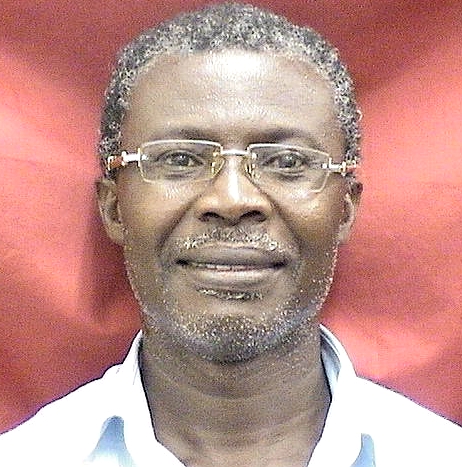
Department of Geological Engineering
This researcher conducts a comprehensive study spanning multiple disciplines within the Physical Sciences domain, focusing on the Voltaian Basin in Ghana. Their work integrates insights from geochemistry and elemental analysis, hydrocarbon exploration, and reservoir analysis, offering a detailed examination of geological provenance, hydrocarbon potential, and reservoir characteristics in this region.