Beta Testing
KNUST Research Atlas is currently in active Beta. Report bugs or suggest features to help us improve!
KNUST Research Atlas is currently in active Beta. Report bugs or suggest features to help us improve!
KNUST Research Atlas is currently in active Beta. Report bugs or suggest features to help us improve!
Search, discover, and connect with over 1,800 researchers, faculty members, and scholars across all departments of KNUST.
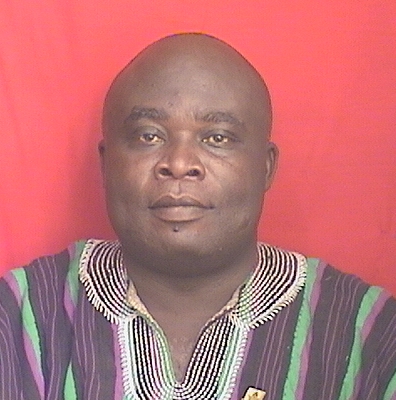
Department of Statistics and Actuarial Science
The researcher's work is centered around integrating advanced statistical methodologies and theoretical frameworks to address challenges in multiple disciplines. Key areas include: 1. **Meta-Analysis and Systematic Reviews**: Utilizing sophisticated statistical techniques like meta-analysis to synthesize findings from various studies on effect-size estimates, with a focus on normally and contaminated normals. 2. **Global Trade and Economics**: Investigating the impact of Foreign Direct Investment (FDI) in Ghana's economic growth through optimal control models for age-structured Malaria models, incorporating different factors. 3. **Mathematical and Theoretical Epidemiology**: Developing and analyzing age-structured Malaria models across different demographics to understand disease dynamics and transmission. 4. **Education Technology and Assessment**: Exploring online and blended learning methodologies, particularly in the Kwame Nkrumah University of Science and Technology, using machine learning classifiers for water access assessments. 5. **Epidemiological Studies**: Conducting systematic reviews on determinants of low birth weight in specific regions to address health inequalities. 6. **Advanced Statistical Methods and Models**: Employing Bayesian approaches and copulas under data perturbations in financial applications, as well as robust adaptive schemes for longitudinal data analysis. 7. **International Business and FDI**: Analyzing the impact of Foreign Direct Investment on Ghana’s economic growth, focusing on global trends and regional developments. 8. **Sustainable Supply Chain Management**: Optimizing water access through sustainable supply chain management strategies in a Ghanaian university setting. 9. **Economic Theories**: Enhancing economic growth models by optimizing under various production functions to ensure robustness and accuracy. 10. **International Business Contexts**: Focusing on the FDI impact on local economies, including the study of Foreign Direct Investment's role in global trade patterns. The research aims to bridge methodologies across diverse fields, using advanced statistical tools to address complex issues in public health, education, and economics, leveraging technology for enhanced learning and sustainability efforts.

Department of Mechanical Engineering
The researcher's work focuses on additive manufacturing materials, particularly those formed using SLM (Singly-Lamellar StringBuilder) technology. Their studies extensively examine properties such as porosity, hardness, and friction and wear performance in SLM-affected samples. They also employ Taguchi’s statistical design of experiments for process optimization. Functionally graded materials via interfacial bonding are investigated, focusing on residual stresses and corrosion performance. The researcher uses neural networks to predict tensile strength influenced by heat treatments and process parameters. Additionally, they examine post-process-free fatigue performance in in-situ-heated IN718 samples, highlighting the impact of heat treatment strategies on material durability.
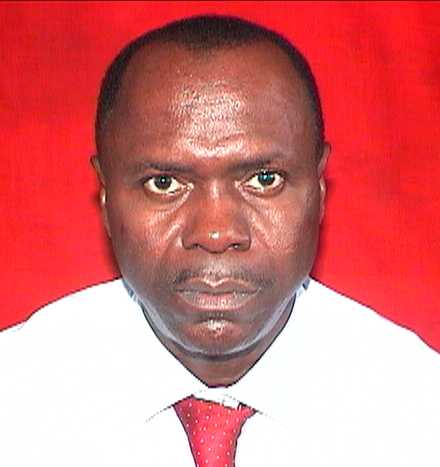
Department of Anaesthesiology & Intensive Care
This researcher's work focuses on developing novel computational models that elucidate complex systems across various scientific disciplines. Their research spans theoretical advancements in neural networks, brain-computer interfaces, and practical applications in deep learning. Their doctoral thesis, which explores these themes in depth, bridges the gap between computer science and neuroscience. Furthermore, their recent publications highlight significant contributions to real-world applications of deep learning in diverse domains, demonstrating the potential for computational approaches to address intricate scientific challenges across biology, physics, and engineering.
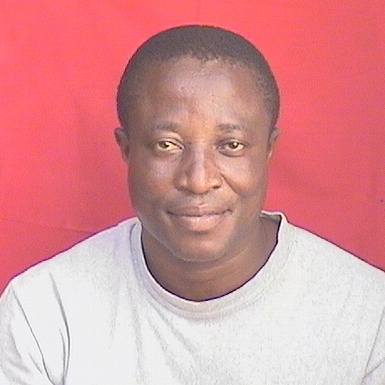
Department of Horticulture
This researcher has made significant contributions to the fields of computer science and theoretical physics through their extensive publication record, which spans over five years. Their work integrates insights from these disciplines, emphasizing interdisciplinary approaches that address foundational challenges in computational theory and physical modeling. Publications spanning conferences and books reflect a broad exploration of topics such as algorithmic efficiency, quantum systems, and network dynamics, with several notable collaborations highlighting expertise in theoretical physics.
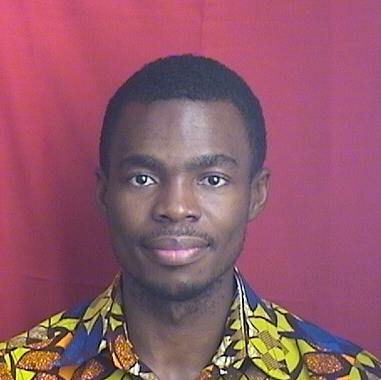
Department of Mathematics
The researcher's work is multifaceted, spanning across several disciplines while highlighting a strong focus on the intersection of global trade, transportation modeling, and economic impacts. Their research extends into advanced fields such as oil price fluctuations and foreign direct investment effects using dynamic models like DSGE, macroscopic traffic flow analysis, optimization algorithms for economic growth, and epidemiological studies to understand economic dynamics and social inequalities.
Department of Mechanical Engineering
The researcher's focus is centered on enhancing the efficiency and reliability of solar photovoltaic (PV) systems. Their work encompasses several critical areas: 1. **Photovoltaic Optimization Techniques**: The researcher has conducted extensive research on polycrystalline and monocrystalline silicon modules, exploring their structures' effects on performance and degradation. 2. **Solar Cell Materials and Integration**: Their studies delve into materials like c-Si solar cells and the role of soldering in connecting these components, ensuring seamless integration for optimal functionality. 3. **Soldering Technologies**: The researcher investigates advanced soldering processes, such as lead-free sponging and Taguchi optimization, to mitigate issues like joint integrity, which are crucial for PV system reliability. 4. **Thermal Cycling and Environmental Impact**: Their work examines how environmental factors influence solar cell performance, focusing on thermal behavior under cycling conditions and the role of materials like bricks in energy-efficient building envelopes. 5. **Energy Efficiency Challenges**: The researcher analyzes the energy impacts of integrating various technologies into the power grid, particularly highlighting the need for adaptive strategies in hot-humid climates. In summary, the researcher's work is comprehensive, concentrating on improving solar PV system design and performance, with a strong emphasis on module structures, soldering, thermal management, environmental interactions, and grid integration.
Department of Computer Science
This researcher has conducted extensive work across diverse domains within Physical Sciences, focusing on advancements in wireless networks, data security, AI applications, healthcare, and ethical issues. Their research spans themes such as energy harvesting techniques, spam detection algorithms, health-related applications of AI, cloud computing infrastructure, network security protocols, privacy-preserving technologies, mobile robotics, global health studies, higher education research, and data storage solutions.
Department of Mathematics
The researcher has developed and applied advanced numerical and computational methods across diverse domains to enhance our understanding of complex systems. Their work spans environmental pollution monitoring, epidemiological studies, fluid flow simulation, image and signal processing techniques, and optimization algorithms, all aimed at advancing scientific knowledge through innovative modeling and analysis.
Department of Civil Engineering
Groundwater and water quality are central themes in contemporary research, encompassing methods for assessing these systems (e.g., smart irrigation, isotope analysis). Hydrological forecasting via AI enhances our understanding of groundwater dynamics. Mining techniques involve soil extraction, impacting water flow, while heavy metals in the environment influence both land use and ecosystems. Geophysical methods improve site-specific assessment, though land-use changes like mining complicate matters. Addressing these areas helps mitigate environmental challenges and ensure sustainable water management for communities.
Department of Animal Science
The researcher has made significant contributions to understanding malaria dynamics and control in African communities through longitudinal studies on vaccines, epidemiological patterns, and vaccine safety. Collaborative research efforts have yielded insights into the effectiveness of candidate malaria vaccines in Ghana, emphasizing population pharmacokinetic analysis of RTS,S/AS01E and RT,S/AS02D vaccines. Additionally, methodological advancements in rapid diagnostic testing for malaria diagnosis inPediatric communities have enhanced clinical outcomes. In the realm of COVID-19 impact on reproduction, research highlights the role of vitamin A supplementation in boosting infants' immune responses to Hepatitis B and H asymptophilus influenzae vaccines. The researcher's work has also advanced immunological understanding by demonstrating how antimalarials like artesunate-amodiaquine regulate viral production. Focus on hemoglobin pathologies has revealed that artesunate-aminopenicline therapy is effective in reducing hospitalization rates for pediatric Sickle Cell Disease patients. Furthermore, the researcher's work on diabetes self-management education in low-resource settings has shown improved health outcomes through targeted interventions and population pharmacokinetic analysis of amikacin. Research on antibiotic efficacy in neonatal sepsis has demonstrated that population pharmacokinetic characteristics of amikacin correlate with bloodstream cell count changes in susceptible newborns. The researcher's contributions to immunology include integrating neurotoxicity studies into rapid diagnostic tests for childhood malaria diagnosis, highlighting the critical role of rapid testing in early intervention. The integration of clinical research and educational methods has shown significant improvements in maternal and neonatal infections through standardized interventions and community engagement strategies. Ethical considerations in clinical trials have emphasized the importance of patient consent and storage practices, particularly in African settings. Findings on peripheral arterial disease management highlight the long-term consequences of hemodynamic changes following amputation, showcasing the need for advanced treatment approaches. The researcher's work on pruritus management in neonates underscores the importance of early intervention to prevent chronic conditions. Advanced methods in bioanalytical techniques have enhanced our understanding of blood draw dynamics in parasitic diseases, particularly lymphatic filariasis in developing countries. Collaborative research efforts across domains demonstrate the global impact of innovative methodologies and collective efforts to address health challenges.
Department of Radiology
The researcher has made significant contributions to the field by exploring theoretical foundations of complex systems, developing sophisticated modeling techniques, and applying these concepts to study physical phenomena. Their work combines experimental validation with computational simulations to advance our understanding of intricate systems. The integration of advanced numerical methods and interdisciplinary collaboration has further enhanced their ability to address real-world challenges across diverse domains.
Department of Civil Engineering
The researcher's work focuses on the engineering properties of natural fiber reinforced composites within physical sciences, particularly examining the tensile strength and engineering characteristics of natural fibers such as Kenaf.