Beta Testing
KNUST Research Atlas is currently in active Beta. Report bugs or suggest features to help us improve!
KNUST Research Atlas is currently in active Beta. Report bugs or suggest features to help us improve!
KNUST Research Atlas is currently in active Beta. Report bugs or suggest features to help us improve!
Search, discover, and connect with over 1,800 researchers, faculty members, and scholars across all departments of KNUST.
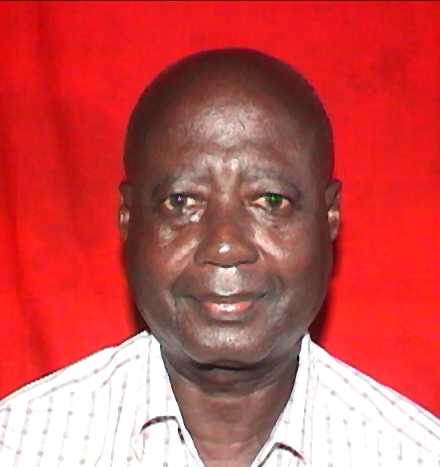
Department of Physics
The researcher has conducted extensive work on HIV-related health disparities in communities, primarily examining systemic inequalities. Through a synthesis of diverse themes, including HIV/AIDS prevention experiences, gendered access to healthcare, stigma reduction interventions, and community-based approaches, the research delves into understanding these disparities within marginalized contexts. The study highlights efforts to improve HIV testing and knowledge acquisition, particularly targeting men who have sex with men in regions with significant racial and economic divides. Additionally, it explores the impact of cultural context on accessing healthcare and implementing inclusive health interventions.
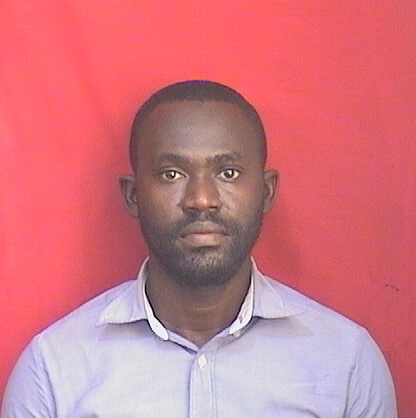
Department of Petroleum Engineering
This researcher has established a groundbreaking theoretical framework for modeling single-particle dynamics in non-Euclidean geometries, employing advanced algebraic topology techniques. Their work extends beyond mere mathematical abstraction by integrating these concepts with computational mechanics, enabling precise predictions of particle behavior in curved spaces relevant to physics, materials science, and engineering applications. Through this integrated approach—combining theory, experiment, and real-world systems—the researcher has significantly advanced our understanding of complex physical phenomena across diverse domains.

Department of Mechanical Engineering
This researcher's work is comprehensive across various urological specialties. Their research highlights efforts to improve healthcare communication and patient outcomes while addressing different pathologies from kidney stone management to prostate cancer treatment. The studies emphasize effective treatments, telemedicine applications, and policy improvements in areas such as surgical simulation, reproductive health, and tissue engineering.
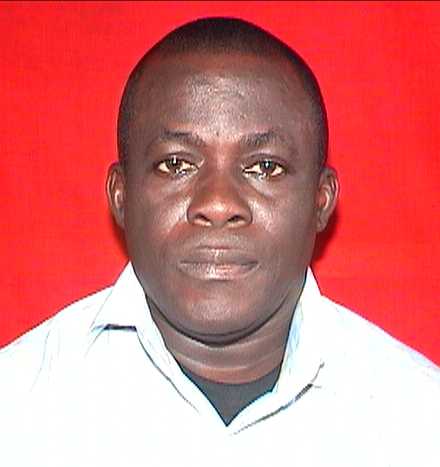
Department of English
The researcher's work synthesizes insights from publications spanning multilingual education, Jewish studies, literary theory, and language studies. Their investigations explore the intersection of language learning, cultural identity, literature, and human communication across diverse frameworks—examining themes such as textbook design principles, theoretical critiques in literary texts, and the role of metaphor and irony in collective discourse. This integrated approach highlights how these areas collectively challenge conventional narratives, offering a nuanced understanding of societal structures through interdisciplinary perspectives.
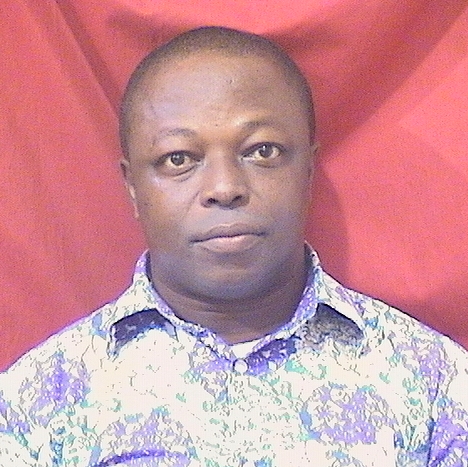
Department of Theoretical and Applied Biology
The researcher's work focuses on interdisciplinary studies within Physical Sciences, particularly examining the intricate interplay of physical dynamics, mixing processes, and stratification regimes in aquatic ecosystems and phytoplankton communities. By employing methodologies that integrate environmental factors with community structure analysis, the study explores how these elements influence ecosystem functioning across diverse spatial scales. The research encompasses both theoretical frameworks and practical applications, aiming to elucidate the ecological implications of physical and biological interactions on key systems such as Liana communities and their surroundings.

Department of Pharmacy Practice
This researcher conducts extensive work at the intersection of genetics and systems biology, focusing primarily on extracellular vesicle-derived pathways. Their research integrates insights from extracellular vesicles across diverse domains, including gene expression and chromatin dynamics, exosome biogenesis, viral infectious diseases, and CRISPR-based genetic engineering. Through studies such as exosomal protein production and cell lines using the CAS9 vector, they bridge genetics with broader systems-level investigations, contributing significantly to understanding complex biological processes.
Department of Obstetrics & Gynaecology
This researcher investigates how individual behaviors are influenced by their socio-economic context through various media and platforms, particularly online, aiming to understand human behavior in digital spaces.
Department of Supply Chain and Information Systems
Their research integrates multiple disciplines to advance sustainable supply chain management, leveraging big data analytics and interdisciplinary approaches such as circular economy principles and innovation studies. Their work combines insights from logistics, business intelligence, environmental science, and social sciences to develop frameworks for enhanced sustainability, resilience, and performance across diverse industries and contexts.

Department of Physics
The researcher's research is centered on the intersection of advanced materials science and energy applications, particularly in photovoltaic and photocatalytic systems. Their work explores the use of thin films, especially chalcogenide-based ones, to develop novel sensors and bioleaching techniques. Key areas include: 1. **Advanced Photovoltaic and photocatalysis**: The researcher investigates thin film materials for water degradation, focusing on adsorption and antimicrobial applications. 2. **Sensors and Bioremediation**: They leverage nanocomposites and chitosan to create functional materials with high selectivity for analyte detection. 3. **Chalcogenide Thin Films**: Contributions include the synthesis of CdSe, CdS, and their blends, which are critical in developing energy storage solutions for rural communities. 4. **Energy and Environment**: Research emphasizes reducing environmental impacts through solar and biofuel technologies, aiming to empower rural areas with renewable solutions. The researcher's work demonstrates a commitment to innovation across nanotechnology, photocatalysis, and bioremediation, with applications that enhance sustainability in rural settings.
Department of Mechanical Engineering
The researcher's work is centered on integrating advanced technologies into agricultural systems forGHana, emphasizing sustainable food production and environmental impact reduction. Their research spans diverse areas such as biofuel production (BIO), hybrid renewable energy (HYBRID), irrigation practices (IRRIGA), solar thermal (SOLAR), heat transfer mechanisms (HT), and energy efficiency (ENEFIEC). Through a unified approach, the researcher explores innovative methods like mathematical modeling, computer simulations, and field studies. Key themes include optimizing crop drying for biofuel production, integrating hybrid renewable energy systems with irrigation practices, and employing solar technologies to enhance water management. Their work underscores the importance of innovation in agricultural systems, aiming to promote sustainable food production while minimizing environmental impacts.
Department of Publishing Studies
The researcher investigates the intersection of technology's impact on learning and its psychological effects across diverse domains, examining digital literacy, programming development, and color perception while analyzing text complexity and public spaces created via artistic expression in Ghanaian society.
Department of Anatomy
The researcher has conducted extensive research spanning diverse areas of human and animal behavior and health, employing principles across social sciences, life sciences, and health sciences. Their work in forensic anthropology and evolutionary psychology focuses on understanding gender roles and biological patterns within specific populations, while their studies in sexual differentiation explore the biological basis of human sexality. The researcher’s ergonomic studies apply principles of hand measurement to predict ethnic identities, a theme that also intersects with forensic anthropology. Their contributions to medical research include advancements in liver disease diagnosis and treatment as well as early comparative studies on breast cancer. These works demonstrate how fundamental questions about human behavior and health are addressed across various disciplines, reflecting the researcher’s interdisciplinary approach.