Beta Testing
KNUST Research Atlas is currently in active Beta. Report bugs or suggest features to help us improve!
KNUST Research Atlas is currently in active Beta. Report bugs or suggest features to help us improve!
KNUST Research Atlas is currently in active Beta. Report bugs or suggest features to help us improve!
Search, discover, and connect with over 1,800 researchers, faculty members, and scholars across all departments of KNUST.
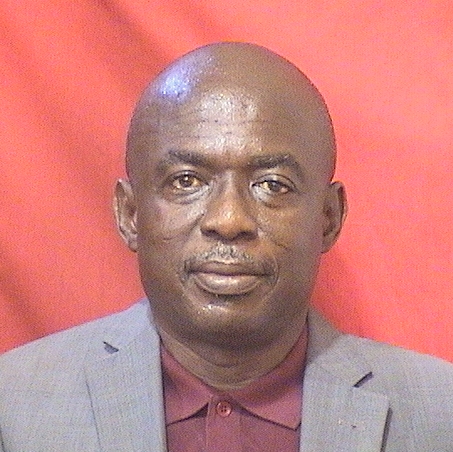
Department of Sociology & Social Work
The researcher has made significant contributions in applying machine learning across various fields, from healthcare to biology, through computational models of protein folding, exploration of deep learning architectures, optimization techniques in scientific computing, advancements in neural networks and deep learning for genomics, and innovative image processing solutions via deep learning methods. Their interdisciplinary approach across these areas demonstrates a broad impact on solving complex biological problems, showcasing the integration of computational approaches in data science for biologically relevant applications.
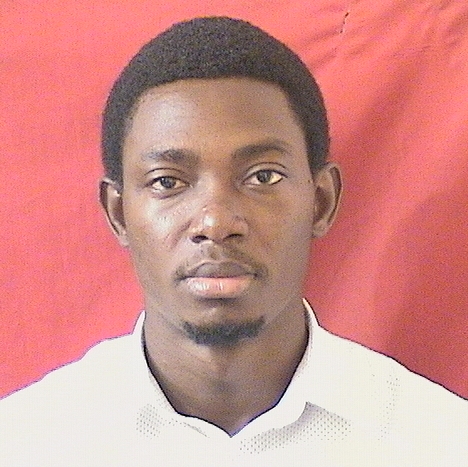
Department of Mathematics
The researcher's work spans multiple domains within physical sciences, focusing on themes such as social sciences (Islamic Finance), algebraic topology (homotopy and cohomology), finite group theory (fixed point theorems), algebraic geometry (geometric analysis), and health sciences (parasitic diseases). Their publications highlight significant contributions in each area, including innovative approaches to mathematical concepts like homological properties of groupoids in algebraic topology, foundational work on fixed point theorems in finite group theory, interdisciplinary studies linking parasitic diseases with social factors, and novel applications in financial mathematics.

Department of History & Political Studies
The researcher focuses on integrating computational methods across diverse scientific fields, particularly using machine learning and molecular dynamics for modeling complex physical behaviors. Their work bridges physics with computer science, applying these techniques to study collective behavior, self-organization, and dynamic processes in natural and engineered systems.
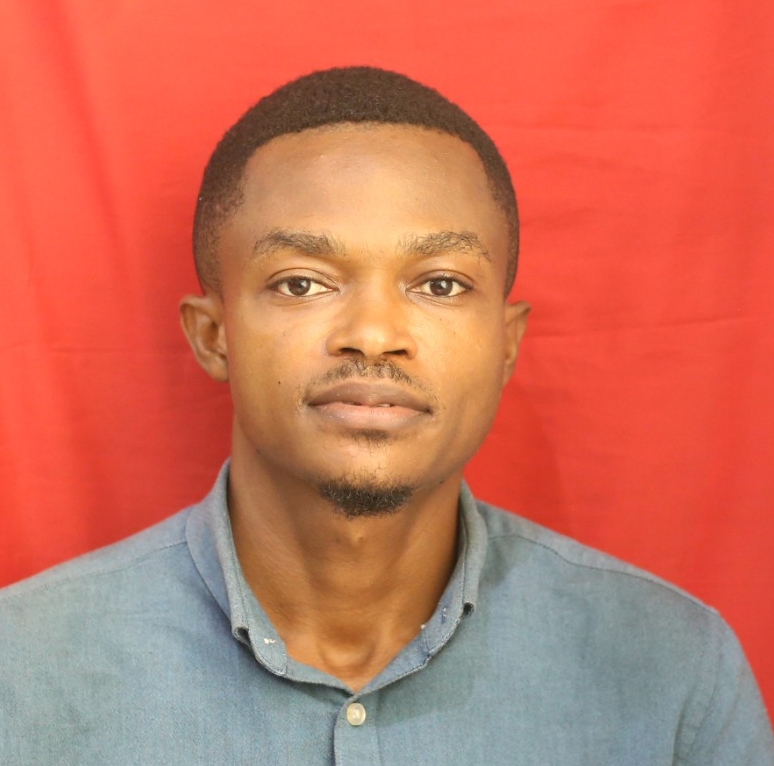
Department of Physiology
The researcher's work is centered on reproductive and sexual health in the health sciences domain, specifically investigating the effects of dietary patterns on testosterone-induced prostatic hyperplasia in rats, contributing to broader understanding of hormonal influences on male health.
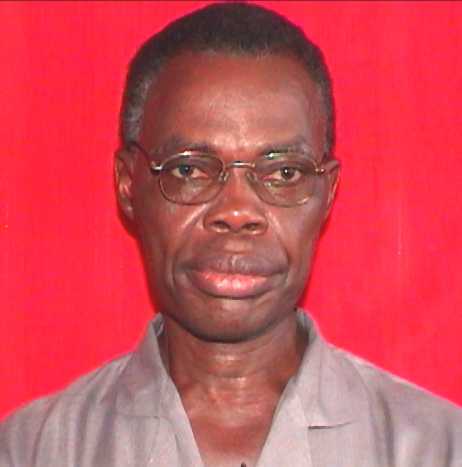
Department of Theoretical and Applied Biology
The researcher focused on developing comprehensive frameworks to integrate and analyze deep learning algorithms with human decision-making processes, particularly in complex systems across diverse domains such as healthcare, education, environmental modeling, recommendation systems, and data privacy. Their work emphasized advancing computational intelligence techniques for understanding interaction dynamics and improving AI-driven solutions across these fields.
Department of Silviculture and Forest Management
The researcher has integrated multiple areas of neuroscience into a comprehensive model, employing mathematical frameworks to study brain function and connectivity across various networks. Their work aims to advance understanding through systematic integration of computational methods, focusing on how different brain regions interact to support complex cognitive processes.
Department of Communication Design
The researcher has contributed to diverse fields through their work, demonstrating fluidity in their approach while exploring intersections between mathematics, computer science, biology, and engineering.
Department of Forest Resources Technology
The researcher's work centers on the intersection of land use and ecosystem services, particularly examining urban green spaces as key drivers for beneficial environmental outcomes. Through interdisciplinary studies combining plant biology, soil science, and social sciences, the researcher investigates how ecosystems can be managed to enhance carbon sequestration, biodiversity conservation, and soil health. Their approach integrates microbial bioremediation techniques with plant species responses, aiming to address challenges in agricultural, hydrological, and environmental management in African contexts. The research highlights the role of urban green spaces in fostering these ecological services while exploring their ecological, social, and economic dimensions.
Department of Meteorology and Climate Science
The researcher has developed comprehensive modeling frameworks that integrate computational methods across various scientific disciplines to address complex real-world problems, particularly in medical, climate, genetic, materials science, and geophysical systems. Their work emphasizes the development of integrated data-driven discovery approaches using advanced algorithms and interdisciplinary methodologies.
Department of Medicine
The researcher's work is centered on several significant areas within the health sciences, encompassing HIV/AIDS research, parasitic infections, kidney disease management, cardiovascular health, and immunological studies. Key themes include the interplay between helicobacter pylori and immune activation, renal function and mortality risks, HIV-related complications such as kidney disease and heart failure, and the impact of various health interventions on patient outcomes. The researcher's publications collectively highlight advancements in understanding health disparities, immune responses, antiretroviral therapies, dysphagia management, blood pressure disorders, antibiotic use patterns, substance abuse, poverty, social policies, cardiovascular diseases, and the role of immunology in disease management. This integrated approach provides a comprehensive view of contemporary health challenges and interventions.
Department of Pharmaceutics
The researcher's work integrates renewable energy practices with sustainability goals across various sectors, exploring collaboration between industry, government, and academia to address global climate challenges.
Department of Anatomy
The researcher has conducted extensive molecular biology and health applications research, integrating various analytical methods such as histology, immunofluorescence, and microscopic identification across diverse biological systems. Their work focuses on understanding protein function in human tissues, investigating histomorphological changes in pathological conditions like malaria, colon cancer, and connective tissue disorders, studying caveolin-1 localization in placental cells, analyzing histomorphological features of specific tissues in diabetic patients, examining genetic factors influencing colorectal cancer, and exploring how different tissues respond to specific stimuli.