Beta Testing
KNUST Research Atlas is currently in active Beta. Report bugs or suggest features to help us improve!
KNUST Research Atlas is currently in active Beta. Report bugs or suggest features to help us improve!
KNUST Research Atlas is currently in active Beta. Report bugs or suggest features to help us improve!
Search, discover, and connect with over 1,800 researchers, faculty members, and scholars across all departments of KNUST.
Department of Civil Engineering
The researcher's work integrates innovative greywater management techniques, advanced biosorption methods in environmental science, and biofuel production for sustainable development, addressing themes of resource management, pollution reduction, and social impact, particularly focusing on Ghana's challenges in mining, water access, and sustainability.
Department of Civil Engineering
The researcher focuses on integrating advanced structural analysis and monitoring techniques to study load-bearing behavior and potential damage mechanisms, particularly within offshore wind turbine and reinforced concrete foundations. Their work employs sophisticated models for crack propagation assessment and health monitoring methods. Additionally, they investigate the environmental impacts of radiation studies within nuclear project applications.
Department of Civil Engineering
The researcher focuses on advancing interdisciplinary research at the intersection of geophysics and environmental science, utilizing innovative methodologies such as geophysical and electrical resistivity studies to address challenges in soil mechanics, water flow processes, and geotechnical information systems. Their work emphasizes the application of advanced analytical techniques like interpretable AI for estimating soil moisture content and applying geophysical methods to site investigations and tailings management.
Department of Civil Engineering
The researcher has focused on integrating advanced computational methods with innovative data analysis techniques to address complex scientific problems across diverse fields. Their work emphasizes the development of scalable algorithms and interdisciplinary approaches to tackle challenges in material characterization, biological systems, and multiscale modeling. The research employs cutting-edge machine learning and inverse problem-solving methodologies to advance understanding in engineering, physics, and biology, while also fostering collaboration between experts in computational science and experimentalists. Their efforts aim to provide robust tools for interpreting large-scale data, enabling predictive modeling across scales, and bridging the gap between theoretical insights and practical applications.
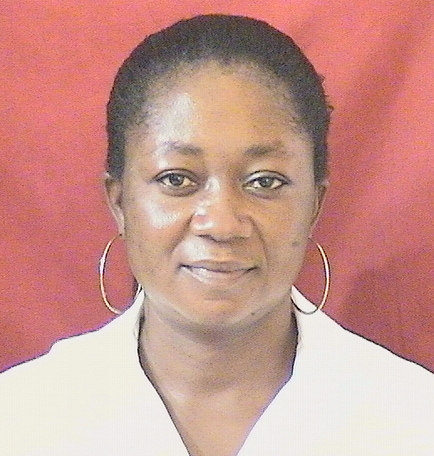
Department of Civil Engineering
My research focuses on advancing quantum computing's transformative potential in materials science, particularly through the exploration of its fundamental limitations and capabilities. I employ cutting-edge algorithms to tackle the complexities of simulating many-body systems, leveraging graph neural networks for novel material analysis approaches. My work also delves into theoretical frameworks that elucidate how molecules interact within proteins, contributing to a deeper understanding of their behavior under quantum transformations. Additionally, I maintain an overview through a comprehensive review paper that synthesizes these insights, highlighting the potential of quantum technologies in shaping future materials discovery and application.
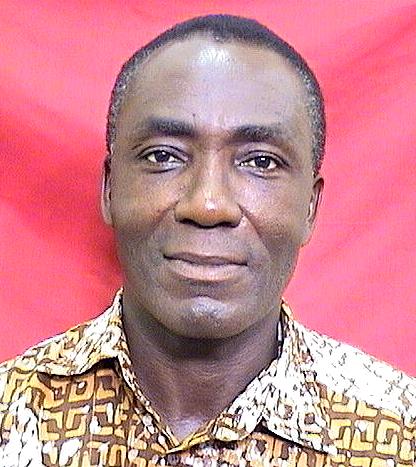
Department of Civil Engineering
The researcher's work focuses on a broad range of themes within physical sciences, encompassing land use and ecosystems, water-energy-food Nexus studies, hydrological modeling, flood risk assessment, environmental controls, soil issues, urban development challenges, transboundary water resource management, groundwater and isotope geochemistry, AI applications in forecasting, water reuse technologies, biosolids from dewatering faecal sludge, and wastewater treatment systems.
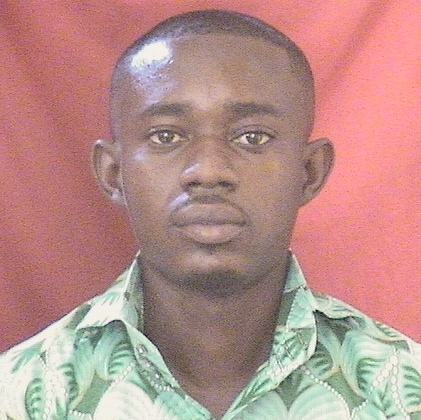
Department of Civil Engineering
The researcher conducts a comprehensive study of material behavior across multiple domains, focusing on how materials respond under varying stresses and conditions. Their work encompasses geotechnical engineering, where they investigate shear strength influenced by mineral composition and wet-dry cycles; underground structures, examining geosynthetic materials and pipeline performance under static and dynamic loads; soil mechanics, analyzing deformation in expansive soils through experiments; and geophysical methods, applying electrical resistivity to study soil compaction. This interdisciplinary approach highlights the researcher's expertise in understanding material behavior across physical sciences and engineering disciplines.
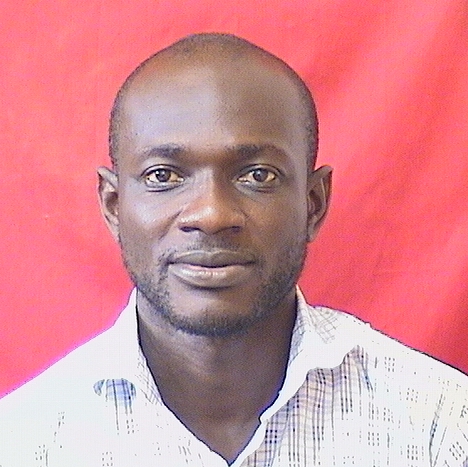
Department of Civil Engineering
The researcher has conducted extensive work across diverse domains within physical sciences, with a focus on mining and resource management, environmental contamination, geotechnical studies, waste management, hydroelectric dam analysis, groundwater studies, and soil science. Their research integrates interdisciplinary methodologies, employing advanced techniques from scientific literature, geophysical methods, and analytical approaches to address complex environmental challenges. The researcher's work highlights the integration of traditional environmental issues with modern analytical and geological techniques, demonstrating a commitment to advancing understanding in areas such as resource management, contamination prevention, and sustainable practices across disciplines.
Department of Civil Engineering
Groundwater and water quality are central themes in contemporary research, encompassing methods for assessing these systems (e.g., smart irrigation, isotope analysis). Hydrological forecasting via AI enhances our understanding of groundwater dynamics. Mining techniques involve soil extraction, impacting water flow, while heavy metals in the environment influence both land use and ecosystems. Geophysical methods improve site-specific assessment, though land-use changes like mining complicate matters. Addressing these areas helps mitigate environmental challenges and ensure sustainable water management for communities.
Department of Civil Engineering
The researcher's work focuses on the engineering properties of natural fiber reinforced composites within physical sciences, particularly examining the tensile strength and engineering characteristics of natural fibers such as Kenaf.
Department of Civil Engineering
The researcher's work spans a broad range of topics within Geotechnical Engineering and Physical Sciences. Their studies emphasize innovative approaches in engineering applications, including stress-strain analysis of concrete with quarry rock dust (Theme 1), the influence of concrete shrinkage and creep on structural behavior (Themes 2 and 3), and advancements in material science through research into concrete corrosion and durability (Theme 4). Key contributions are demonstrated by investigations into deflection characteristics of reinforced precast structures, reliability analysis of pre-stressed concrete shells, and applications of differential equations in solving engineering problems. These findings contribute significantly to advancing the understanding and practical use of concrete technology in geotechnical systems.
Department of Civil Engineering
The researcher's work focuses on advancing computational and AI-based methods to address complex challenges across various domains. Their publications highlight efforts in quantum computing for efficient problem solving, machine learning applications in climate science for accurate prediction, and neural networks in medical imaging for early disease detection, aiming to leverage AI technology to make significant contributions across physics, environment, and healthcare.