Beta Testing
KNUST Research Atlas is currently in active Beta. Report bugs or suggest features to help us improve!
KNUST Research Atlas is currently in active Beta. Report bugs or suggest features to help us improve!
KNUST Research Atlas is currently in active Beta. Report bugs or suggest features to help us improve!
Search, discover, and connect with over 1,800 researchers, faculty members, and scholars across all departments of KNUST.

Department of Mathematics
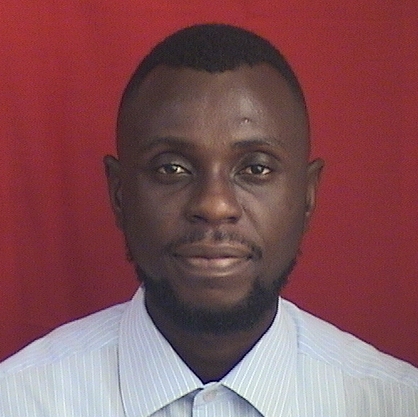
This researcher's work integrates topological and matrix-based methods into data analysis within physical sciences, focusing on novel approaches to address complex systems through interdisciplinary studies. Their integration of these methodologies enhances understanding across diverse domains, with specific contributions from each area influencing broader applications in areas such as machine learning and complex system modeling.
Department of Mathematics
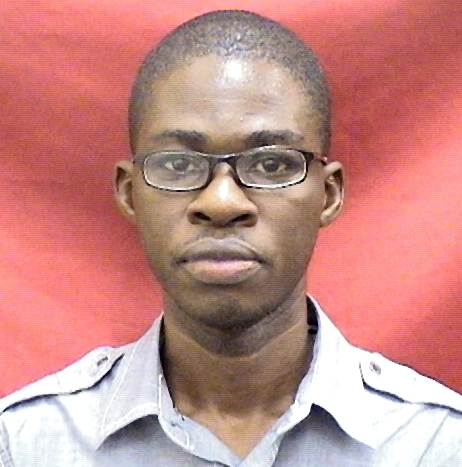
The researcher has developed a unified statistical research framework that integrates copula models to address challenges in diverse fields across several domains. Their work spans topics ranging from health sciences (malaria control and public health interventions) to social sciences (financial risk modeling, mortality forecasting, demographic analysis), physical sciences (energy load prediction and environmental studies), statistical distribution estimation, actuarial science, and more. Central to their methodology is the application of copula-based models across these themes, demonstrating a coherent approach to dependency modeling in complex systems across health, finance, energy, and social sciences.
Department of Mathematics
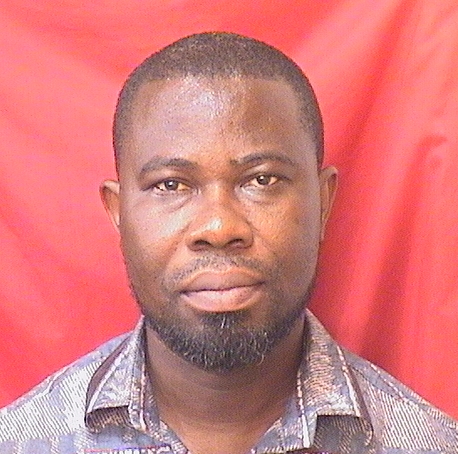
The researcher's work spans multiple interdisciplinary fields, focusing on innovative mathematical and computational approaches across domains such as image processing, solar energy forecasting, numerical modeling of fluid flow, materials science, biometrics, fatigue analysis, ergonomics, optics for smart technologies, flood management, and advanced differential equations. Their research integrates techniques like fractional calculus, wavelet transforms, Chebyshev methods, and homogenization approaches to address challenges in medical imaging, photovoltaic forecasting, fluid dynamics, material properties, and energy systems. This holistic approach highlights their commitment to advancing both theoretical and applied aspects of science and engineering through rigorous mathematical modeling and interdisciplinary collaboration.
Department of Mathematics
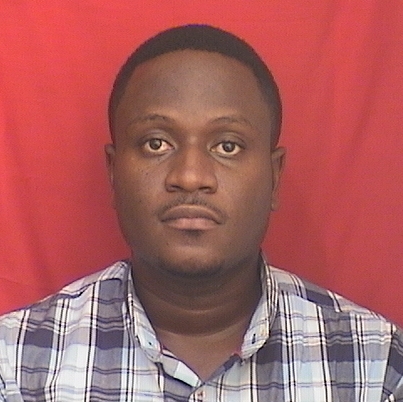
The researcher's work integrates multiple domains, focusing on health disparities in female genital mutilation, gender dynamics affecting labor and family structures, nutritional aspects of children affected by water access, cellular mechanics influencing disease processes, and linguistic influences shaping cultural analyses.
Department of Mathematics
The researcher's work spans a diverse array of dynamical systems and their behaviors across various mathematical frameworks, illustrating intricate interactions between order and chaos. From tent function dynamics to phase diagram studies, the research explores bifurcations, Lyapunov exponents, attractors, and fractals in contexts from physics to engineering. The integration of thermodynamic approaches using Tsallis entropy reveals the role of dynamical patterns in energy localization within physical systems.
Department of Mathematics
This researcher has focused their work across a diverse range of themes, all centered on advancing research through innovative approaches in computational optimization, simulation techniques, mathematical modeling, and real-world applications. Their overarching research focus encompasses the application of advanced algorithms and models to address challenges in photovoltaics, viral infections, public health systems, energy management, epidemiological studies, manufacturing processes, and financial mathematics. The researcher has developed novel solutions using hybrid methods such as NSGAII, Monte Carlo simulations, particle swarm grey wolf optimization, fractional compartmental models, curvilinear Shallow Water Equations, field-flow fractionation techniques, and machine translation approaches to tackle complex problems in these domains, aiming for both theoretical advancements and practical applications.
Department of Mathematics
The researcher focuses on developing advanced denoising methods for image and signal data within the physical sciences. Their work involves applying wavelet transforms, particularly the Haar wavelet, for forecasting financial stock returns in Ghana.
Department of Mathematics
The researcher's work focuses on exploring the interplay between complex systems across diverse fields, utilizing a combination of statistical mechanics, energy dynamics, geometric topology, quantum systems, social behavior, opinion formation, algebraic structures, and mathematical modeling. This integrated approach examines phenomena such as phase transitions in Ising models, socio-economic choices from a physics perspective, lattice metrics on the sphere, and decision-making processes, all unified under the overarching theme of understanding universal principles governing complex system behaviors from both theoretical and computational angles.
Department of Mathematics
The researcher has made significant contributions across diverse fields of science, integrating advancements in food chemistry, proteomics, biochemistry, and functional biology. Their work spans themes such as phenolic compounds, nanomaterials, protein biogenesis, and metabolic pathways, reflecting a holistic approach to understanding life sciences. Key areas include the role of enzymes like Fe3+ reducing agents, methods for protein analysis, and the interaction between plants and food systems. The researcher has also explored the integration of advanced analytical techniques, such as heat stability studies and mass spectrometry, to uncover novel insights in metabolic processes. Their research underscores the importance of interdisciplinary approaches in addressing complex biological and chemical challenges, demonstrating a commitment to advancing our understanding of food and health through cutting-edge scientific investigations.
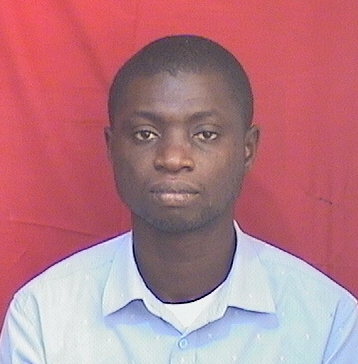
Department of Mathematics
The researcher's work focuses on advancing the integration of rough sets and fuzzy logic with mathematical morphological concepts, particularly through revised approaches that expand applicability to complex structures such as unions and intersections in physical sciences contexts.
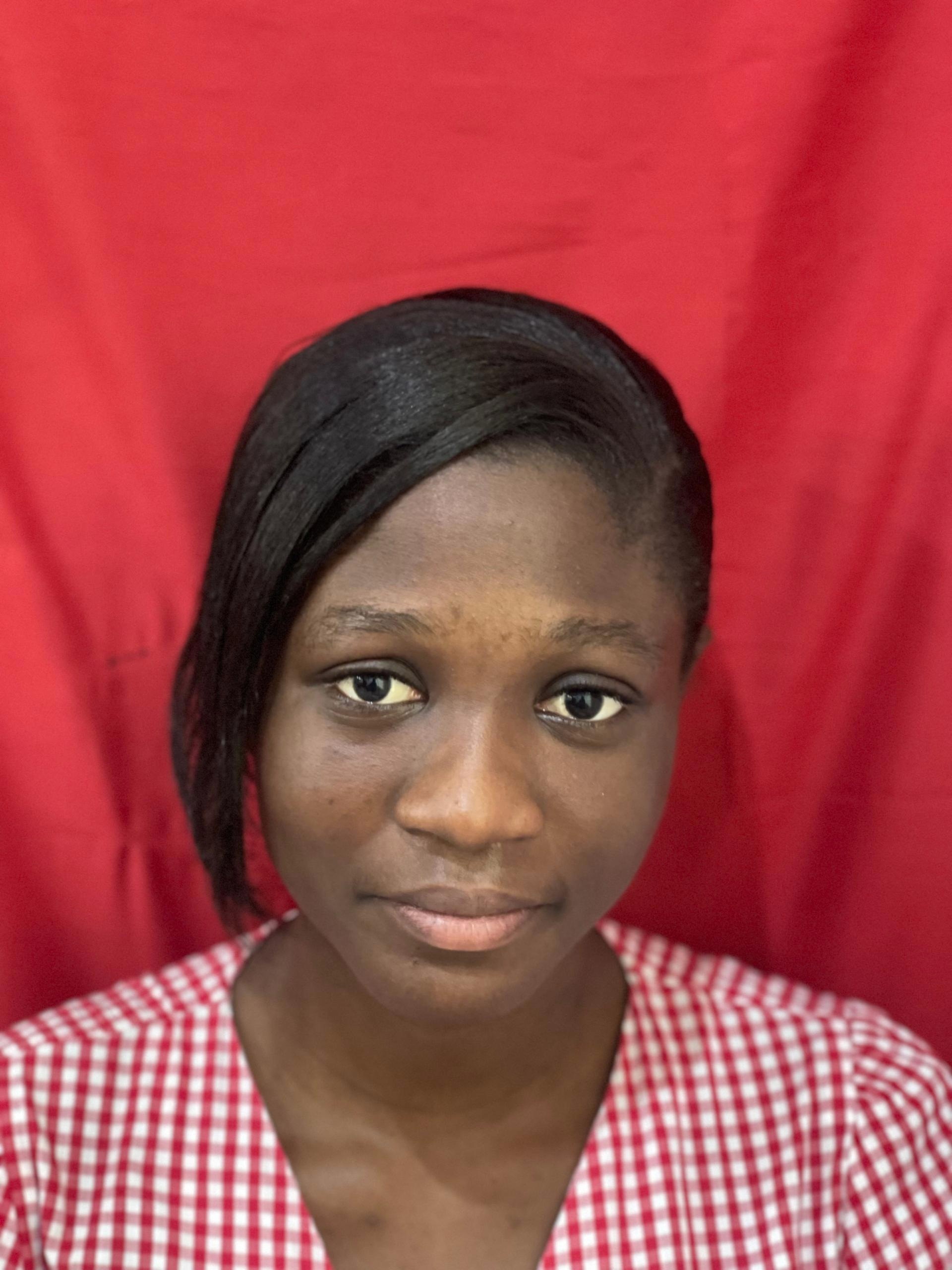
Department of Mathematics
The researcher focuses on integrating statistical methods with genetic and genomic data to advance understanding in cancer biology and personalized medicine, particularly exploring connections between epigenetic modifications and disease progression.
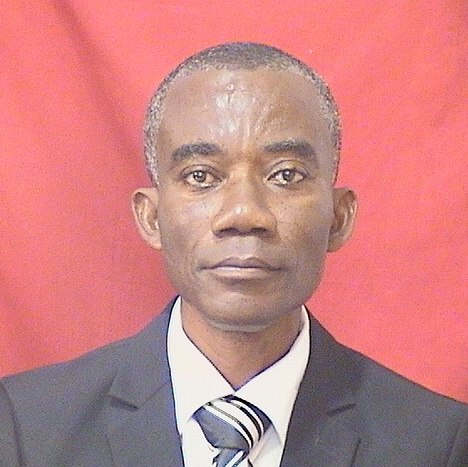
Department of Mathematics
The researcher is primarily engaged in integrating theoretical mathematics with applied fields across diverse domains such as physics, social sciences, health sciences, computer science, philosophy, and more. Their work spans areas like fractional calculus, chaos theory, optimization techniques, genetic algorithms, fuzzy systems, algebraic geometry, probabilistic modeling, differential equations, and quantum mechanics. The researcher's focus includes both foundational mathematical advancements and practical applications in teaching methodologies (education), pandemic tracking (health sciences), virus modeling, computational approaches, theoretical physics, and interdisciplinary studies that bridge mathematics with other scientific and social disciplines.