Beta Testing
KNUST Research Atlas is currently in active Beta. Report bugs or suggest features to help us improve!
KNUST Research Atlas is currently in active Beta. Report bugs or suggest features to help us improve!
KNUST Research Atlas is currently in active Beta. Report bugs or suggest features to help us improve!
Search, discover, and connect with over 1,800 researchers, faculty members, and scholars across all departments of KNUST.

Department of Geomatic Engineering
The researcher has conducted extensive research across multiple domains, focusing on parasitic diseases, environmental impacts, public health policies, and agricultural advancements, all of which contribute to a comprehensive understanding of Ghanaian health challenges and solutions. Their work integrates spatial variation studies, treatment strategies for lymphatic filariasis, elimination programs, and control measures, while also exploring the role of satellites in rainfall estimation, land use changes, and ecosystem services. The researcher’s research extends into areas such as geology, epidemiology, social equity, cancer screening, agronomy, and global public health policies, all aimed at addressing neglected tropical diseases and improving quality of life for the Ghanaian population.
Department of Geomatic Engineering
This researcher's work centers on understanding land rights and land reforms in life sciences across diverse domains such as Ghana and Ethiopia. Their research integrates 3D modeling techniques to analyze urban land development, legal frameworks, geospatial technologies, and social justice issues while addressing challenges related to environmental impact and sustainability goals. Methodologies that combine interdisciplinary approaches contribute to a comprehensive exploration of land rights and reforms in both life sciences and geospatial applications.
Department of Geomatic Engineering
The researcher's work integrates advanced technologies and methodologies from environmental science, land-use studies, hydrology, agriculture, environment, and beyond, aiming to enhance sustainable land management practices. Through innovative approaches like Geo-Information Techniques and GIS, they assess changes in land cover, ecosystems, and water systems, focusing on improving resource efficiency across various domains. This research seeks to balance human needs with ecological benefits, particularly in managing urban areas and natural ecosystems for enhanced water resource management and food security.
Department of Geomatic Engineering
The researcher focuses on integrating deep learning, optimization, and bioinspired systems to address challenges in healthcare and environmental sustainability, aiming to advance synthetic biology through interdisciplinary approaches.

Department of Geomatic Engineering
The researcher has developed a comprehensive approach to understanding radioactive contamination and its transfer across various spatial scales, particularly through modeling their occurrence in farmlands. Their work focuses on analyzing the geospatial distribution and spatial variability of naturally occurring radioactive materials, examining processes at both global and regional levels while incorporating soil property characteristics. The study underscores the importance of quantifying uncertainties in predicting radioactive transfer mechanisms, aiming to provide actionable insights for environmental management and safety protocols.

Department of Geomatic Engineering
The researcher has focused on applying advanced analytical techniques such as fluorescence microscopy, GNSS positioning, and pharmacological studies to investigate biological processes relevant to health and environment. Their work encompasses the study of infectious diseases through antibiotic resistance, tuberculosis epidemiology, and the role of parasites and host interactions in ecological and public health contexts. Additionally, they address environmental factors influencing hydrophobic organisms, contributing to a deeper understanding of disease dynamics and environmental impacts on host populations. Their research aims to enhance public health interventions by leveraging these insights.
Department of Geomatic Engineering
The researcher has integrated advanced computational methods, including neural networks, feedback mechanisms, and stochastic modeling, across various scientific disciplines to enhance our understanding of complex environmental systems. Their work combines approaches from physics, computer science, and biology to model phenomena such as climate dynamics, ecosystem interactions, and geophysical processes, aiming to uncover fundamental principles governing these systems through the application of innovative computational techniques.
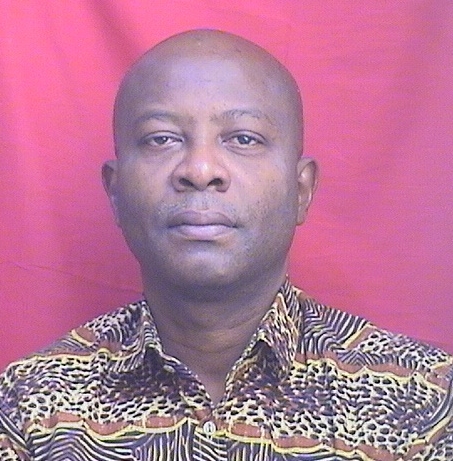
Department of Geomatic Engineering
The researcher has made significant contributions to understanding various aspects of environmental systems through innovative methodologies and interdisciplinary approaches, particularly focusing on hydrological processes, land use changes, soil dynamics, and resource management. Their work spans across diverse domains, including soil moisture analysis, water resources management, rainfall patterns, and agricultural practices. Through a combination of geospatial techniques, remote sensing, and applied field studies, the researcher has advanced knowledge in soil erosion, water quality monitoring, and land-use changes. Notable projects include spatial-temporal analyses of hydrological systems, geospatial modeling of forest landscapes, and digital library support for educational programs. Their research underscores the critical role of innovative technologies in addressing global challenges related to water resources, biodiversity conservation, and sustainable development in developing communities.
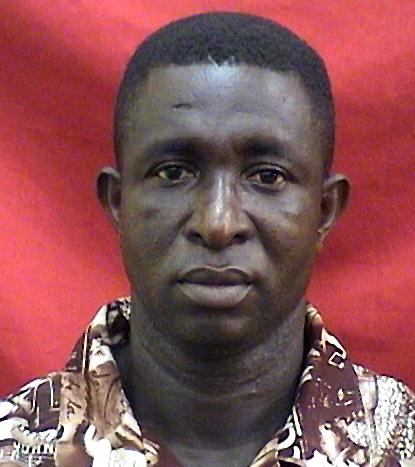
Department of Geomatic Engineering
The researcher's primary focus is on integrating behavioral patterns with evolutionary biology across diverse animal species. Their work explores themes such as neural coding, social behavior, and neurobiological mechanisms, collaborating with experts in related fields like behavioral ecology and neuroscience. Through computational methods, they analyze large datasets to uncover genetic and environmental influences on behavior. Their research integrates evolutionary perspectives into empirical studies of specific organisms, targeting behaviors found in diverse species to understand broader patterns of evolution. The approach combines longitudinal studies of individual animals with statistical models, enabling insights into the interplay between genetics and behavior. Funding sources vary across their projects but consistently aim to address fundamental questions about how traits are shaped by both genetic variation and environmental pressures. Their work seeks to identify universal mechanisms driving animal behavior while also exploring specific biological systems for a deeper understanding of evolution.
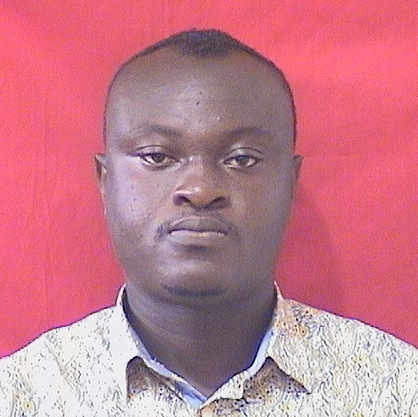
Department of Geomatic Engineering
The researcher focuses on a broad range of issues, examining the environmental and social impacts of climate change, the role of ecosystems in sustaining human well-being, and innovations in agriculture that improve food production while reducing resource use. Their work bridges the gap between environmental science, technology, and public health, advocating for sustainable practices across diverse sectors.
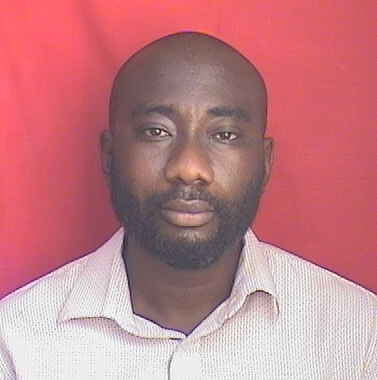
Department of Geomatic Engineering
This research focuses on the development and application of innovative concrete materials to enhance construction efficiency, particularly leveraging recycled materials for building projects.
Department of Geomatic Engineering
The researcher's work focuses on mitigating urban heat islands, employing methodologies rooted in physical sciences to assess climate resilience and ecological dynamics across diverse environments. Their research incorporates insights from previous studies examining similar challenges globally, highlighting their contributions to advancing sustainable urban design practices.