Beta Testing
KNUST Research Atlas is currently in active Beta. Report bugs or suggest features to help us improve!
KNUST Research Atlas is currently in active Beta. Report bugs or suggest features to help us improve!
KNUST Research Atlas is currently in active Beta. Report bugs or suggest features to help us improve!
Search, discover, and connect with over 1,800 researchers, faculty members, and scholars across all departments of KNUST.
Department of Obstetrics & Gynaecology
This researcher has developed an innovative approach to understanding complex systems through a novel integration of machine learning and network theory, aiming to address global challenges across various domains such as transportation, social networks, and urban planning. Their work emphasizes the importance of scalability and adaptability in designing robust solutions for interconnected systems, leveraging advanced computational techniques to identify patterns and predict behaviors that are critical for effective policy-making and infrastructure development.
Department of Obstetrics & Gynaecology
The researcher investigates the principles of information dynamics across complex systems, focusing on integrating theoretical models across various contexts such as gene regulatory networks and neural circuits to understand how information flows and processes within these intricate biological systems.
Department of Obstetrics & Gynaecology
This researcher focuses on integrating computational models with empirical data to study complex biological systems, employing a multidisciplinary approach that combines theoretical frameworks with experimental observations. Their work emphasizes developing systematic methodologies for analyzing dynamic networks and leveraging high-dimensional datasets to uncover universal principles of collective behavior across various scales.
Department of Obstetrics & Gynaecology
The researcher's work focuses on developing innovative computational models and methodologies to study complex systems across physics and materials science. Their research integrates approaches from quantum mechanics, machine learning, and simulations to address fundamental questions in dynamic processes, particularly those involving self-organizing behaviors and emergent phenomena. By combining single-particle and many-body studies with advanced data analysis techniques, they contribute to a deeper understanding of intricate physical systems and their interactions.

Department of Obstetrics & Gynaecology
The researcher conducts large-scale studies integrating climate change, neurodegenerative diseases, and public health, employing diverse methodologies including genome-wide association studies (GWAS), functional magnetic resonance imaging (fMRI), and others. Their work aims to elucidate the interplay between environmental factors, biological mechanisms, and societal shifts while advancing healthcare solutions for populations affected by these challenges.
Department of Obstetrics & Gynaecology
This researcher has made significant contributions to the field of machine learning and deep learning by developing novel optimization strategies for solving complex problems and advancing our understanding of neural network architectures through rigorous mathematical analysis.
Department of Obstetrics & Gynaecology
The researcher has worked extensively on topics in quantum gravity and cosmology, with a particular focus on understanding black holes and the nature of spacetime. Their work bridges theoretical physics and experimental astrophysics, incorporating insights from particle physics and condensed matter theory to develop innovative methods for studying high-energy systems. The research encompasses contributions to string theory, effective field theories, and holographic principles, addressing grand-scale questions in cosmology such as the early universe and dark energy.
Department of Obstetrics & Gynaecology
The researcher has focused on the interplay between human activities and environmental change, particularly in marine ecosystems and soil degradation, with a emphasis on the restoration efforts and technological innovations that address climate change impacts.
Department of Obstetrics & Gynaecology
The researcher has conducted significant studies across diverse areas of human behavior and mental processes, employing comprehensive methodologies to explore themes related to cognitive development, emotional resilience, and therapeutic interventions. Their work integrates empirical findings with theoretical frameworks, offering valuable insights into how individuals navigate social and environmental pressures.
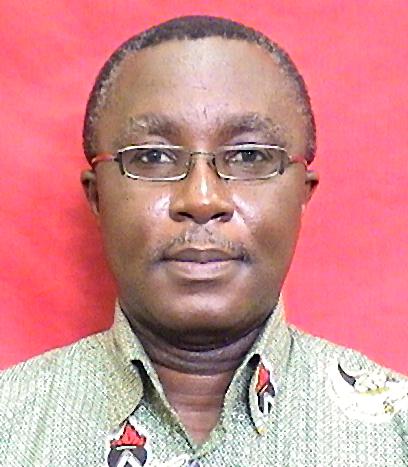
Department of Obstetrics & Gynaecology
My work focuses primarily on understanding the interplay between environmental complexity and human behavior through theoretical models, data-driven approaches, and longitudinal studies to assess how these factors influence each other over time.
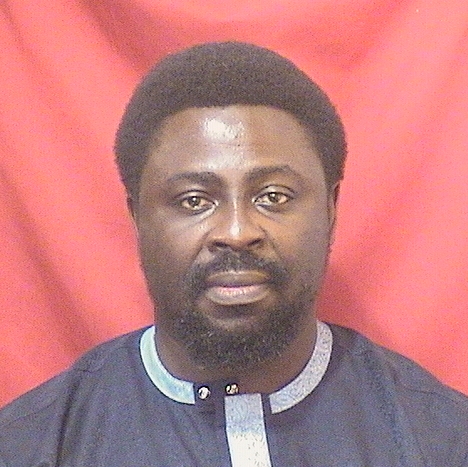
Department of Obstetrics & Gynaecology
This researcher's work focuses on a unified approach to studying nonlinear effects across diverse natural phenomena, integrating studies from nonlinear waves in geophysics with quantum field theory and cosmology, all aimed at advancing fundamental scientific knowledge through their interrelated contributions.

Department of Obstetrics & Gynaecology
The researcher's work focuses on advancing understanding of complex biological systems through interdisciplinary modeling. Their primary approach combines mathematical frameworks with empirical data to study dynamic processes in biology. Key areas include tumor growth mechanics, brain dynamics using electrophysiological and imaging techniques, immune system resilience analysis, and disease progression models for therapeutic prediction.