Beta Testing
KNUST Research Atlas is currently in active Beta. Report bugs or suggest features to help us improve!
KNUST Research Atlas is currently in active Beta. Report bugs or suggest features to help us improve!
KNUST Research Atlas is currently in active Beta. Report bugs or suggest features to help us improve!
Search, discover, and connect with over 1,800 researchers, faculty members, and scholars across all departments of KNUST.

Department of Mechanical Engineering
The researcher's work is centered on integrating advanced technologies into agricultural systems forGHana, emphasizing sustainable food production and environmental impact reduction. Their research spans diverse areas such as biofuel production (BIO), hybrid renewable energy (HYBRID), irrigation practices (IRRIGA), solar thermal (SOLAR), heat transfer mechanisms (HT), and energy efficiency (ENEFIEC). Through a unified approach, the researcher explores innovative methods like mathematical modeling, computer simulations, and field studies. Key themes include optimizing crop drying for biofuel production, integrating hybrid renewable energy systems with irrigation practices, and employing solar technologies to enhance water management. Their work underscores the importance of innovation in agricultural systems, aiming to promote sustainable food production while minimizing environmental impacts.

Department of Mechanical Engineering
I focus on understanding how neural circuits process information in real-time by combining experimental data with computational modeling, integrating neuroimaging and behavioral studies across multiple conditions or tasks to examine how these systems integrate and modulate information efficiently.
Department of Mechanical Engineering
This researcher has conducted extensive research across diverse areas of solar energy technologies in Africa, encompassing themes such as solar radiation and photovoltaics, silicon and solar cell technologies, photovoltaic system optimization techniques, electric vehicles and infrastructure, electronic packaging and soldering technologies, stroke rehabilitation and recovery, and power systems and renewable energy. Their work focuses on advancing innovation in solar technology, optimizing module performance, enhancing battery charging efficiency, improving vehicle electrification, developing robust electronic components for solar applications, contributing to stroke rehabilitation through energy recovery initiatives, and driving the transition to renewable energy sources.

Department of Mechanical Engineering
The researcher's work focuses on additive manufacturing materials, particularly those formed using SLM (Singly-Lamellar StringBuilder) technology. Their studies extensively examine properties such as porosity, hardness, and friction and wear performance in SLM-affected samples. They also employ Taguchi’s statistical design of experiments for process optimization. Functionally graded materials via interfacial bonding are investigated, focusing on residual stresses and corrosion performance. The researcher uses neural networks to predict tensile strength influenced by heat treatments and process parameters. Additionally, they examine post-process-free fatigue performance in in-situ-heated IN718 samples, highlighting the impact of heat treatment strategies on material durability.
Department of Mechanical Engineering
The researcher's focus is centered on enhancing the efficiency and reliability of solar photovoltaic (PV) systems. Their work encompasses several critical areas: 1. **Photovoltaic Optimization Techniques**: The researcher has conducted extensive research on polycrystalline and monocrystalline silicon modules, exploring their structures' effects on performance and degradation. 2. **Solar Cell Materials and Integration**: Their studies delve into materials like c-Si solar cells and the role of soldering in connecting these components, ensuring seamless integration for optimal functionality. 3. **Soldering Technologies**: The researcher investigates advanced soldering processes, such as lead-free sponging and Taguchi optimization, to mitigate issues like joint integrity, which are crucial for PV system reliability. 4. **Thermal Cycling and Environmental Impact**: Their work examines how environmental factors influence solar cell performance, focusing on thermal behavior under cycling conditions and the role of materials like bricks in energy-efficient building envelopes. 5. **Energy Efficiency Challenges**: The researcher analyzes the energy impacts of integrating various technologies into the power grid, particularly highlighting the need for adaptive strategies in hot-humid climates. In summary, the researcher's work is comprehensive, concentrating on improving solar PV system design and performance, with a strong emphasis on module structures, soldering, thermal management, environmental interactions, and grid integration.

Department of Mechanical Engineering
The researcher has been investigating several sustainability challenges in Ghana, particularly in the energy sector and agriculture. They have focused on improving energy access, enhancing food production efficiency, and advancing agro-e经济 systems. By leveraging technologies such as solar photovoltaic (PV) systems, biomass-based methods, and smart grids, they have sought to address these issues while also exploring broader trends in sustainable energy and biofuels across the globe.

Department of Mechanical Engineering
The researcher's work focuses on the broad field of physical sciences, with a primary emphasis on fluid mechanics and heat transfer phenomena across diverse domains. Their studies encompass radiative heat transfer in magnetohydrodynamic flows through porous media, turbulence effects on rough surfaces, particle dynamics in turbulent flows, aerodynamic impacts on jets, and applications in electromagnetism and hydraulic structures. This interdisciplinary approach highlights the researcher's holistic exploration of fluid dynamics, heat transfer, and their practical implications across engineering disciplines.
Department of Mechanical Engineering
The researcher's work focuses on advancing artificial intelligence techniques for decision-making, with an emphasis on ethical considerations such as algorithmic fairness and transparency. Their research integrates AI into complex systems, particularly in healthcare and economics, aiming to develop robust algorithms that balance efficiency and human interaction. Additionally, they are dedicated to fostering open-source tools that enable broader experimentation and innovation across diverse applications, ensuring responsible development of AI technologies.

Department of Mechanical Engineering
The researcher has made significant contributions across multiple domains in network science and complex systems. Their work includes advancements in network modeling, algorithm development for community detection, and analysis of social networks. They have also examined the impact of online platforms on various communities, both positive and negative, contributing to a deeper understanding of the broader societal effects within these fields. Their research spans diverse areas such as information diffusion, social influence, and collective behavior, offering valuable insights into the intricate dynamics of interconnected systems.
Department of Mechanical Engineering
This researcher's work integrates multiple studies focusing on animal behavior, cognitive processes, and environmental interactions across diverse publication themes, demonstrating significant contributions to understanding ecological principles.
Department of Mechanical Engineering
This research analyzes the environmental consequences of integrating advanced materials and technologies across diverse sectors—such as vehicle emissions, healthcare waste management, material science applications, meteorological studies, education methods, innovation strategies—and their societal and health impacts, with a focus on sustainable development and eco-friendly technologies in transportation and healthcare.
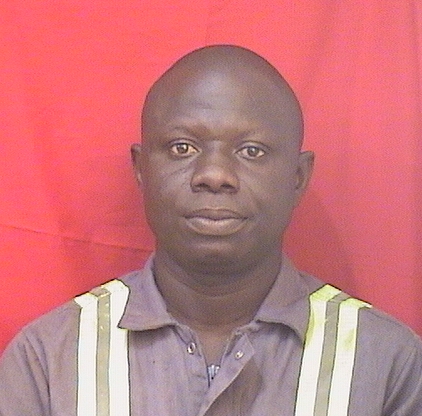
Department of Mechanical Engineering
The researcher’s work focuses on leveraging technological advancements to enhance educational outcomes across various domains, particularly in online and blended learning environments, mobile learning, and innovations in educational methods. Through a synthesis of their publications, they explore how technology can facilitate improved learning experiences for students, especially in higher education settings, teacher training programs, senior high schools, and innovative capstone subjects in undergraduate programs. Their research delves into the role of emerging technologies in shaping pedagogical practices and policies within African contexts, emphasizing the cultural, social, and systemic factors that drive technological adoption.