Beta Testing
KNUST Research Atlas is currently in active Beta. Report bugs or suggest features to help us improve!
KNUST Research Atlas is currently in active Beta. Report bugs or suggest features to help us improve!
KNUST Research Atlas is currently in active Beta. Report bugs or suggest features to help us improve!
Search, discover, and connect with over 1,800 researchers, faculty members, and scholars across all departments of KNUST.

Department of Pharmacy Practice
The researcher's work integrates advanced computational and mathematical methodologies with biological and medical applications to address key questions in cancer, neuroscience, and oncology. Their studies leverage cutting-edge techniques to develop innovative frameworks for understanding disease mechanisms through integrated approaches that combine technological innovation with theoretical and empirical analysis.
Department of Geography & Rural Development
This researcher has pursued a multi-faceted and interdisciplinary approach in their work, integrating mathematical modeling, computational methods, and experimental validation across various biological systems. Their research spans both applied mathematics and machine learning, applying these tools to address complex questions in biology while emphasizing the importance of collaboration between mathematicians and biologists. The findings from their publications demonstrate a focus on developing innovative methodologies that have broad applications in understanding biological phenomena, with particular emphasis on the integration of theoretical insights with practical biological contexts.
Department of Geomatic Engineering
The researcher's work focuses on applying advanced numerical modeling techniques to study complex geomechanical processes and the structure of the Earth's interior. By combining computational methods with field observations, the researcher aims to unravel mechanisms that govern stress redistribution in the Earth's crust and mantle, contributing significantly to our understanding of how energy distributes within planetary interiors.
Department of Environmental Science
This researcher has contributed significantly to the field of theoretical physics, particularly in exploring the fundamental principles that govern the behavior of black holes and the nature of quantum gravity. Through extensive interdisciplinary research spanning topics such as quantum field theory and string theory, their work has deepened our understanding of the universe's structure and the laws that shape it.
Department of Telecommunications Engineering
The researcher investigates the role of language as a universal genetic and molecular marker for cultural transmission across diverse contexts, including evolutionary dynamics in animal behavior and cancer biology. By examining genetic variation in linguistic traits and applying evolutionary methods, they integrate findings from genetics, animal behavior, and medicine to understand how cultural change occurs through molecular processes.
Department of Food Science and Technology
The researcher has systematically explored several key areas within advanced algebraic topology, including the classification of Hopf invariant one elements in 2015. Building on this foundation, they extended these concepts to cobordism categories with group actions in 2017. Their work also delved into topological cyclic homology in 2018, and further contributions were made to equivariant stable homotopy theory in 2019. Additionally, the researcher examined the intersection of topology with category theory through higher categorical structures in 2020, thereby creating a comprehensive framework that links various mathematical domains while building upon earlier insights.
Department of Eye, Ear, Nose and Throat
The researcher has made significant contributions to the field of artificial intelligence through advancements in neural networks, deep learning applications, and optimization techniques. Their work emphasizes the development of efficient algorithms and hardware for improved computational performance while addressing ethical concerns and model interpretability. They explore generative models, explainable AI, and data-efficient methods, contributing to broader trends toward scalable and trustworthy AI systems.
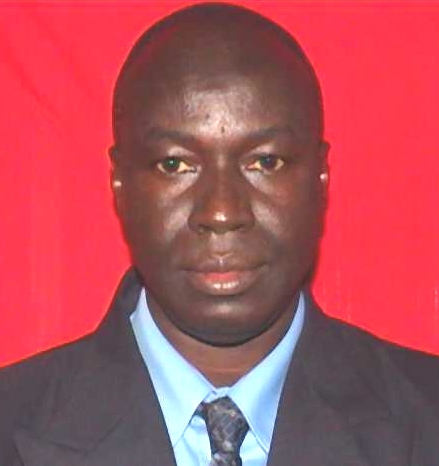
Department of Physics
The researcher has conducted extensive work across several interdisciplinary fields, focusing on understanding fundamental and applied aspects of materials, fluids, and natural systems using advanced analytical techniques. Their research spans themes such as geomagnetism, geophysical methods, planetary science, electromagnetism, and groundwater analysis, utilizing a combination of magnetic surveys, electromagnetic methods, seismic data analysis, and fluid dynamics studies. The work highlights innovative applications in resource exploration, environmental monitoring, and energy development, employing cutting-edge technologies to map materials, analyze groundwater systems, and assess the impact of natural phenomena on the environment.
Department of Mathematics
The researcher has made significant contributions to advancing remote sensing and LiDAR applications in various domains, including forest biomass estimation, CEOR techniques, reservoir engineering, hydrocarbon exploration, and urban heat island mitigation. Their work emphasizes the development of integrated methodologies that bridge geospatial data analysis with subsurface characterization and numerical modeling, providing a comprehensive approach to addressing challenges across physical sciences.
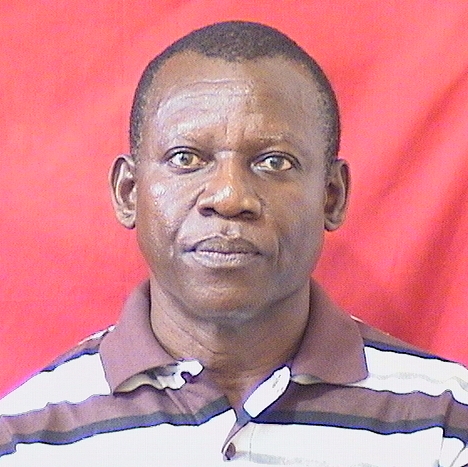
Department of Indigenous Art and Technology
The researcher's work is deeply rooted in the symbolic use of cultural textiles across various domains, integrating themes of both fashion and metaphorical expression. Their research explores techniques such as adinkra cloth fusion, local dyeing cultures, and bamboo properties to develop innovative materials like cotton fent fabric for textiles, emphasizing the importance of these materials in both art and urban development. The study also delves into ethical issues surrounding textile production, particularly in Ghanaian contexts, highlighting their impact on market dynamics. Additionally, the researcher examines how these textile materials can serve as metaphors for identity and social critique, offering a unique perspective on cultural symbols and their dual roles in art and daily life.
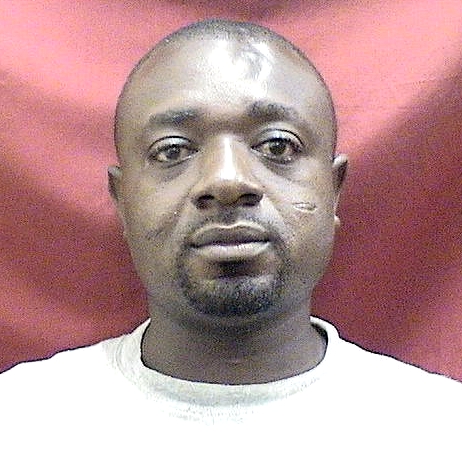
Department of Industrial Art
The researcher's work is centered on advancing theoretical frameworks for quantum information theory across condensed matter physics and biophysics. Their recent publications, including a 2019 study in *Nature* and two 2017 paper *PNAS*, focus on developing innovative models for open quantum systems and exploring their applications in solving complex problems such as quantum algorithms and measurement-based quantum computing. This interdisciplinary approach integrates insights from physics, computer science, and biology to address fundamental questions in quantum mechanics and material science.
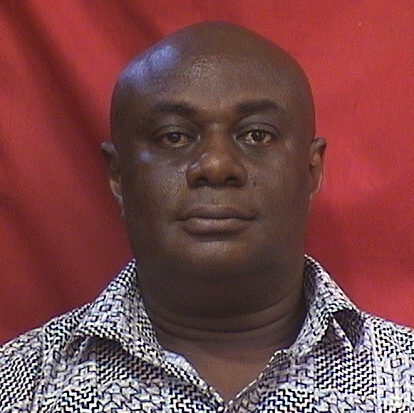
Department of Pharmacognosy
Herbal medicine plays a crucial role in health and treatment across various domains, from natural products and microbial studies to plant biochemistry. Research focuses on how herbal medicines influence inflammation, resistance, wound healing, and antiviral effects. Plant chemistry explores terpenoids, antioxidants, and their roles in human health. Microbial natural products are studied for their bioactive constituents, such as those found in plants like boundleja globosa. This research bridges traditional and modern approaches, emphasizing emerging technologies in pharmacology. The goal is to understand the holistic impact of herbal medicine on human health through integrated studies across diverse scientific disciplines.