Beta Testing
KNUST Research Atlas is currently in active Beta. Report bugs or suggest features to help us improve!
KNUST Research Atlas is currently in active Beta. Report bugs or suggest features to help us improve!
KNUST Research Atlas is currently in active Beta. Report bugs or suggest features to help us improve!
Search, discover, and connect with over 1,800 researchers, faculty members, and scholars across all departments of KNUST.
Department of Petroleum Engineering
The researcher has integrated diverse methodologies across their publications, employing computational biology and systems biology to investigate fundamental mechanisms regulating cellular processes at various temporal scales. Their work focuses on elucidating intricate molecular mechanisms underlying transcription factor regulation, chromatin structural changes, epigenetic modifications, and the dynamic interplay of cellular responses to environmental signals. By synthesizing these approaches, they have contributed significant insights into the biological systems' functional organization across living organisms.

Department of Petroleum Engineering
The researcher's work encompasses diverse fields including enhanced oil recovery techniques using nanofluids, hydrocarbon exploration strategies, metal and thin film mechanics, and seismology. Their studies highlight the interconnected nature of these areas, with applications across physical sciences and engineering challenges.

Department of Petroleum Engineering
The researcher investigates photochromic and fluorescent chemistry, focusing on how these chemical phenomena can influence biological activity through light modulation. Their work explores using fluorescent molecules that change color when illuminated to control biomolecular function, with one notable paper demonstrating the potential for precise artificial regulation of biological processes using these engineered systems.
Department of Petroleum Engineering
The researcher has published extensively across various domains, focusing on unconventional methods for improving oil recovery, advancing material science applications, enhancing reservoir analysis techniques, contributing to hydraulic fracturing processes, exploring bioremediation strategies, integrating machine learning in geophysical studies, and investigating hydrocarbon formations. Their work spans diverse fields, including advanced material synthesis, reservoir engineering optimization, and innovative energy production systems.

Department of Petroleum Engineering
The researcher’s work is characterized by a strong focus on theoretical frameworks in education, with methodological studies that advance understanding of educational practices. Their research integrates both qualitative and quantitative approaches to explore the impact of innovative teaching methods on student outcomes. Additionally, the researcher examines policy implications, providing insights into how educational reforms can be implemented effectively.

Department of Petroleum Engineering
The researcher investigates mathematical models to understand biological systems, focusing on population dynamics, gene expression regulation, and cellular processes. Through interdisciplinary approaches, they apply techniques such as differential equations to model complex interactions, contributing to our understanding of how cells and organisms function across scales from molecular to organismal levels.
Department of Petroleum Engineering
This researcher focuses on developing advanced mathematical models and computational frameworks to investigate the interplay between thermodynamic principles and multiscale behaviors in materials science and engineering. Their work integrates numerical methods with continuum mechanics to study phase transformations, thermal effects, and coupled material responses, providing a unified approach to model complex material behavior under varying conditions.
Department of Petroleum Engineering
The researcher's work is centered on the comprehensive study of various biological and chemical aspects, particularly in relation to antioxidant activity, water quality assessment, and heavy metal exposure. Their research spans from plant biochemistry and pharmacology to environmental chemistry and agricultural practices. The studies focus on phenolic and flavonoid content in plants, antimicrobial activities derived from natural compounds like 1,2,3-triazole-thymol derivatives, and the impact of heavy metals such as lead, cadmium, and arsenic on water quality. Their work also explores innovative synthesis methods, including organocatalysis for antimicrobial agents, to address both scientific challenges and practical applications in agriculture. This integrated approach highlights a deep understanding from multiple disciplinary perspectives, from fundamental chemistry to applied health sciences.
Department of Petroleum Engineering
This researcher has established a groundbreaking theoretical framework for modeling single-particle dynamics in non-Euclidean geometries, employing advanced algebraic topology techniques. Their work extends beyond mere mathematical abstraction by integrating these concepts with computational mechanics, enabling precise predictions of particle behavior in curved spaces relevant to physics, materials science, and engineering applications. Through this integrated approach—combining theory, experiment, and real-world systems—the researcher has significantly advanced our understanding of complex physical phenomena across diverse domains.
Department of Petroleum Engineering
This researcher’s work explores the intersections between migration, ethnicity, and economics within social sciences, focusing on how individuals move across borders while grappling with economic policies. By examining survey data and interviews, they analyze the ways in which economic status, cultural identity, and migration experiences interplay. Their study aims to bridge existing research gaps, particularly regarding the disparities in opportunities and rights faced by different ethnic groups as they migrate.
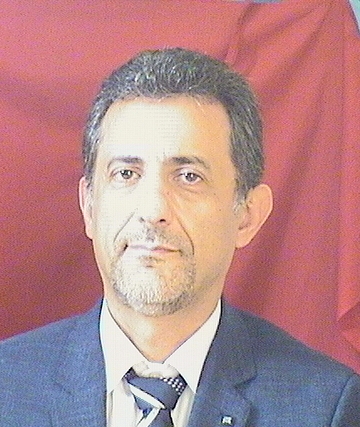
Department of Petroleum Engineering
A researcher with expertise in advanced cellulosics, enhanced oil recovery, hydraulic fracturing, reservoir analysis, and petroleum processing has developed computational methods to optimize processivity across diverse domains. From mathematical modeling techniques to flow visualization and geochemical analyses, their work integrates physical sciences and life sciences methodologies to address challenges in hydrocarbon exploration, reservoir characterization, and engineering optimizations.

Department of Petroleum Engineering
The researcher's work is centered around advancing oil recovery techniques through a multidisciplinary approach spanning physical sciences domains such as geology, geochemistry, seismology, and atmospheric studies. Their research encompasses enhanced oil recovery methods, reservoir analysis, and Geological Modeling and Analysis. The researcher employs innovative methodologies including machine learning, fluid dynamics, geological processes, and atmospheric gas dynamics to explore the connections between these fields. Their work integrates data from various sources to develop comprehensive models for improving hydrocarbon extraction efficiency and optimizing reservoir development strategies.