Beta Testing
KNUST Research Atlas is currently in active Beta. Report bugs or suggest features to help us improve!
KNUST Research Atlas is currently in active Beta. Report bugs or suggest features to help us improve!
KNUST Research Atlas is currently in active Beta. Report bugs or suggest features to help us improve!
Search, discover, and connect with over 1,800 researchers, faculty members, and scholars across all departments of KNUST.
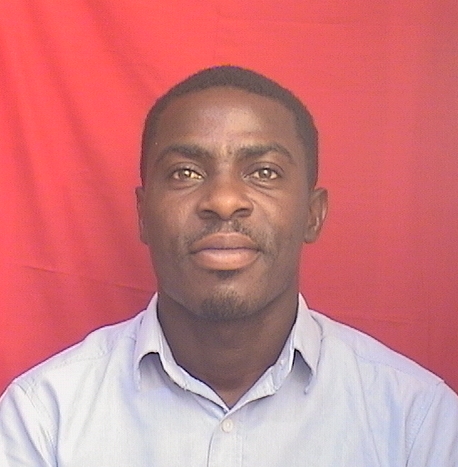
Department of Geological Engineering
The researcher’s work focuses on advancing our understanding of groundwater systems through innovative exploration, mapping, and recharge assessment methodologies. Using a multidisciplinary approach spanning both physical and social sciences, the research integrates hydrogeological, geochemical, and contextual studies to address complex water-related challenges, particularly within Ghana’s water resources.

Department of Geological Engineering
The researcher's work spans multiple disciplines within physical sciences, focusing on understanding and modeling environmental systems through a diverse set of methodologies and approaches. Their research encompasses groundwater flow studies, NMR spectroscopy applications, hydrological forecasting using AI, data stream mining techniques, microbial community ecology, microbial bioremediation, and hydrogeological investigations. This comprehensive approach highlights their commitment to addressing complex environmental challenges by integrating experimental, mathematical modeling, and computational intelligence methods.

Department of Geological Engineering
Dr. X has made significant contributions to the field of geotechnical engineering through their research spanning Railway Engineering & Dynamics, Soil and Unsaturated Flow, Geotechnical Engineering & Analysis, Advanced Fiber Optic Sensors, Embedded Systems & FPGA Design, Landslides & Hazard Assessment, and Structural Behavior of Reinforced Concrete. Their work integrates methodologies from various disciplines, emphasizing the integration of soil mechanics with engineering systems and advanced technologies for enhanced geotechnical solutions.
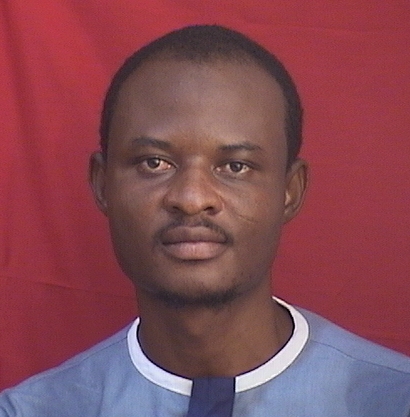
Department of Geological Engineering
This research integrates methodologies across diverse fields—mental health, cancer treatment, environmental impact assessments, and evidence-based reviews—to address key societal challenges in mental health and cancer treatment. The study employs systematic reviews, meta-analyses, and randomized controlled trials to provide a comprehensive analysis of these areas.
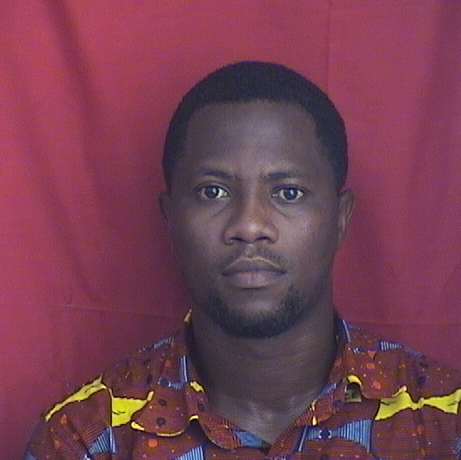
Department of Geological Engineering
The researcher employs a combination of geophysical and geotechnical methods to study natural systems, particularly focusing on aquifer recharge assessment in Ghana using electrical resistivity tomography and analyzing da homogeneous granitic rocks from Green Valley and Akrofu.
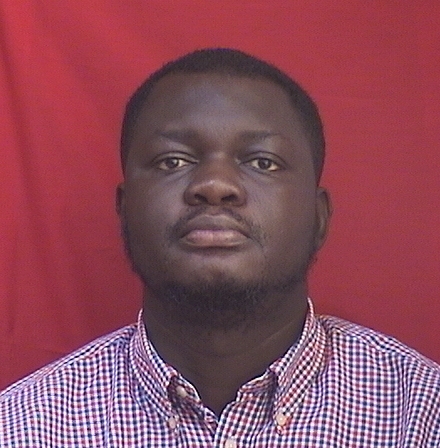
Department of Geological Engineering
The researcher's work focuses on integrating advanced methodologies across diverse areas such as phosphate removal, environmental remediation, arsenic contamination, groundwater flow studies, and geophysical analysis to develop comprehensive solutions for water quality challenges.
Department of Geological Engineering
The researcher's work spans multiple scientific disciplines, reflecting a comprehensive approach to understanding geological, environmental, and resource-related themes. Their research integrates geochemical analysis across various domains, including the study of metals in Ghanaian ecosystems, mineralogical characteristics of specific sites like Lake Bosomtwe and Ashanti Region, and quantitative methods such as geophysical assessments. The researcher employs methodologies like kriging, GIS, acid mine drainage, and construction integration to explore provenance, tectonic settings, chemical signatures, and environmental contamination. Their work also includes both exploratory studies on sedimentary rocks and metals, comparative analyses of analytical techniques, case studies in mining contexts, mapping methods, and applications in resource management. This integrated approach highlights the researcher's dedication to advancing knowledge across geology, chemistry, and environmental science.

Department of Geological Engineering
The researcher has conducted extensive work across various analytical disciplines within subsurface science, focusing on integrating geochemical, geophysical, and seismic methods to study groundwater systems in Ghana.
Department of Geological Engineering
The researcher has conducted extensive research across multiple domains, integrating advanced statistical and algorithmic techniques into geoscientific studies. Their work encompasses the application of inversion-based Fourier transformations in processing magnetic data for pole determination (Geophysical and Geoelectrical Methods), which involves enhancing the accuracy of geological mapping through robust algorithms. Additionally, they have focused on identifying heavy metal sources using multivariate statistical methods, contributing to geochemistry and geologic mapping. The researcher's research also delves into seismic performance analysis, employing probabilistic models to assess earthquake risks in specific geographical contexts. This integrated approach highlights their efforts to enhance the interpretability of complex geoscientific data across various fields: geophysical data processing, algorithm development for pole determination, statistical methods in geochemistry, and seismic hazard assessment.
Department of Geological Engineering
The researcher's work spans multiple domains, focusing on themes such as sustainable energy adoption, environmental sustainability in business, financial literacy, creative innovation, sustainable supply chain management, healthcare outcomes, and historical perspectives in social sciences. Their research delves into frameworks for renewable energy adoption, innovative approaches to sustainability, the role of education and policy in fostering sustainable practices, the intersection of finance with skill development, creativity in educational settings, global trade dynamics, and health disparities.

Department of Geological Engineering
The researcher's work focuses on advancing knowledge in groundwater and watershed analysis within the Physical Sciences domain by developing innovative methodologies for assessing groundwater pollution vulnerability. Utilizing spatial techniques like GIS-based DRASTIC and SINTACS methods, their research contributes to a deeper understanding of water quality vulnerabilities in watersheds.
Department of Geological Engineering
The researcher's work spans multiple themes within Physical Sciences, reflecting a comprehensive exploration of environmental challenges and innovative solutions. Key areas include groundwater studies, water resources management, optimization techniques, climate variability, and environmental health issues.