Beta Testing
KNUST Research Atlas is currently in active Beta. Report bugs or suggest features to help us improve!
KNUST Research Atlas is currently in active Beta. Report bugs or suggest features to help us improve!
KNUST Research Atlas is currently in active Beta. Report bugs or suggest features to help us improve!
Search, discover, and connect with over 1,800 researchers, faculty members, and scholars across all departments of KNUST.
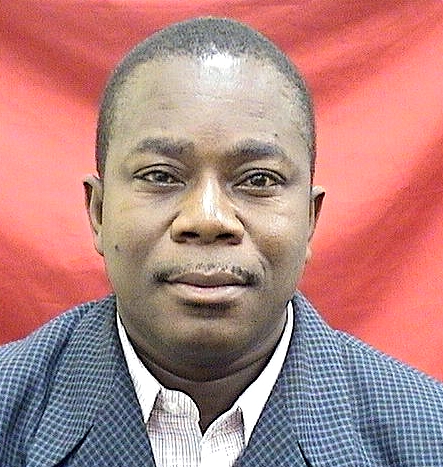
Department of Physics
The researcher's work focuses on comprehensive studies across hydrological processes, atmospheric phenomena, water resources management, geophysical methods, and environmental contamination in agricultural contexts. Their research encompasses the variability of rainfall patterns, their impact on catchment systems, the influence of heavy metals on soil health, the role of solar radiation in groundwater replenishment, potential gold deposits identified through geophysical techniques, and the effects of climate change on soil quality. Advanced technologies such as satellite remote sensing, geophysical surveys, and electromagnetic methods are employed to analyze hydrological processes, contamination, and water resources. The research also explores applications of these methods in optimizing agricultural practices and mitigating environmental risks.

Department of Physics
My research focuses on advancing materials science for sustainable energy storage systems, integrating innovative 2D materials and advanced adsorption technologies. Through first-principles calculations of properties such as electronic and magnetic characteristics in transition metal-doped monolayers of Möbius graphene (MoS₂), I investigated the unique electronic and magnetic behaviors that enable novel heat energy storage solutions. My work also emphasizes the practical application of these materials in environmental remediation, particularly through adsorption processes like zeolite-based removal of ammonium ions from water samples affected by mining activities in Ghana. Additionally, I explored the fabrication of high-capacitive materials using Zeolite A synthesized from wassa kaolin for thermal energy storage and hybrid systems combining adsorption heat pumps with heat engines. On a broader scale, my research extends to optimizing material recovery and lifecycle management in spent lithium-ion batteries using AI-based technologies, further enhancing their energy density and safety standards.

Department of Physics
A researcher focuses on synthesizing data across multiple disciplines to understand the interplay between climate change, economic policies, and ecological systems, aiming to provide a holistic view of their work.

Department of Physics
The researcher has focused on advancing physical science techniques across diverse medical applications, utilizing methodologies such as deep learning, material characterization, and simulation to address challenges in cancer detection, nuclear materials degradation, fusion material synthesis, advanced radiotherapy, joint arthroplasty outcomes, and bone health issues.

Department of Physics
The researcher's work focuses on a comprehensive exploration of various interconnected fields within the physical sciences, including microbial fuel cells for bioremediation, metal and thin film mechanics, biofield effects in health, ferroelectric and piezoelectric materials, flood risk management, flow measurement, genetics, and interdisciplinary approaches. Their research integrates these themes to advance theoretical understanding across diverse domains while fostering practical applications, such as fuel cell innovation, material science advancements, and environmental monitoring techniques.

Department of Physics
The primary research interest of this work was to investigate the interplay between information processing efficiency and neural coding within the context of sensory organization, with a focus on understanding how these principles shape neural representations and decision-making processes.

Department of Physics
The researcher's work focuses on integrating AI techniques with medical diagnostics through deep learning models such as ResNet18 and ResNet34 to enhance breast cancer detection systems, particularly addressing challenges in computational intelligence. Additionally, the study explores optimization problems in software engineering, exemplified by the Team Orienteering Problem with Overlaps, demonstrating how advanced algorithmic approaches can be applied across diverse domains.

Department of Physics
The researcher has made significant contributions to the field of advanced materials science, particularly in the areas of 2D materials, conducting polymers, semiconductors, and alloys. Their work encompasses the electronic properties of MoS₂ monolayers, the study of polyaniline's conductivity through electrochemical polymerization, and the development of SiC-based nanomaterials for energy storage. Additionally, they investigate the mechanical and thermal properties of aluminum alloy microstructures, which have implications for aerospace and industrial applications. Through innovative computational methods and experimental techniques, their research advances our understanding of these materials' functionality across various domains.
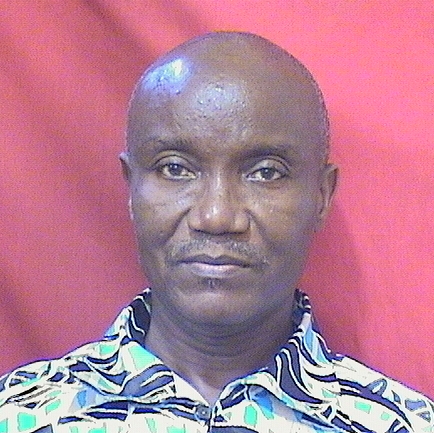
Department of Physics
This researcher's research focuses on advancing geophysical methodologies across multiple domains, particularly leveraging imaging techniques such as electrical resistivity and electromagnetic methods for detailed structural analysis and mineral exploration. Their work includes integrating mapping and imaging approaches to study groundwater systems, geological structures, and mineral deposits using advanced datasets from diverse fields like aeromagnetism, electromagnetics, and radiometry.
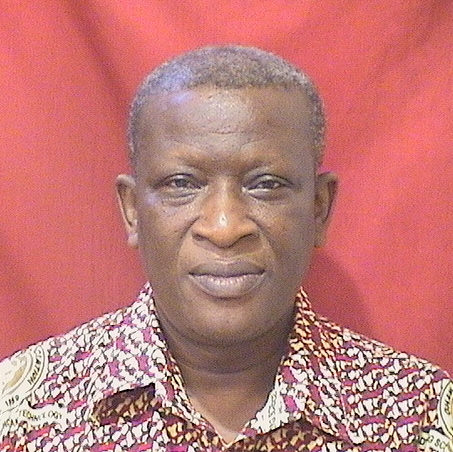
Department of Physics
The researcher has conducted extensive work in advancing innovative solutions for energy efficiency and environmental sustainability, focusing on themes such as solar cell technologies, microbial fuel cells, bioremediation processes, and their integration into hybrid renewable energy systems. This interdisciplinary approach spans multiple domains, including physical sciences (e.g., solar cell materials, polymer applications), social sciences (e.g., urban development challenges, bioenergy initiatives), and environmental studies (e.g., impact assessment of renewable technologies). Their research emphasizes the development and optimization of advanced materials and systems to address energy needs while mitigating environmental concerns.

Department of Physics
This researcher has conducted extensive studies on human behavior, cultural evolution, and global development through longitudinal research and cross-cultural surveys. They employ quantitative data collection tools and statistical methods to analyze patterns across diverse societies. Their work contributes significantly to our understanding of how historical developments shape contemporary social structures, supported by theoretical frameworks and empirical evidence.
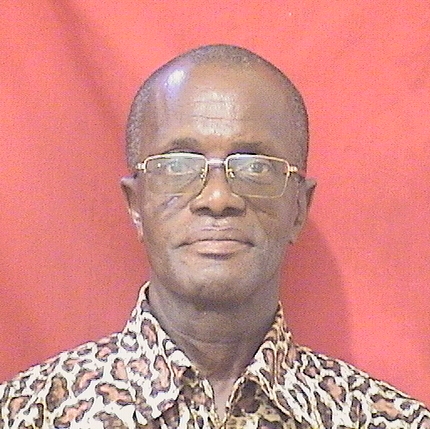
Department of Physics
The researcher has conducted extensive work across diverse areas of physical sciences, focusing on novel materials and technologies. Key themes include the development of photocatalysts such as cobalt-doped ZnO-g-C3N4 heterostructures for photocyclotron degradation of eosin yellow dye in water, as well as advancements in quantum dots synthesis and properties. The study also explores multiferroic materials, including ferroelectricity in zinc cadmium telluride, and the optical and structural behaviors of semiconducting sulfides and selenides. Research into superconductivity is extensive, involving Sn-doped systems and magnetic effects. The researcher investigates X-ray diffraction studies, particularly in α-Mn films, as well as the anomalous resistivity at low temperatures in Mn thin films. Nanomaterials such as CdSe and PbS thin films are studied for their optical and electronic properties. Magnetic transitions in Ni-Mn alloys are explored, along with their applications. The researcher examines the anomalous resistivity of α-Mn films and magnetoresistance in Cd-based systems. Insights into solid-state spectroscopy include studies on α-Mn thin films and electro-optical properties of polyaniline nanoparticles. Advanced battery technologies are addressed by optimizing material recovery in galvanized steel oxidation. Finally, the researcher explores phase-change materials like zeolites and their catalytic roles in battery systems.