Beta Testing
KNUST Research Atlas is currently in active Beta. Report bugs or suggest features to help us improve!
KNUST Research Atlas is currently in active Beta. Report bugs or suggest features to help us improve!
KNUST Research Atlas is currently in active Beta. Report bugs or suggest features to help us improve!
Search, discover, and connect with over 1,800 researchers, faculty members, and scholars across all departments of KNUST.

Department of Mathematics
The researcher is broadly interested in developing advanced statistical methodologies across diverse fields including Psychology of Development and Education, Traffic and Road Safety, COVID-19 epidemiological studies, Statistical Methods in Clinical Trials, Pesticide Residue Analysis and Safety, Global Security and Public Health, Insurance and Financial Risk Management, and the Impact of the COVID-19 Pandemic on Disease Transmission. Their work focuses on enhancing statistical robustness, accuracy, and practical application across these domains to address challenges in public health, education, safety research, and healthcare management.
Department of Mathematics
The researcher's work is centered on integrating global environmental and social risks into a comprehensive model for quantitative risk assessment, focusing on themes like water resource management, agricultural practices, and public health impacts.
Department of Mathematics
The researcher's work is a multifaceted exploration of higher education in Ghana, encompassing diverse themes such as employment transitions, technical vocational education, gender inequality, governance structures, global policies, assessment practices, teacher training, curriculum development, and international collaborations. Their focus includes examining how these elements shape the education system's ability to produce skilled graduates for various careers.
Department of Mathematics
This researcher has focused extensively on advancing technology in education, particularly through AI-based pedagogical tools and online learning analytics. Their work explores how integrating AI into teaching enhances student engagement and academic performance across diverse settings, including higher education, urban universities, and school districts. The researcher emphasizes the role of parental involvement in supporting mathematics achievement, especially for deaf learners, and highlights the importance of fostering a growth mindset in students. Furthermore, their research delves into the cognitive and developmental aspects of mathematical skills, examining how factors like technology use and online learning analytics shape student success. While the researcher's work is broad, it consistently highlights themes of improving STEM education through innovative pedagogical approaches and leveraging digital tools to enhance learning experiences.
Department of Mathematics
The researcher has conducted extensive work in mathematics education and critical thinking development, with applications spanning diverse fields such as social sciences, life sciences, physical sciences, health sciences, and educational theory. Their publications explore the use of geometric simplexes, homological invariants, differential equations, fractional calculus, and mathematical modeling to address complex problems across these domains.
Department of Mathematics
The researcher has focused extensively on several key themes within their work, including optimal control dynamics in infectious diseases such as HIV, gonorrhea, and Ebola, alongside broader research into poxvirus and parasitic disease transmission. Their work integrates mathematical models with advanced methodologies like fractional calculus and optimization techniques to address complex systems across public health, ecology, and environmental science. The researcher's interdisciplinary approach emphasizes the application of these tools in understanding and mitigating outbreaks, while also highlighting their role in advancing innovative modeling approaches that consider multiple factors in disease spread.
Department of Mathematics
The researcher's work is multifaceted, spanning across several disciplines while highlighting a strong focus on the intersection of global trade, transportation modeling, and economic impacts. Their research extends into advanced fields such as oil price fluctuations and foreign direct investment effects using dynamic models like DSGE, macroscopic traffic flow analysis, optimization algorithms for economic growth, and epidemiological studies to understand economic dynamics and social inequalities.
Department of Mathematics
The researcher has developed and applied advanced numerical and computational methods across diverse domains to enhance our understanding of complex systems. Their work spans environmental pollution monitoring, epidemiological studies, fluid flow simulation, image and signal processing techniques, and optimization algorithms, all aimed at advancing scientific knowledge through innovative modeling and analysis.
Department of Mathematics
The researcher has focused on developing analytical methods to solve systems of nonlinear fractional partial differential equations across diverse applications in physical sciences. Their work emphasizes the use of techniques such as semi-separation of variables, homotopy analysis, and variational iteration for tackling complex problems involving anomalous diffusion, oscillatory systems, and phenomena with memory effects, contributing significantly to advancing fractional calculus methods in real-world modeling and simulation.
Department of Mathematics
The researcher's work integrates diverse areas of physical sciences through AI, focusing on optimizing water systems for leakage detection and vulnerability assessment, employing advanced models like deep learning for hydrological forecasting and simulation. Additionally, they explore anaerobic digestion and biogas production for environmental impacts, while also ensuring robust quality monitoring techniques in water treatment plants.
Department of Mathematics
The researcher's work integrates a comprehensive approach across multiple disciplines, integrating themes from global maternal and child health, psychological well-being, religious beliefs, socio-economic factors, gender dynamics, labor practices, public policy reforms, international aid, educational systems, agricultural resilience, economic growth, health disparities, social influences, demography, education systems, migration, taxation compliance, fiscal policies, and urban development. The research employs methodologies spanning statistical analysis, micro-level studies, and macro-integration of different domains to develop a holistic understanding of global challenges and opportunities in health, education, gender equity, and policy-making.
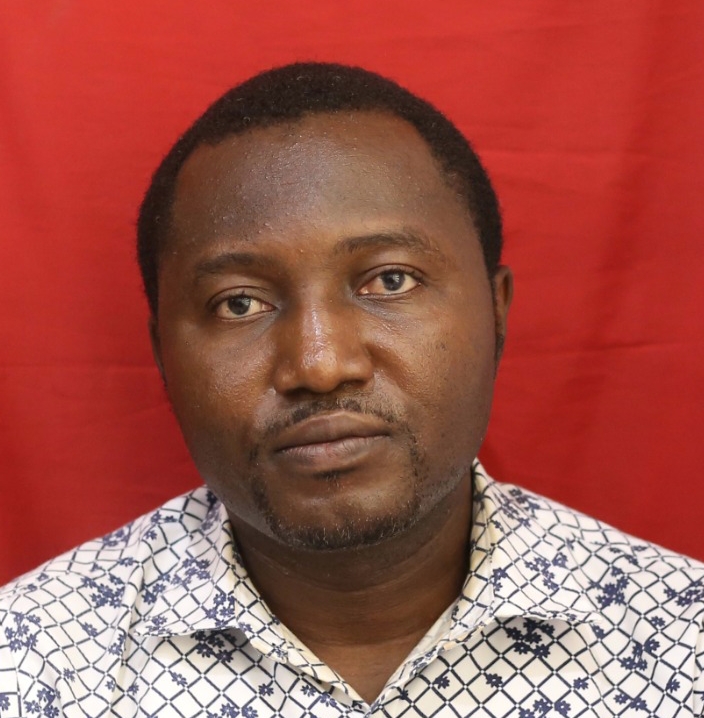
Department of Mathematics
The researcher's research focuses on developing efficient iterative methods for solving nonlinear equations across diverse disciplines. Their work encompasses innovative algorithms in metrology and metrology systems, optimal experimental designs, photovoltaic system optimization techniques, anomaly detection methodologies, advanced measurement tools, and mathematics education strategies, all aimed at enhancing problem-solving capabilities in physical and social sciences.