Beta Testing
KNUST Research Atlas is currently in active Beta. Report bugs or suggest features to help us improve!
KNUST Research Atlas is currently in active Beta. Report bugs or suggest features to help us improve!
KNUST Research Atlas is currently in active Beta. Report bugs or suggest features to help us improve!
Search, discover, and connect with over 1,800 researchers, faculty members, and scholars across all departments of KNUST.

Department of Mathematics
The researcher has made significant contributions to advancing remote sensing and LiDAR applications in various domains, including forest biomass estimation, CEOR techniques, reservoir engineering, hydrocarbon exploration, and urban heat island mitigation. Their work emphasizes the development of integrated methodologies that bridge geospatial data analysis with subsurface characterization and numerical modeling, providing a comprehensive approach to addressing challenges across physical sciences.
Department of Mathematics
The researcher's work spans across multiple disciplines in physical sciences, focusing on energy load and power forecasting, advanced mathematical modeling, groundwater flow studies, fractional differential equations solutions, flood risk assessment, field-flow fractionation techniques, and bacterial infections. Their core focus is on developing and applying sophisticated models to address challenges in these diverse areas, including energy systems, environmental flows, pharmacokinetics, hydrology, and public health.
Department of Mathematics
The research integrates advanced mathematical models across diverse scientific domains to address challenges in public health, urban planning, environmental management, and medicine. Employing techniques such as fractional calculus, iterative numerical methods, fixed-point theorems, wavelet-based signal processing, and virtual or physical modeling approaches, these studies develop comprehensive solutions for complex problems. These methodologies are applied across themes like anaerobic digestion of waste, nonlinear photonic systems, COVID-19 epidemiology, family dynamics, and geotechnical engineering, highlighting an interdisciplinary approach that bridges physics, medicine, urban planning, and environmental science. The focus is on leveraging analytical tools to enhance problem-solving in real-world contexts, emphasizing methodologies such as fractional calculus, iterative techniques, fixed-point proofs, virtual process modeling, and time-series analysis.
Department of Mathematics
The researcher's work spans multiple domains within physical sciences, focusing on themes such as social sciences (Islamic Finance), algebraic topology (homotopy and cohomology), finite group theory (fixed point theorems), algebraic geometry (geometric analysis), and health sciences (parasitic diseases). Their publications highlight significant contributions in each area, including innovative approaches to mathematical concepts like homological properties of groupoids in algebraic topology, foundational work on fixed point theorems in finite group theory, interdisciplinary studies linking parasitic diseases with social factors, and novel applications in financial mathematics.
Department of Mathematics
The researcher has advanced integrated systems addressing environmental challenges across diverse fields. Their work integrates studies from land use and ecosystems, soil carbon dynamics, market and financial aspects, meteorological phenomena, public health impacts, poxvirus research, agricultural practices, hydrological analysis, and energy forecasting to develop comprehensive systems for ecological, social, and economic sustainability.
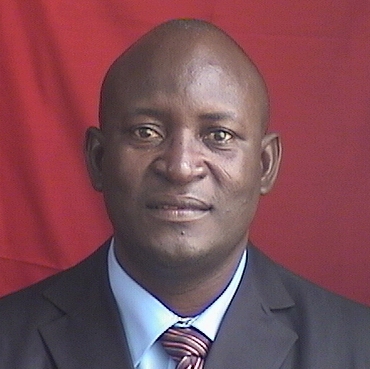
Department of Mathematics
The researcher focuses on integrating mathematical modeling and advanced computational techniques to address complex problems in various fields, including food safety dynamics, infectious disease spread, transportation optimization, academic efficiency analysis, maritime security studies, and numerical methods for inverse problems.
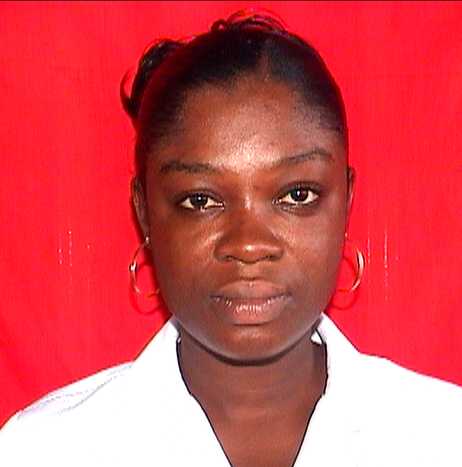
Department of Mathematics
This researcher has made significant contributions to the field of machine learning through a combination of theoretical advancements in nonlinear diffusion models and their applications in pattern recognition tasks. By integrating unsupervised deep learning techniques, they have developed novel approaches that address challenges in data modeling complexity, feature extraction, and model generalization. Their work bridges the gap between theoretical innovations and practical applications, advancing our understanding of complex data patterns and improving the performance of machine learning systems across various domains.
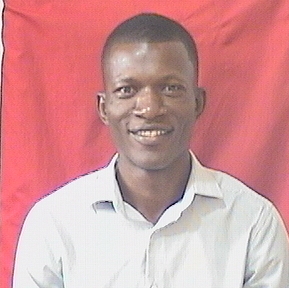
Department of Mathematics
The researcher has focused on the interplay between epigenetic modifications and gene expression regulation in the context of cancer development. By examining transcription factor interactions, chromatin remodeling mechanisms, and their role in epigenetic inheritance, they have investigated how these processes can lead to genetic silencing of oncogenic genes. Their work emphasizes the critical role of environmental stressors in shaping these regulatory networks, providing a systems-level understanding that bridges molecular mechanisms with clinical implications for cancer treatment.
Department of Mathematics
The researcher conducts interdisciplinary studies focusing on advanced fluid dynamics, heat transfer, and bioprocessing techniques. Their work encompasses nanofluid flow, hybrid systems, and bioconvection phenomena, with a particular emphasis on their applications in chemical engineering, material sciences, and biotechnology. Additionally, they explore mathematical models for disease transmission, including COVID-19, HIV-AIDS, and Mosquitoborne diseases, employing both deterministic and stochastic approaches. The researcher's research also delves into fractional calculus applications across various domains, from heat transfer to nanofluid flow dynamics, with a focus on developing novel methodologies and analytical tools.
Department of Mathematics
The researcher's work centers on inverse problems within the realm of matrix theory and algorithms, particularly in the physical sciences. Their research encompasses a broad spectrum of matrix-related challenges, including generalized eigenvalue problems, singular value analysis, and the development of efficient numerical methods for solving these issues. This interdisciplinary approach combines theoretical investigations with practical applications, ensuring solutions are both computationally feasible and accurate. The researcher's work bridges fundamental mathematical challenges with real-world applications across diverse scientific fields, highlighting a strong foundation in linear algebra and its transformative impact on understanding complex physical systems.
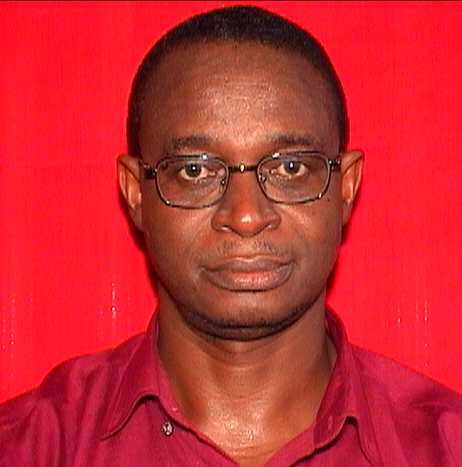
Department of Mathematics
Their work focuses on the development and application of mathematical inequalities across diverse areas in physical sciences, including traffic flow, optics, gravity, engineering, and quantum mechanics. They utilize sophisticated inequality techniques to address challenges in these fields, demonstrating how foundational mathematical tools can provide novel insights and solutions.
Department of Mathematics
The researcher's work integrates advanced mathematical modeling across diverse domains to address complex real-world phenomena. Their research spans technology adoption and user behavior, COVID-19 epidemiological studies, traffic control and management, functional equations stability results, school choice policies, quantum information and cryptography, fixed point theorems analysis, matrix theory and algorithms, polynomial and algebraic computation, and more. A key focus is on using advanced mathematical models to analyze systems across these fields, demonstrating their potential for addressing challenges in technology, public health, urban planning, theoretical mathematics, and computational sciences.