Beta Testing
KNUST Research Atlas is currently in active Beta. Report bugs or suggest features to help us improve!
KNUST Research Atlas is currently in active Beta. Report bugs or suggest features to help us improve!
KNUST Research Atlas is currently in active Beta. Report bugs or suggest features to help us improve!
Search, discover, and connect with over 1,800 researchers, faculty members, and scholars across all departments of KNUST.
Department of Obstetrics & Gynaecology
My research is focused on theoretical exploration of spacetime emergence and its connection to quantum gravity. I leverage entanglement entropy in loop quantum gravity as a tool to study these phenomena, while also examining black holes from an information-theoretic perspective, particularly their thermodynamic properties within this framework.
Department of Obstetrics & Gynaecology
The researcher has conducted extensive work on several key areas that collectively contribute to advancing AI safety research. Their focus spans multiple dimensions of decision-making under uncertainty, abstract approaches to achieving artificial general intelligence (AGI), causal reasoning in decision contexts, collaboration between agents for multi-agent systems, and the modeling of complex interaction dynamics. These themes reflect a commitment to understanding how AI systems can be designed to think, act, and learn rationally while addressing existential risks.
Department of Obstetrics & Gynaecology
The researcher has focused on advancing methodologies for dynamic traffic modeling and optimization, particularly in addressing real-world challenges such as congestion and driver behavior. Their work encompasses developing innovative models for multi-objective traffic flow control using machine learning, designing optimal strategies for vehicle-to-vehicle communication in dense networks, and exploring efficient solutions for real-time optimization through reinforcement learning and network congestion management. The overarching goal is to enhance traffic efficiency and reduce its negative impacts on urban mobility.

Department of Obstetrics & Gynaecology
This researcher has developed a novel framework that integrates deep learning with structured output processing across multiple domains, enabling effective handling of complex relational data tasks. Their work bridges traditional machine learning and graph-based approaches, focusing on scalable solutions for collective inference problems such as image segmentation and protein folding. The research also extends to multi-task learning scenarios, demonstrating the utility of a unified architecture that processes information through multiple layers of feature aggregation. Their comprehensive studies leverage deep neural networks to model hierarchical relationships in data, providing a versatile toolset for solving challenging tasks across various domains, supported by extensive empirical evaluations on datasets like MNIST.
Department of Obstetrics & Gynaecology
The researcher's work focuses on advancing machine learning models for time-series forecasting and energy system modeling, particularly utilizing attention mechanisms to improve predictive accuracy in dynamic environments. Their studies span various applications across different fields, such as financial markets and environmental science, demonstrating the versatility and effectiveness of these computational techniques in real-world scenarios.
Department of Obstetrics & Gynaecology
This research focuses on human behavior and social structures by applying advanced experimental methods to study human interactions with technology and society. Through rigorous analysis of behavioral patterns, this work contributes significantly to our understanding of complex systems in psychology.
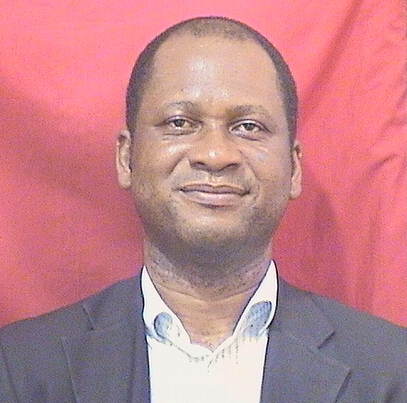
Department of Obstetrics & Gynaecology
The researcher's work integrates theoretical approaches to quantum systems with applied studies in neural networks and materials science, alongside experimental contributions in condensed matter physics, demonstrating a comprehensive understanding across multiple disciplines.
Department of Obstetrics & Gynaecology
This researcher has focused extensively on advancing computational methods to enhance predictive accuracy in financial markets by integrating machine learning models with traditional statistical techniques. Their work emphasizes the development of novel numerical approaches to address complex financial problems, such as volatility prediction and risk assessment, while fostering interdisciplinary collaborations between computer scientists and mathematicians.
Department of Obstetrics & Gynaecology
This researcher has developed a comprehensive theoretical framework integrating network theory and systems modeling across diverse disciplines, including quantum mechanics, evolutionary biology, and ecology. Their work highlights the importance of understanding collective behavior in macroscopic systems through a unified approach that applies broadly across physics, biology, and ecosystems.
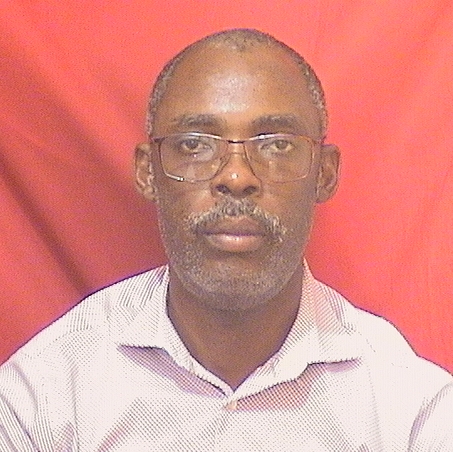
Department of Obstetrics & Gynaecology
This researcher investigates how individual behaviors are influenced by their socio-economic context through various media and platforms, particularly online, aiming to understand human behavior in digital spaces.
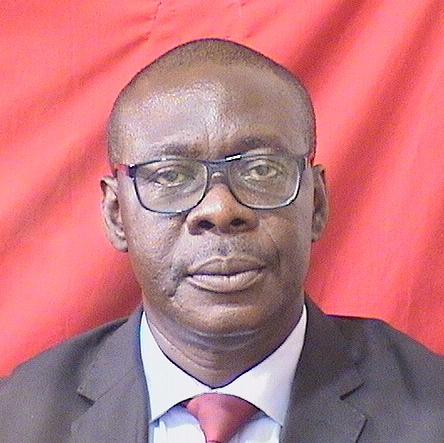
Department of Obstetrics & Gynaecology
This researcher has concentrated their work on developing efficient quantum algorithms for solving complex optimization problems across various domains. Their research extends into applying advanced computational techniques in network science, particularly in social and biological systems, where they leverage mathematical models to address challenges in understanding collective behaviors. Additionally, the researcher has made significant contributions to computational biology, advancing our ability to model and analyze large-scale biological networks and genomic data. Recent work in theoretical physics has further solidified their commitment to interdisciplinary approaches, bridging quantum computing with practical applications in fields ranging from materials science to environmental modeling. Their research emphasizes collaboration across traditional academic boundaries, demonstrating a persistent effort to address real-world problems through innovative scientific inquiry.
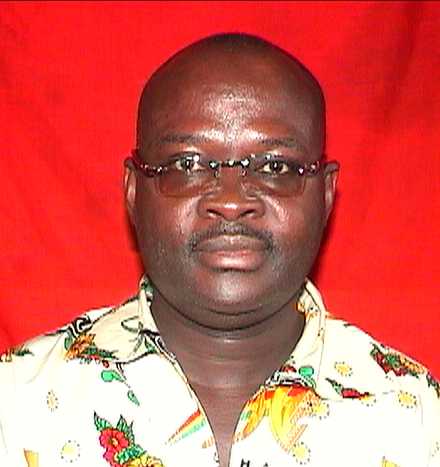
Department of Obstetrics & Gynaecology
The researcher has focused extensively on advancing machine learning techniques, particularly exploring neural network architectures for real-world applications across diverse domains such as healthcare, computer vision, and robotics. Their work emphasizes developing and optimizing algorithms that improve pattern recognition and decision-making processes, with a particular interest in leveraging deep learning to address challenges in these fields.