Beta Testing
KNUST Research Atlas is currently in active Beta. Report bugs or suggest features to help us improve!
KNUST Research Atlas is currently in active Beta. Report bugs or suggest features to help us improve!
KNUST Research Atlas is currently in active Beta. Report bugs or suggest features to help us improve!
Search, discover, and connect with over 1,800 researchers, faculty members, and scholars across all departments of KNUST.
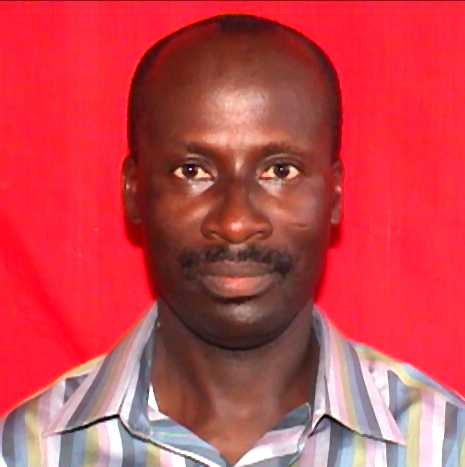
Department of Mechanical Engineering
The researcher's work is centered on a comprehensive exploration across multiple domains within the physical sciences, with a primary focus on advancing knowledge in renewable energy, composite materials, fluid dynamics, thermal efficiency, and transportation safety. Key areas of investigation include studies on waste management systems, natural fiber reinforced composites for structural applications, and energy-efficient mechanisms such as hot plate stoves and photovoltaic module optimization techniques. The researcher also delves into acoustic wave phenomena and topology optimization methods, while examining the impacts on structures like cookstoves and vehicles. This integrated approach highlights a broad spectrum of research interests that span domains from renewable energy solutions to practical implementation in industrial settings.
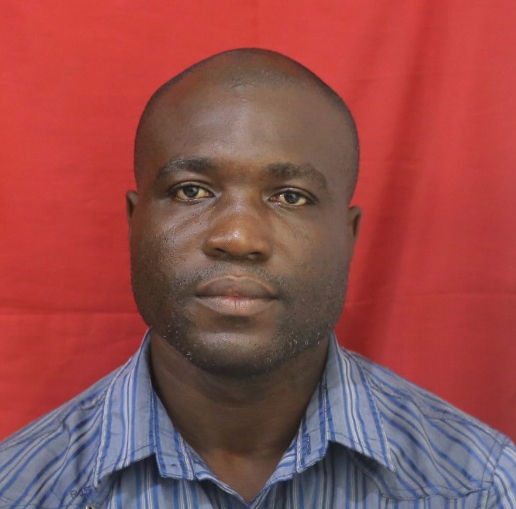
Department of Mechanical Engineering
The researcher has been focusing on several key themes across multiple domains, including urban and rural challenges, environmental sustainability, social reforms, healthcare systems, international aid, labor markets in education, health issues, transportation policies, patient-provider communication, solid waste management, climate change impacts, nutrition, occupational hazards, and energy sources. Their work examines factors such as urban infrastructure development, environmental policy impacts, social reforms, healthcare enrollment dynamics, international development initiatives, labor market dynamics in healthcare settings, health equity concerns, transportation system improvements, patient engagement in healthcare services, and the sustainability of solid waste management practices.
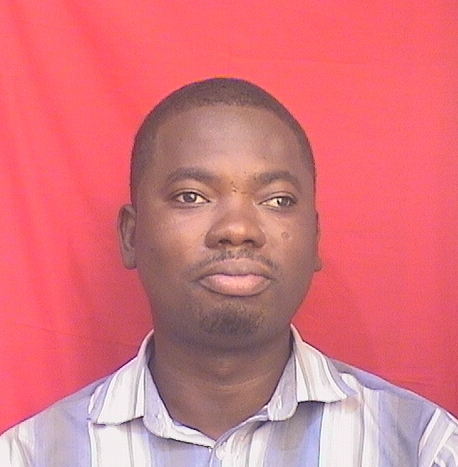
Department of Mechanical Engineering
The researcher integrates diverse areas within physical sciences, from energy and environmental impacts through innovative thermochemical processes and renewable energy modeling, using advanced techniques like CFD and thermodynamics to enhance our understanding of complex systems across domains such as biomass conversion, acoustics, solar energy, wood trailer beds, and photovoltaic power cycles.
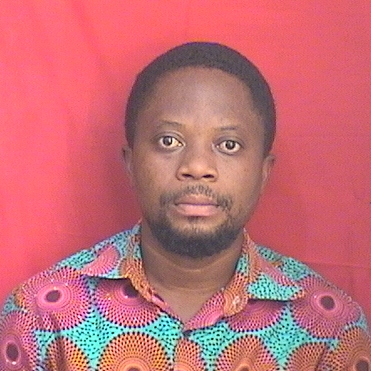
Department of Mechanical Engineering
The researcher’s work focuses on integrating hybrid renewable energy systems with global energy transition strategies, examining their environmental impacts and thermochemical efficiencies. Their studies highlight innovative applications of solar photovoltaic (PV) systems in reducing energy costs for households through electric cooking and rooftop solar thermal generation. Additionally, they investigate the potential of redundant energy from PV systems to drive future research trends across various physical sciences domains, including hybrid renewable energy, energy environment impacts, thermochemical processes, photovoltaic systems, solar thermal and energy systems, land use, building energy optimization, and renewable energy innovation.

Department of Mechanical Engineering
The researcher's work extends across diverse fields within physical and life sciences, focusing on innovative technologies and sustainable practices. Their research encompasses the use of coconut waste for energy solutions, assessment of electric vehicle costs, exploration of hybrid renewable energy systems, advancements in food drying techniques, applications of solar thermal methods in agriculture, analyses of solar PV systems, thermochemical biomass processes, developments in solar power and composite materials, studies on urban transport infrastructure, considerations of heat transfer mechanisms, and investigations into eco-friendly industrial applications. Their work also delves into the technical aspects of packaging, electronic technologies, building energy optimization, food production, and the economic evaluation of renewable energy systems, highlighting a comprehensive approach to advancing sustainable and efficient solutions in various scientific domains.

Department of Mechanical Engineering
This research investigates how societal challenges are addressed across diverse domains—family dynamics in illness, business opportunities in entrepreneurship, environmental impact assessments, and diabetes management—all within the broader context of social sciences to examine equity and systemic issues.
Department of Mechanical Engineering
The researcher has made significant strides in advancing the development of novel soft, active, and light-responsive materials, with a focus on self-assembling polymers, photoresponsive and light-responsive hydrogels, ionic liquid chemistry, block copolymers, and systems involving calcium carbonate crystallization. Their work contributes to the broader field of soft and active matter technologies, addressing challenges in material science through innovative synthesis and characterization approaches across multiple domains.
Department of Mechanical Engineering
The researcher has conducted extensive work in photovoltaic system optimization techniques, exploring methods for improving efficiency and reliability. They have also investigated hybrid renewable energy systems, investigating their economic implications and environmental impact. Their studies on solar thermal systems highlight advancements in performance analysis. The researcher integrates climate effects into energy planning, focusing on solar radiation and its role in sustainability. Advanced control strategies for grids are explored, while they assess the technical feasibility of smart grid integration. They examine the resilience of energy systems to various disruptions and analyze investment opportunities through case studies. Their work also covers microgrid optimization and evaluates working capital impacts. The researcher designs adaptive control systems and explores circular economy models, focusing on waste management in higher education. They study fuel-cell pumps for agriculture and assess photovoltaic-based renewable irrigation. Their research integrates policy considerations into energy planning and considers atmospheric gas dynamics.
Department of Mechanical Engineering
The researcher's work is interdisciplinary, synthesizing advancements in computational fluid dynamics, agricultural food supply chain traceability, electric vehicle infrastructure development, and governance practices. Their research integrates methodologies from aerospace engineering, food safety, environmental policy, and global economics to address critical challenges across these fields.
Department of Mechanical Engineering
The researcher focuses on understanding the intricate interactions between natural systems and human activities, employing a multidisciplinary approach that spans climate science, genetics, and environmental studies. Their work emphasizes how environmental changes influence biological processes, particularly through gene expression patterns linked to ecological thresholds and neural signaling mechanisms in response to climate fluctuations.
Department of Mechanical Engineering
The researcher's work is centered on integrating various disciplinary approaches within the physical sciences to address complex real-world challenges across diverse fields. Their research spans atmospheric phenomena and simulations in meteorology, energy systems for infrastructure development, sustainable practices in higher education, mechanical engineering principles, environmental impacts analysis, financial performance evaluations, and innovative technologies in renewable energy. This integrated approach highlights a holistic strategy that bridges theoretical concepts with practical applications, from optimizing power grids to enhancing educational sustainability and developing sustainable energy solutions.

Department of Mechanical Engineering
This researcher employs an interdisciplinary approach, integrating nonlinear dynamics, mathematical modeling in biology, biophysics, soft matter physics, and computational modeling to investigate complex biological systems across scales—from molecular processes to cellular and population-level phenomena. Her work emphasizes the application of theoretical frameworks with experimental validation, employing analytical techniques to uncover universal principles governing collective behavior in diverse contexts. This unified research approach bridges theoretical insights with empirical discovery, advancing our understanding of biological systems at various hierarchical levels.