KNUST Research Atlas is currently in active Beta. Report bugs or suggest features to help us improve!
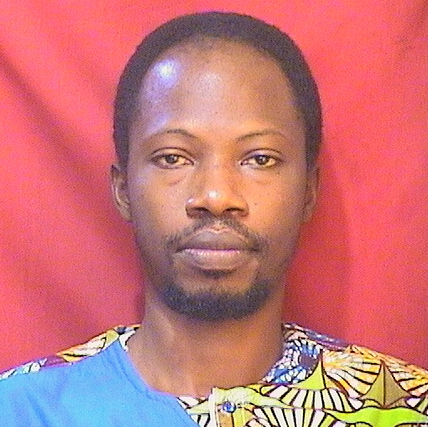
David Ato Quansah
The researcher has conducted extensive work in photovoltaic system optimization techniques, exploring methods for improving efficiency and reliability. They have also investigated hybrid renewable energy systems, investigating their economic implications and environmental impact. Their studies on solar thermal systems highlight advancements in performance analysis. The researcher integrates climate effects into energy planning, focusing on solar radiation and its role in sustainability. Advanced control strategies for grids are explored, while they assess the technical feasibility of smart grid integration. They examine the resilience of energy systems to various disruptions and analyze investment opportunities through case studies. Their work also covers microgrid optimization and evaluates working capital impacts. The researcher designs adaptive control systems and explores circular economy models, focusing on waste management in higher education. They study fuel-cell pumps for agriculture and assess photovoltaic-based renewable irrigation. Their research integrates policy considerations into energy planning and considers atmospheric gas dynamics.
Faculty Biography
David is currently Director of The Brew-Hammond Energy Centre at the Kwame Nkrumah University of Science and Technology (KNUST) where he leads a multidisciplinary network of Fellows drawn from various Colleges of the University and beyond to work on energy and sustainability challenges confronting Ghana and Africa at large.He is an Associate Professor at the Department of Mechanical Engineering where he teaches undergraduate and postgraduate courses in Sustainable and Alternate Energy Systems, Renewable Energy Project Analysis, Solar PV Technologies and other basic engineering courses. He has over 15 years of experience in research, consulting and teaching in renewable energy (RE) technologies, energy policy analysis and financial modelling of energy projects. He is currently the National Contact Point (NCP) for Ghana on the EU research and innovation programme, Horizon 2020, in the thematic area of Secure, Clean and Efficient energy, in which position he serves as liaison between the Horizon 2020 programme and researchers in Ghana.He previously coordinated the Master of Science Programme in Renewable Energy Technologies (MSc RETs) at KNUST and was also responsible (2009 – 2015) for short courses at the Brew-Hammond Energy Centre; during which participants from more than 20 African countries were trained in Solar PV design and installation, design and construction of biogas systems, RE Project Analysis, among others.David holds a PhD (Renewable Energy Specialization) from the Norwegian University of Life Sciences (NMBU) where he researched performance degradation in solar photovoltaic modules. He had earlier obtained a Master of Science Degree in Mechanical Engineering (Thermo-fluids and Energy Systems) from KNUST and another Masters Degree in Energy Engineering from the Institute International d’Ingenierie de l’Eau et de l’Environment (2iE) in Ouagadougou. He is a certified expert in Climate and Renewable Energy Finance and also holds a number of professional development certifications in low-carbon development strategies and sustainable energy transitions. He is a member of the International Solar Energy Society (ISES), the Ghana Science Association and a Member of the Ghana Institution of Engineers (GhIE).Email: daquansah.coe@knust.edu.gh, david.ato.quansah@gmail.com.
Atmospheric and Environmental Gas Dynamics
Building Energy and Comfort Optimization
Control and Stability of Dynamical Systems
Electric Vehicles and Infrastructure
Energy and Environment Impacts
Hybrid Renewable Energy Systems
Integrated Energy Systems Optimization
Microgrid Control and Optimization
Photovoltaic System Optimization Techniques
Photovoltaic Systems and Sustainability
Smart Grid Security and Resilience
solar cell performance optimization
Solar Radiation and Photovoltaics
Solar Thermal and Photovoltaic Systems
Sustainability in Higher Education
Working Capital and Financial Performance
Department of Mechanical Engineering
Kwame Nkrumah University of Science and Technology