Beta Testing
KNUST Research Atlas is currently in active Beta. Report bugs or suggest features to help us improve!
KNUST Research Atlas is currently in active Beta. Report bugs or suggest features to help us improve!
KNUST Research Atlas is currently in active Beta. Report bugs or suggest features to help us improve!
Search, discover, and connect with over 1,800 researchers, faculty members, and scholars across all departments of KNUST.
Department of Computer Engineering
This researcher has focused on developing advanced methods for image fusion in the Physical Sciences domain, particularly targeting applications in medical imaging and engineering. Their work emphasizes the integration of diverse imaging modalities, with significant contributions to techniques such as breast tumor detection and blood vessel segmentation. While some studies may lean toward mathematical models or machine learning approaches, this project aims to bridge these areas, offering innovative solutions for comprehensive image analysis.
Department of Computer Engineering
The researcher has made significant contributions across a diverse range of research domains, with a focus on integrating advanced technologies and methodologies. Their work spans key areas such as blockchain security, smart grid optimization, AI-driven solutions in cancer detection, and innovative image processing techniques. Additionally, the researcher explores advanced photolithography methods, network security strategies, diagnostics for health conditions like diabetic foot ulcers, and applications of artificial intelligence in various fields. Their research is characterized by a commitment to enhancing technological efficiency, integrating diverse methodologies across different domains, and addressing both theoretical and applied challenges in technology development.
Department of Computer Engineering
The researcher has focused primarily on developing innovative computational methods that bridge theoretical physics with applied interdisciplinary research, aiming to enhance our ability to model and understand complex physical phenomena across diverse application domains. Their work emphasizes the creation of robust numerical models capable of accurately describing fundamental physical interactions while also addressing real-world challenges in healthcare, materials science, and engineering. By integrating these advancements into broader scientific and technological contexts, their research seeks to drive innovation and practical solutions that improve our ability to model and predict outcomes across a wide range of fields.
Department of Computer Engineering
The researcher has made significant contributions across diverse domains, focusing on energy systems, cybersecurity, human-computer interaction, IoT, signal processing, and image analysis. Their work encompasses advancements in smart grids, solar radiation technologies, blockchain integration platforms, advanced signal processing devices, and image measurement techniques. The researcher also emphasizes innovations in user authentication, educational engineering, and mobile application development, particularly in areas like smart home systems, autonomous vehicle technology, and IoT-based surveillance. Their research extends to energy management solutions, social sciences through topics such as emotion recognition and robotics, while also contributing to the field of cybersecurity. The overall focus is on developing intelligent technologies for sustainable energy, enhanced human-computer interaction, and impactful educational innovations across various scientific disciplines.

Department of Computer Engineering
The researcher has expertise in machine learning with a strong mathematical foundation, focusing on optimization techniques for neural network models. Their work encompasses both convex and non-convex optimization, exploring distributed systems and asynchronous communication protocols. They are particularly interested in Byzantine fault-tolerant learning systems, which enhances robustness under adversarial or failure-prone environments. The research integrates theoretical foundations with algorithm development and practical deployment across diverse domains such as healthcare and finance, leveraging quantum computing applications. Their work emphasizes collaboration with industry partners and utilizes open-source software to drive impactful solutions in real-world scenarios.
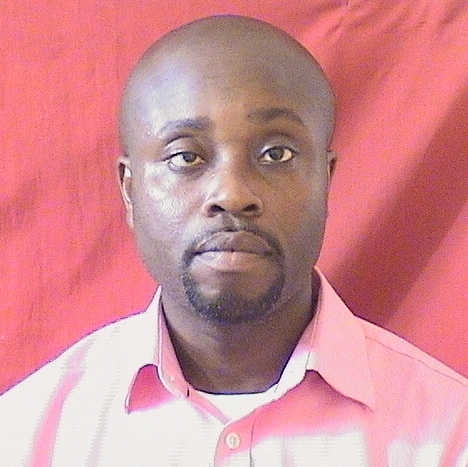
Department of Computer Engineering
The researcher has conducted extensive work in several interdisciplinary areas within physical sciences, focusing on developing innovative technologies across diverse domains. Their research encompasses advancements in IoT-based systems for agriculture, wireless body area networks (WBAN) applications, and antenna design for precise positioning and communication in biomedical and environmental fields. Additionally, they have contributed to enhancing network security and improving the efficiency of communication systems, all while exploring novel techniques in microwave imaging and smart home devices. Their work reflects a commitment to advancing cutting-edge technologies across both fundamental science and practical applications, showcasing a cohesive approach to solving complex problems in modern society.
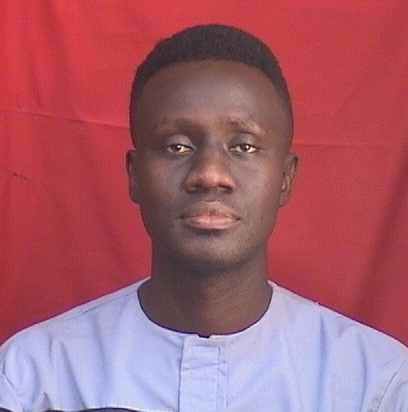
Department of Computer Engineering
The researcher's work integrates several interdisciplinary areas within the physical sciences, demonstrating a comprehensive approach that spans materials science, medicine, security, computational methods, economics, and business applications. Their research encompasses polymer nanocomposites for material science applications, advanced medical technologies like radiotherapy optimization using tissue-equivalent phantoms, privacy-enhanced systems in cybersecurity, atomic physics principles applied to Pulmonary Blood Flow measurements, financial market behaviors influencing stock exchange performance, imaging techniques for MRI applications in healthcare, computational methods for drug discovery, and business models in innovation management. This integrated approach highlights the researcher's efforts in solving complex problems across diverse fields within the physical sciences.

Department of Computer Engineering
The researcher has focused on developing advanced optimization techniques using machine learning and deep learning methods, particularly targeting applications across diverse domains such as graph-based representations for solving complex problems like social networks and protein folding. Their work also extends to computational chemistry, demonstrating innovative approaches that bridge theoretical insights with practical implementations, showcasing a comprehensive approach to interdisciplinary research.
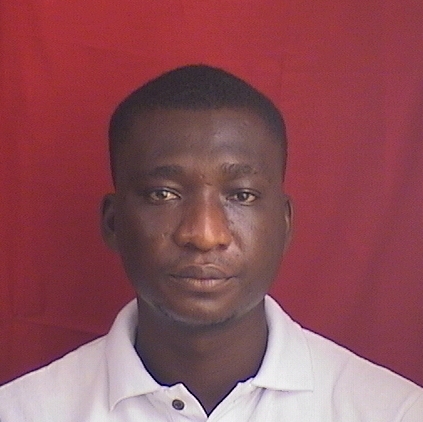
Department of Computer Engineering
The researcher integrates advanced smart technologies across diverse fields to address global challenges such as climate change and energy efficiency, aiming to develop sustainable solutions through innovative integration of biometrics, smart grids, and renewable energy systems.

Department of Computer Engineering
The researcher has made significant contributions to the field of biosensing through innovative approaches in advanced materials science and bioinformatics. Their work encompasses developing gold- and silver-based nanomaterials for precise heat shock protein detection, employing nanoparticles on ITO glass substrates for electrochemical sensing applications, and pioneering magnetic biosensors that enhance medical diagnostics. Additionally, they have advanced the field with machine learning techniques for analyzing biological data, particularly relevant to diabetes management and blood glucose monitoring. Their research highlights a comprehensive exploration of biosensor technologies across diverse domains, including life sciences, health sciences, and chemical sensor development.
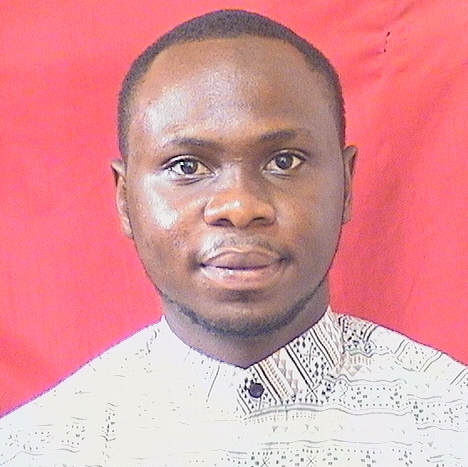
Department of Computer Engineering
The researcher's comprehensive work spans multiple subfields within the Physical Sciences, encompassing areas such as Blockchain Technology Applications and Security, Smart Grid Energy Management, Software-Defined Networks and 5G, ICT in Developing Communities, E-Government and Public Services, Emotion and Mood Recognition, Educational Technology and Assessment, Consumer Retail Behavior Studies, Oil Palm Production and Sustainability, Food Supply Chain Traceability, and Network Security and Intrusion Detection. These diverse areas demonstrate a cohesive research focus on technological innovations, optimization techniques, system efficiency improvements, security enhancements, and behavioral studies across various applications.

Department of Computer Engineering
This research focuses on improving indoor and outdoor location accuracy using advanced computational methods and machine learning algorithms within real-world settings where traditional geolocation tools do not work, with applications in environmental monitoring and personal health tracking.