KNUST Research Atlas is currently in active Beta. Report bugs or suggest features to help us improve!
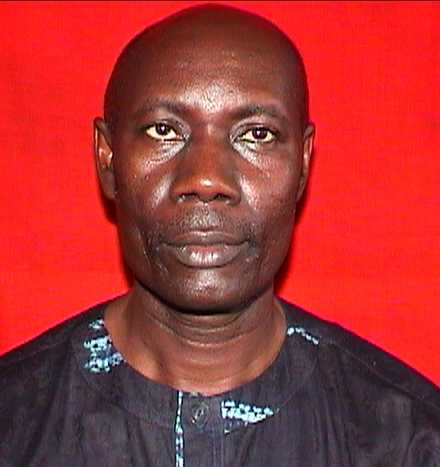
William Oduro
The researcher's work is interdisciplinary, spanning diverse domains of life sciences and social sciences, with a strong focus on sustainable development in African regions. Their research integrates data from various fields such as Cocoa and Sweet Potato Agroecology, Conservation Biology, and Rangeland Management, examining both traditional practices and modern technologies to address ecological challenges. The researcher's work is notable for its holistic approach, integrating data from different domains to contribute to the understanding of plant-iodic supercapacitors, animal behavior in ecosystems, and land rights, all while highlighting the importance of sustainable development practices in Africa.
Faculty Biography
Prof. William Oduro is a Professor and Lecturer of Wildlife Biology/Ecology and Management, former Dean of the International Programme Office (IPO), office of the Vice Chancellor, Kwame Nkrumah University of Science and Technology (KNUST), Kumasi, Ghana. Former Dean Faculty of Renewable Natural Resources (FRNR), College of Agriculture and Natural Resources, KNUST, former Director Institute of Renewable Natural Resources (IRNR), KNUST, and former Head Department of Wildlife and Range Management, IRNR and FRNR Prof Oduro has spent his entire professional career in Biology/Ecology and Management with focus on education, research and service.His academic training consists of a Bachelor of Science Degree in Wildlife and Range Management in 1984 from the Faculty of Agriculture and Forestry, University of Ibadan, Nigeria and a Master of Science in Wildlife and Range Management and Doctor of Philosophy (Wildlife Biology and Ecology) in 1985 and 1990 respectively and nine professional certificates from seven countries. He has two International awards from Smithsonian Institute, Washington D.C. and the Distinguished Professor Award, KNUST 27 Nov. 2015. Prof. Oduro began his academic career as Teaching Assistant in 1987 at University of Ibadan, Nigeria and lecturer in 1990 at the KNUST, Kumasi, Ghana. During his academic career he published 107 papers in 22 peer review journals, authored or edited 5 books, 4 book chapters, 19 abstracts in proceedings, 2 periodicals, 81 technical reports, one international public exhibition, 3 video documentaries, and 51 other publications. He attended 127 conferences/seminars and workshops including scientific presentations and plenary addresses. He served as key supervisor for 11 students at the Diploma Natural Resources Management Level, 162 Students at the Undergraduate BSc Natural Resources Management Level and 52 Postgraduate Research Projects at Masters Level (Both MPhil Wildlife & Range Management, MSc GISNATUREM and MSc Environmental Resource Management) and 17 PhDs (International and Local). Prof. Oduro serves as an external assessor in three Universities in Ghana, two Universities in Nigeria, one in Republic of Benin, and a regular reviewer for 10 international and 2 local journals. He offers lectures in Research Methods - Research Skills and Communication for WASCAL, RWESCK TRECK PhD and MPhil students in Civil Engineering Department; also, for RCESS PhD and MPhil students in University of Energy and Natural Resources (UENR), Sunyani. He has coordinated several external funded projects including: ‘People, Land Management and Environmental Change’ (PLEC) GEF/UNU/INRA. $ US 10,992,900.00; ‘Sustainable Land Management for Mitigating Land Degradation, Enhancing Agricultural Biodiversity and Reducing Poverty in Ghana” (SLaM) GEF/UNDP/Ghana Gov’t) $US 1,758,023.00; ‘Agroforestry Practices to Enhance Resource-Poor Livelihoods’ (APERL) CIDA CAD 3,000,000.00; ‘The inclusion of community based agro-biodiversity conservation into value chains and markets: designing viable institutional configurations through cross-site learning in Southern Africa, Ghana, Colombia and Thailand (ICHA), Netherlands Directorate-General for International Cooperation/Wageningen UR/KNUST, Euro 146,000.00; ‘Enhancing Management of Natural Resources through the Empowerment of Traditional Leaders in the Oil and Gas Region in Ghana towards Poverty Reduction’. African Association of Universities (AAU)/DFID Euro 100,000.00; Member, Research Team on Global Pollination Project UNEP/GEF- funded USD 130,808.00; Member, Steering Committee “Building Stronger Universities in Developing Countries” (BSU). 60 million DKK (11.5 million USD) granted for the first phase. second phase, and third phase, Ministry of Foreign Affairs in Denmark/DANIDA; Team Leader of WP2 BSU I, II and III: Consultant/Coordinator High Forest Biodiversity Conservation Project of Faunal Survey in Globally Significant Biodiversity Areas (FSD, FC, MLFM, GEF/World Bank/Ghana Gov’t); $US 250,000. Environmental Impact Assessment (EIA Tain II FR), FORM International Ghana $US 25,000.00; Consultant Evaluation and Monitoring of Lake Bosomtwe Project (UNESCO funded $1,000,000.00); Project Leader Strengthening Partnerships and Market Linkages for Farmer Groups in the Sunyani West District CFLI-2014-GH0005 DFTAD CAD$29,984. Project Manager, Coordinator and primary contact person E-learning (E-L) and Problem Based Learning (PBL), funded by the Ministry of foreign Affairs of Denmark DFC File No. BSUKOM-KU KNUST activity budget is DKK 850.153, Team Leader, Entrepreneurship and job creation DKK 1,521,673 “Building Stronger Universities in Developing Countries” (BSU II Team Leader. Innovation and Entrepreneurship, DKK 1, 521, 673, “Building Stronger Universities in Developing Countries” (BSU III) 15,000,000 DKK (Start January 2017, End 2021).; Local Project Coordinator, EU ERASMUS+ “Entrepreneurship, Innovation and Sustainability in Higher Education in Africa’ EEISHEA. 999.89 Euros.; Team Leader Nuffic Fellowship ‘Technology-driven Entrepreneurship and Innovative GI science education for agriculture and forestry Acronym: EI 4 GI’ Euros 75,000.00. Local Project Coordinator. ERASMUS+ Intra-Africa Academic Mobility Programme + ICM Key Action 107 application KNUST with Aalborg University, Denmark; Mahidol University, Thailand; UENR, Ghana; SUZA, Tanzania. (Start March 2019, End 2021);Prof. Oduro has managed 22 robust international and 21 national wildlife researches for the past 20 years. Much of these researches have focused on biodiversity/Agrobiodiversity assessment, assessment of wildlife populations, wildlife ecology/biology, wildlife utilization, park design and management, community nature-based tourism, game ranching and domestication, traditional conservation of biological resources, rural land management and land use, rural environmental resource management. He is a member of the International Leadership Foundation and a regular speaker at top management fora of international and local institutions/organizations including Higher education. He is also a regular speaker at the African Forum on Religion and Government-Ghana (AFReG), a Tertiary Leadership Seminar. Prof. Oduro engages the academia community through presentations on Project Proposal writing and Management, Research methods and Scientific communication skills. In conjunction with the researches, he has played a key role in preparing strategies to monitor trade in Elephant Products and Illegal Killing of Elephants” - Nairobi, Kenya. TRAFFIC/IUCN/SSC/CITES (1998) and member of a Committee to draw resolutions for elephants Parts Trade in Florida (1995) and Harare (1997). He has been member of Government of Ghana delegation to Conference of the Parties (CoP) of the Convention on International Trade in endangered species of wild fauna and flora (CITES) on 4 occasions, 1995 -2004. Member of the Advisory Working Group for the evaluation of the Review of Significant Trade, CITES/UNEP at the joint session of the 27th Animals and 21st Plants Committee on the Isle of Vlim in Germany and at the U.S. Fish & Wildlife Service’s National Conservation Training Center, Sherperdstown, West Virginia, USA. Member of the Steering Committee Man and Biosphere (MAP) and Chairman of the Editorial Committee of MAP of the Environmental Protection Council,Ghana. Prof. Oduro was a member of the team that analyzed the Biodiversity for Africa BSP/WWF, reviewed Ghana’s Biodiversity, USAID, prepared Ghana’s Biodiversity and Action Plan, Ministry of Science and Technology. Ghana. He is a registered member of 14 international and national professional associations. He has received 2 internationally professional awards/ prizes. Beyond his teaching and research career he has served in various capacities 35, 37 and 23 at the university, national and international levels respectively. He was the head of Department of Wildlife and range Management from 1995 to 2002; Director of Institute of renewable Natural resources (2002-2004); Dean of Faculty of Renewable natural Resources (2008-2012); Dean of International Programme Office, Vice Chancellor’s Office (2013-2016). Prof Oduro’s extensive professional experience and travel in 16 African countries and 20 other countries outside Africa provide him with a unique understanding of the cultural context of agrobiodiversity capacity building in the world. He moves freely within the culture of these countries with knowledge of gender roles, language and current sustainable wildlife management issues.
African Botany and Ecology Studies
Agricultural Innovations and Practices
Agricultural pest management studies
Agriculture and Rural Development Research
Amphibian and Reptile Biology
Cocoa and Sweet Potato Agronomy
Conservation, Biodiversity, and Resource Management
Coral and Marine Ecosystems Studies
Ecology and Vegetation Dynamics Studies
Energy and Environment Impacts
Fish Ecology and Management Studies
Hydropower, Displacement, Environmental Impact
Land Rights and Reforms
Online and Blended Learning
Paleontology and Evolutionary Biology
Plant and animal studies
Problem and Project Based Learning
Rangeland Management and Livestock Ecology
Religion, Society, and Development
Supercapacitor Materials and Fabrication
Wildlife Ecology and Conservation
Students’ Satisfaction of Blended Problem-Based Learning: An Academic Experience at Kwame Nkrumah University of Science and Technology
Open AccessEMI-BF4 electrolyte and Al2O3/PVDF-HFP modified PE separator for high capacitance retention and cycle stability in supercapacitors
Toward sustainable land resources management with agroforestry: empirical evidence from the Sunyani west district of Ghana
Review of E-Learning Environment at the Kwame Nkrumah University of Science and Technology, Ghana
Open AccessProblem Based Learning Resources and Exposure in higher Education: Evidence from the Kwame Nkrumah University of Science and Technology, Kumasi - Ghana.
Relative contribution of neutral and deterministic processes in shaping fruit‐feeding butterfly assemblages in Afrotropical forests
Open AccessAn assessment of resource availability for problem based learning in a Ghanaian University setting
Impact of Aboriginal Belief Systems on Natural Resources Management: Mount Cameroon National Park (MCNP)
Open AccessThe Role of Bakweri Traditional Beliefs in the Management of Mount Cameroon National Park
Open AccessThe Forest Fire Problem of Degrading Tain II Forest Reserve in Ghana: Rethinking Community Participation in Fire Management and Sustainable Forestry
Post-Logging Recovery Of Amphibians In Ghanaian Rainforests
Analysis of human activities in and around protected areas (PAs): Case of Kakum conservation area in Ghana
Open AccessStructure and Stability of Cocoa Flowers and Their Response to Pollination
Open AccessInsect assemblage and the pollination system in cocoa ecosystems
Open AccessWest Africa - A Safe Haven for Frogs? A Sub-Continental Assessment of the Chytrid Fungus (Batrachochytrium dendrobatidis)
Open AccessTwo‐Stage Recovery of Amphibian Assemblages Following Selective Logging of Tropical Forests
Evaluation of Breeding Substrates for Cocoa Pollinator, <i>Forcipomyia</i> spp. and Subsequent Implications for Yield in a Tropical Cocoa Production System
Open AccessFunctional relationship between crop raiding by the savannah elephant and habitat variables of the Red Volta Valley in north-eastern Ghana
Open AccessFloral Phenology of Upper Amazon Cocoa Trees: Implications for Reproduction and Productivity of Cocoa
Open AccessDifferences in the Effects of Selective Logging on Amphibian Assemblages in Three West African Forest Types
Spatial and temporal variation in butterfly biodiversity in a <scp>W</scp>est <scp>A</scp>frican forest: lessons for establishing efficient rapid monitoring programmes
The genetic diversity of Jatropha Curcas (L.) germplasm in Ghana as revealed by random amplified polymorphic DNA (RAPD) primers
Pollinator Status of Bees in Cocoa Agro-Ecological System
The effect of frugivory on postdispersal seed removal and germination in the pantropical forest tree <i>Antiaris toxicaria</i> Leschenault
Re-discovery of the Giant West African Squeaker, Arthroleptis krokosua Ernst, Agyei &amp; Rödel, 2008 (Amphibia: Anura: Arthroleptidae) in two forests of south-western Ghana with observations on the species’ variability and habitat preferences
Traditional Representations of the Natural Environment and Biodiversity Conservation: Sacred Groves in Ghana
Open AccessTraditional Representations of the Natural Environment and Biodiversity Conservation: Sacred Groves in Ghana
Open AccessChanges in Beliefs and Perceptions about the Natural Environment in the Forest-Savanna Transitional Zone of Ghana: The Influence of Religion
Open AccessChanges in Beliefs and Perceptions about the Natural Environment in the Forest-Savanna Transitional Zone of Ghana: The Influence of Religion
Open AccessTraditional Representations of the Natural Environment and Biodiversity Conservation: Sacred Groves in Ghana
Open AccessChanges in Beliefs and Perceptions About the Natural Environment in the Forest-Savanna Transitional Zone of Ghana: The Influence of Religion
Open AccessResponse of waterbird species to fluctuating water levels in tropical coastal wetlands
Frugivores and fruit removal of<i>Antiaris toxicaria</i>(Moraceae) at Bia Biosphere Reserve, Ghana
Conservation status of crocodiles in Ghana and Côte-d'Ivoire, West Africa
Open AccessNature and pattern of lagoon fisheries resource utilisation and their implications for waterbird management in coastal Ghana
Social and Environmental Impact Assessment of the FORM Agro-forestry Project in Asubima Forest Reserve, Ghana
Preliminary assessment of fruit-feeding butterfly communities in the Owabi Wildlife Sanctuary
Traditional Natural Resources Management Practices and Biodiversity Conservation in Ghana: A Review of Local Concepts and Issues on Change and Sustainability
Open AccessTraditional Natural Resources Management Practices and Biodiversity Conservation in Ghana: A Review of Local Concepts and Issues on Change and Sustainability
Open AccessPLEC News and Views – September 2004
Aspects of resource tenure that conserve biodiversity: the case of southern and northern Ghana.
Resource access and distribution and the use of land in Tano-Odumasi, central Ghana.
Women Environmental Pacesetters of Jachie
Managing agrodiversity the traditional way : lessons from West Africa in sustainable use of biodiversity and related natural resources
PLEC News and Views – October 2003
Genesis and purpose of the women farmers’ group at Jachie, central Ghana
Department of Wildlife and Range Management
Kwame Nkrumah University of Science and Technology