KNUST Research Atlas is currently in active Beta. Report bugs or suggest features to help us improve!
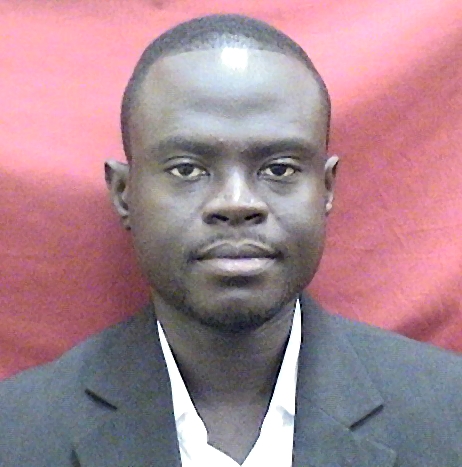
Emmanuel Kweku Quansah
**Research Focus Synthesis** The researcher's work across diverse domains focuses on global Sahelian ecosystems, emphasizing interactions between climate change, agriculture, hydrology, atmospheric processes, solar energy, and fire impacts. Key areas include: 1. **Savanna Ecosystems**: Investigates plant water relations and carbon dynamics, including effects of rain events, bias correction methods, numerical modeling, and NASA data. 2. **Climate Change Impact on Agriculture**: Analyzes how climate change affects agricultural productivity in Ghana's savannas, focusing on variability and re-classification of agro-climatic zones. 3. **Hydrology and Drought Analysis**: Studies rainfall patterns using the Gumbel model, extreme value theory for rainfall, satellite data, and extreme precipitation indices over the Volta Basin. 4. **Atmospheric Chemistry and Datasets**: Examines atmospheric nitrogen isotopes and solar radiation models, including satellite-based datasets and ozone concentrations. 5. **Solar Energy and Photovoltaics**: Explores modeling global solar radiation in various locations, satellite-based products, and spatial distribution of solar energy. 6. **Precipitation Estimation and Validation**: Develops rainfall data from Ashanti, validates TRMM and FEWS satellite methods for accurate precipitation measurement. 7. **Mathematical Modeling**: Uses GSBR models for global solar radiation in different regions, differential equations for prey-predator dynamics, Holling-Tanner models with cannibalism, and predator interference effects on biological control. 8. **Fire Effects on Ecosystems**: Analyzes climate variability impacts on savanna fires in West Africa and extreme temperature indices over the Volta Basin. 9. **Extreme Weather Events**: Re-examines hemispheric variability with extreme precipitation indices from CMIP6, assesses solar visibility using TRMM data, models time dynamics of population systems, and explores finite time blow-ups in population models. 10. **Fire Studies (Repeats)**: Revisits fire impacts on ecosystems, includes studies on moist convective environments, long-term food chain dynamics, predator interference effects, and finite time blow-ups in population models. The researcher's integrated approach provides insights into Sahelian ecosystems, focusing on climate change, agriculture, hydrology, atmospheric processes, solar energy, precipitation management, and fire dynamics.
Faculty Biography
Emmanuel Quansah is a Lecturer in Operations, Supply Chain Management and Information Systems at the Kwame Nkrumah University of Science and Technology (KNUST) School of Business, with over a decade of experience in higher education. He also serves as a research faculty at the USAID funded Center for Applied Research and Innovation in Supply Chain – Africa (CARISCA) at KNUST where he contributes to the development of Ghana’s Logistics Managers Index (LMI) https://carisca.knust.edu.gh/LMI/His current research interest is in the area of digital transformation of Supply Chains. He is also involved in research in the area of supply chain resilience, logistics performance and sustainability. Emmanuel's PhD study focused on logistics service quality in the context of third party logistics. His research has led to a string of collaborative relationships with industry partners and produced relevant policy briefs. He has publications in peer reviewed journals and was a reviewer for the 53rd Annual Conference of the Decision Sciences Institute (DSI). Emmanuel has experience with academic leadership and programme management; having coordinated grant projects, industry engagements as well as academic programmes. In 2017, Emmanuel was a visiting scholar at Arizona State University (ASU) as part of the MasterCard Funded Strengthening Institutional Linkages programme and co-designed the 3+1+1 International Accelerated Degree Programme (IADP) jointly run by KNUST and ASU.Dr. Quansah extends his research to industry through industry engagements and consulting in the areas of operations strategy deployment, distribution network design, supply chain management and information systems. He is a chartered member of the Chartered Institute of Logistics and Transport (CILT), UK and a professional member of the Institute of Industrial and Systems Engineers (IISE), USA. Emmanuel’s passion is to see human needs met through improved supply chain management and decision support.
Air Quality Monitoring and Forecasting
Animal Ecology and Behavior Studies
Atmospheric aerosols and clouds
Atmospheric and Environmental Gas Dynamics
Atmospheric chemistry and aerosols
Building Energy and Comfort Optimization
Climate Change and Health Impacts
Climate change impacts on agriculture
Climate variability and models
Cocoa and Sweet Potato Agronomy
Cryospheric studies and observations
Digital Transformation in Industry
Ecosystem dynamics and resilience
Entrepreneurship Studies and Influences
Evolution and Genetic Dynamics
Fire effects on ecosystems
Flood Risk Assessment and Management
Geophysics and Gravity Measurements
Hydrology and Drought Analysis
Hydrology and Watershed Management Studies
Land Rights and Reforms
Mathematical and Theoretical Epidemiology and Ecology Models
Meteorological Phenomena and Simulations
nanoparticles nucleation surface interactions
Nuclear Physics and Applications
Plant Water Relations and Carbon Dynamics
Precipitation Measurement and Analysis
Quality and Supply Management
Rangeland Management and Livestock Ecology
Soil Moisture and Remote Sensing
Solar Radiation and Photovoltaics
Supply Chain and Inventory Management
Urban and Freight Transport Logistics
Department of Supply Chain and Information Systems
Kwame Nkrumah University of Science and Technology