KNUST Research Atlas is currently in active Beta. Report bugs or suggest features to help us improve!
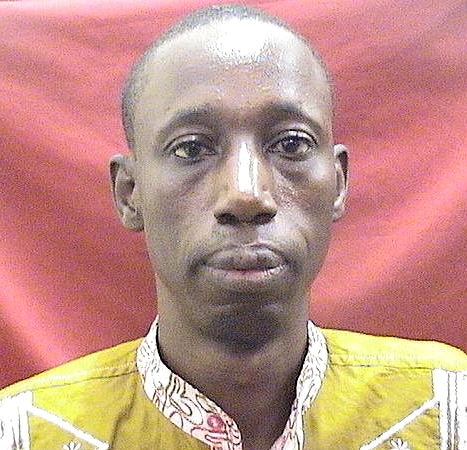
Samson Pandam Salifu
The researcher's work is interdisciplinary, integrating advancements in genetics, bioinformatics, microbiology, pharmacology, and biotechnology to address critical public health issues. Leveraging cutting-edge technologies like CRISPR and genomics, the researcher has contributed significantly to understanding diseases such as malaria, lichi erosion, HIV/AIDS, and cancer, applying innovative approaches across genetics, microbiology, pharmacology, and biotechnology. Their work underscores the potential of genomics and bioinformatics in driving innovation and development for health, particularly in African contexts, where they play a vital role in disease prevention and treatment.
Faculty Biography
Dr. Samson Pandam Salifu holds a BSc. Medical Science from Gazi University, Ankara, MSc. with Distinction in Biomedical Science and PhD in Comparative Viral Genomics from Edinburgh Napier University, Edinburgh, UK. Dr. Salifu has been a Research Fellow at Edinburgh Napier University, Edinburgh and has held the position of Head of Laboratories at Kumasi Centre for Collaborative Research (KCCR), a prestigious research and clinical diagnostic Centre with cutting-edge facilities.Dr Salifu has special interest in application of genomics to profiling species, development of novel tools for diagnostics of infectious pathogens of human, animal and environmental health. He has extensive experience in running and management of research and diagnostic laboratory facilities. He has a considerable experience in a range of molecular biology methods. He has been an external quality control assessor for Ghana National TB Control Programme and member of Ghana TB diagnostics laboratories technical advisory committee.Over the years he has worked in bioinformatics, proteomics as well as sequencing and comparative genomics. He was the Co-Chair of the User Support-working group and also a member of the Education and Training Working Group of H3ABioNet. He has organized and delivers bioinformatics training locally in Ghana and he was a primary trainer on Sequence Analysis module for Introductory Bioinformatics Training across the African content, administered by H3ABioNet. He is also a member of the H3ABioNet Bioinformatics Curriculum Development Task Force and has contributed to the development of the Sequence Analysis Module for the MSc Bioinformatics program.Dr. Salifu joined the Department of Biochemistry and Biotechnology, Faculty of Biosciences, College of Science, Kwame Nkrumah University of Science and Technology in December, 2014 as a lecturer and has been the Coordinator for postgraduate degree programmes for Biotechnology and Forensic Science. He is the chairman of the Department’s laboratories and a co-chair of research grant and research committee.At the graduate level, Dr. Salifu teaches, Crime Scene Investigation, Advanced DNA Technology, Molecular Biology Techniques, Forensic Toxicology, Forensic Pharmacology and Toxicology and Principles of Forensic Investigation.
Adipokines, Inflammation, and Metabolic Diseases
Advances in Oncology and Radiotherapy
Bacterial Infections and Vaccines
Bacteriophages and microbial interactions
Bioeconomy and Sustainability Development
Biofuel production and bioconversion
Brucella: diagnosis, epidemiology, treatment
Cervical Cancer and HPV Research
Competency Development and Evaluation
CRISPR and Genetic Engineering
Enzyme Structure and Function
Ferroptosis and cancer prognosis
Forensic and Genetic Research
Genetics, Bioinformatics, and Biomedical Research
Genomics and Phylogenetic Studies
Gut microbiota and health
Infections and bacterial resistance
Lymphoma Diagnosis and Treatment
Malaria Research and Control
Microbial Metabolic Engineering and Bioproduction
Molecular Biology Techniques and Applications
Reproductive tract infections research
Soybean genetics and cultivation
Vector-borne infectious diseases
Virology and Viral Diseases
Unlocking the African bioeconomy and strengthening biodiversity conservation through genomics and bioinformatics
Open AccessMolecular characterization of soybean accessions using ssr markers and unveiling the genetic diversity
Against the clock: Effect of late detection of a mumps outbreak in the Western North Region of Ghana, 2022
Open AccessUnlocking African bioeconomy through biodiversity genomics and bioinformatics
Open AccessEstablishing African genomics and bioinformatics programs through annual regional workshops
Radiation Therapy for Breast Cancer in Africa
Open AccessEstablish grassroots genomics and bioinformatics programs to train 400 Africans yearly
Open AccessComprehensive microbial network analysis of gastric microbiome reveal key species affecting gastric carcinogenesis
Open AccessRNA-seq research landscape in Africa: systematic review reveals disparities and opportunities
Open AccessModelling the Transmission Dynamics of Meningitis among High and Low-Risk People in Ghana with Cost-Effectiveness Analysis
Open AccessGenes associated with diagnosis and prognosis of Burkitt lymphoma
Open AccessNew Clues to Prognostic Biomarkers of Four Hematological Malignancies
Open AccessGuidelines for developing and updating short courses and course programs using the ISCB competency framework
Open AccessPlant genomics in Africa: present and prospects
Open AccessRNA-seq analyses: Benchmarking differential expression analyses tools reveals the effect of higher number of replicates on performance
Open AccessUnravelling the transcriptome landscape of African Burkitt’s lymphoma patients
Open AccessThe H3ABioNet helpdesk: an online bioinformatics resource, enhancing Africa’s capacity for genomics research
Open AccessThe Diversity, Multiplicity of Infection and Population Structure of P. falciparum Parasites Circulating in Asymptomatic Carriers Living in High and Low Malaria Transmission Settings of Ghana
Open AccessCurrent perspectives on the transmission of Q fever: Highlighting the need for a systematic molecular approach for a neglected disease in Africa
Open AccessA comparative study of different laboratory storage conditions for enhanced DNA analysis of crime scene soil-blood mixed sample
Designing a course model for distance-based online bioinformatics training in Africa: The H3ABioNet experience
Open AccessDesigning a course model for distance-based online bioinformatics training in Africa: The H3ABioNet experience
Open AccessDevelopment of Bioinformatics Infrastructure for Genomics Research
Open AccessEffect of Different Sets of Pleurotus ostreatus and Aspergillus niger Hydrolysis of Cassava Peelings on Bioethanol Yield
Open AccessComparative Study on Fungal Pretreatment and Hydrolysis of Cassava Peelings and Rice Husks for Second-Generation Bioethanol Production
Bacterial etiology of sexually transmitted infections at a STI clinic in Ghana; use of multiplex real time PCR
Open AccessSero-prevalence and occupational risk factors for Brucella infection among slaughterhouse workers and butchers in Kumasi, Ghana
Open AccessGenotypic characterisation of human papillomavirus infections among persons living with <scp>HIV</scp> infection; a case–control study in Kumasi, Ghana
Open AccessVariations in levels of IL-6 and TNF-α in type 2 diabetes mellitus between rural and urban Ashanti Region of Ghana
Open AccessP12.12 Bacteria aetiology of sexually transmitted infections at sexually transmitted infection clinic in kumasi, ghana; use of multiplex real time polymerase chain reaction
Open AccessIsolation and characterization of soilborne virulent bacteriophages infecting the pathogen <i>Rhodococcus equi</i>
Genome and proteome analysis of phage <scp>E</scp> 3 infecting the soil‐borne actinomycete <i> <scp>R</scp> hodococcus equi </i>
Open AccessComplete genome sequence analysis of Rhodococcus equi Phage E3 and Insight into R. equi Phage Diversity
Open AccessCloning and analysis of two alanine racemase genes fromBacillus licheniformis
Open AccessGene cloning and characterization of a second alanine racemase from Bacillus subtilis encoded by yncD
Open AccessDepartment of Biochemistry and Biotechnology
Kwame Nkrumah University of Science and Technology