KNUST Research Atlas is currently in active Beta. Report bugs or suggest features to help us improve!
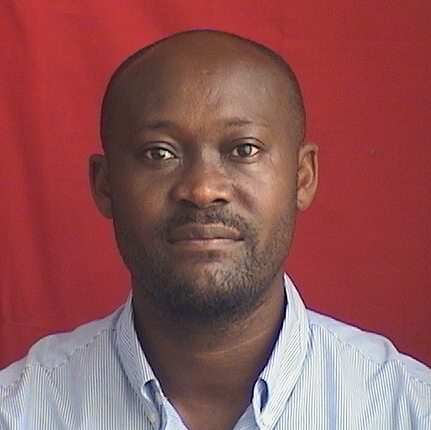
Lawson Mensah
The researcher's work focuses on comprehensive environmental impact assessments across various scales, including heavy metals contamination, wastewater treatment technologies, air quality monitoring, and their health implications, reflecting a broad exploration of environmental sciences.
Faculty Biography
Dr Lawson Mensah completed his undergraduate studies at Kwame Nkrumah University of Science and Technology (KNUST) in 2001 to gain a BSc (Hons) degree in Chemistry. Lawson started his career as a Research Assistant at University College Northampton in the British School of Leather Technology in the United Kingdom after completing his MSc in Leather Technology. He moved on to join a global leather testing firm, SATRA Technology Centre, as a Laboratory Technician to head their leather testing and reporting department where he worked with major international brands and companies. In 2006, Lawson embarked on a career change to become a secondary school science teacher in the UK. In 2010, he completed a Post Graduate Certificate in Education at the Open University, UK and gained his Qualified Teachers Status (QTS) and taught secondary science and advanced level (A-Level) Chemistry for four years. In 2014, Lawson left Thomas Becket Catholic School as the Assistant Director of Science Learning to join Cranfield University as PhD candidate working on biological wastewater treatment for the removal of hazardous chemicals. On completion, Dr Lawson Mensah worked for Severn Trent Water as a Water Treatment Advisor for three and half years before joining KNUST as a Lecturer in Environmental Science where he continues to research and develop solutions for water and wastewater challenges in developing countries.
Air Quality Monitoring and Forecasting
Child Nutrition and Water Access
COVID-19 impact on air quality
Effects and risks of endocrine disrupting chemicals
Heavy metals in environment
Pharmaceutical and Antibiotic Environmental Impacts
Space exploration and regulation
Wastewater Treatment and Nitrogen Removal
Water Treatment and Disinfection
Four Decades of Satellite-Derived PM2.5 Trends over Accra
Open AccessThe dull side of gold ore exploration and analysis: an assessment of heavy metal pollution and ecological risk posed by untreated wastewater from gold assaying laboratories
Human health risk from groundwater consumption: A case study in the Apaaso-Tafo Community in the Bono East Region of Ghana
Open AccessCharacterizing Urban Air Quality in Accra through Multi-Scale PM₂.₅ Assessment using Remote Sensing and Ground-Based Measurements
Open Access<p>Title: Changes in Air Quality (Pm2.5 Concentrations) and its Health Implications Over Four Decades in the City of Accra, Ghana<span>ȉ</span></p>
Open AccessProactive monitoring of changes in the microbial community structure in wastewater treatment bioreactors using phospholipid fatty acid analysis
Open AccessTrihalomethane Formation Potential at the Barekese Water Treatment Plant and the Related Cancer Risk to Consumers in the Kumasi Metropolis of Ghana
Open AccessHeavy metal contamination from fuel station run-off and carwash wastewater: An assessment of ecological risk and experimental treatment
Open AccessInfluence of solids and hydraulic retention times on microbial diversity and removal of estrogens and nonylphenols in a pilot-scale activated sludge plant
Open AccessInfluence of SRT and HRT on Microbial Diversity and Removal of Estrogens and Nonylphenols in a Pilot-Scale Activated Sludge Plant
Open AccessRemoval of steroid estrogens from municipal wastewater in a pilot scale expanded granular sludge blanket reactor and anaerobic membrane bioreactor
Open AccessDepartment of Environmental Science
Kwame Nkrumah University of Science and Technology