KNUST Research Atlas is currently in active Beta. Report bugs or suggest features to help us improve!
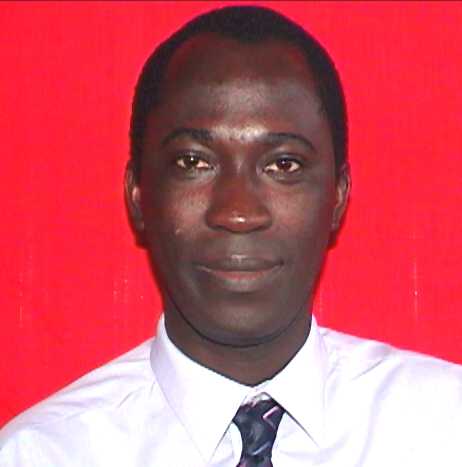
Lawrence Darkwah
The researcher's work is centered around integrating innovative eco-friendly technologies across multiple scientific domains. Their primary themes include the application of adsorption and biosorption methods for effective pollution removal, the exploration of biogas production from agricultural residues for feasibility studies, and the development of sustainable waste management strategies. They also focus on advancing energy efficiency through the assessment of bioenergy systems based on agricultural residues and improving soil health by developing bioremediation techniques using recombinant organisms like Fusarium. The researcher's efforts extend to addressing heavy metal contamination in environmental studies and optimizing water quality, as well as recycling and managing municipal solid waste effectively. Their overarching goal is to create a comprehensive framework that combines innovative technologies across physics and life sciences to address challenges in energy, environment, and waste management, aiming for sustainable solutions globally.
Faculty Biography
Prof. Dr. Lawrence Darkwah is the current Coordinating Dean (KNUST Obuasi Campus). He has been teaching at the Chemical Engineering Department of Kwame Nkrumah University of Science & Technology for more than eighteen years. He has supervised many PhD and MSc. theses both in the Processing, Energy and Environmental aspects of Engineering (covering Chemical, Agricultural and Biotechnology, Civil and Mechanical Engineering Disciplines). Some of these research works utilised biological systems for process development and plant designs. These projects had to assess both the technological and economic feasibility of such plants.Lawrence has research interests in biological and pyrolytic conversion of biomass resources into energy for productive use. He has over the last ten years being teaching postgraduate students how to produce liquid biofuels from diverse feedstocks and giving global case studies for emulation in West Africa. These have been done both as a formal course that counts for some students curricula whilst for others, it has been skills development and knowledge acquisition entrepreneurship in biogas.Prof. Darkwah researches into biological oxidation for mineral extractive purposes and designs environmental mitigation systems for field applications, based on his previous industrial practice and consultations.Lawrence is a fellow of The Energy Center (TEC-KNUST) and a theme leader in Biogas technology in the collaboration between (TEC-KNUST) and North Rhine Westphalia (NRW) in which a biogas laboratory was setup in the Chemical Engineering Department of KNUST to advance capacity-building and training in that area.Prof. Darkwah is a Graduate Member of the Ghana Institution of Engineers and also a member of the Ghana Science Association. He has a wide spectrum of consultancy and collaborative research experiences which impacts on policy-makers and industrial applications. His academic and consulting works are recognised in the Energy, Chemical and Minerals Engineering Sectors.
Adsorption and biosorption for pollutant removal
Anaerobic Digestion and Biogas Production
Biodiesel Production and Applications
Energy and Environment Impacts
Enzyme Catalysis and Immobilization
Enzyme-mediated dye degradation
Food Chemistry and Fat Analysis
Heavy metals in environment
Metal Extraction and Bioleaching
Microbial bioremediation and biosurfactants
Mine drainage and remediation techniques
Mining Techniques and Economics
Municipal Solid Waste Management
Recycling and Waste Management Techniques
Solar Radiation and Photovoltaics
Thermochemical Biomass Conversion Processes
Water Quality and Pollution Assessment
Water resources management and optimization
Correction to: Assessment of Energy Potential of Residential Solid Waste in the Asokore Mampong Municipality of the Ashanti Region of Ghana
Open AccessAssessment of Energy Potential of Residential Solid Waste in the Asokore Mampong Municipality of the Ashanti Region of Ghana
Evaluating the Health and Environmental Consequences of Sulphur-Related Diesel Emissions
Open AccessAssessment of diesel fuel quality
Open AccessPyrolysis of municipal food waste: A sustainable potential approach for solid food waste management and organic crop fertilizer production
Open AccessAssessment of solar radiation resource from the NASA-POWER reanalysis products for tropical climates in Ghana towards clean energy application
Open AccessDevelopment of mathematical model for predicting methane-to-carbon dioxide proportion in anaerobic biodegradability of cattle blood and rumen content
Open AccessConventional and Unconventional Transformation of Cocoa Pod Husks into Value-Added Products
Open AccessWaste Biomass and Biomaterials Adsorbents for Wastewater Treatment
Open AccessAssessment of solar radiation resource from the NASA-POWER reanalysis products for tropical climates in Ghana towards clean energy application
Open AccessA review of anaerobic digestion of slaughterhouse waste: effect of selected operational and environmental parameters on anaerobic biodegradability
Decolourisation of Textile Wastewater by Dye Degrading Microorganisms Isolated from Textile Effluent
Open AccessChemical Plant Design for the Conversion of Plastic Waste to Liquid Fuel
Open AccessImpact of Different Mixing Ratios on Biomethanation of Cattle Blood and Rumen Content
Open AccessValorization of palm biomass waste into carbon matrices for the immobilization of recombinant Fusarium heterosporum lipase towards palm biodiesel synthesis
Valorization of Palm Biomass Waste for Sustainable Production of Lipase-Carbon Matrices And Biodiesel
Open AccessAssessment of Typha capensis for the remediation of soil contaminated with As, Hg, Cd and Pb
Bioremediation of Soil and Water Contaminated with As, Hg, Cd, and Pb Using Heliconia psittacorum
Evaluation of the Rate of Heavy Metal Absorptions by Typha Capensis and Heliconia Psittacorum
Mini-grid electricity service based on local agricultural residues: Feasibility study in rural Ghana
Open AccessMapping, Characterization and Dispersion of Metallic Pollutants within a Catchment of Illegal Gold Mining Activities in Ghana
Open AccessPilot Plant Bioremediation of Hydrocarbon Contaminated Drill Mud - Case Study in Ghana
Technical and Socioeconomic Potential of Biogas from Cassava Waste in Ghana
Open AccessAssessment of technical potential and selected sustainability impacts of second generation bioenergy in Ghana
Feasibility Study of Biomass Hybrid Micro-Plants for Mini-Grid Based Electricity Services in Rural Communities in Ghana
Open AccessMine water and the environment: a case study at Central African Gold Bibiani Limited, Ghana
Water quality assessment of a wastewater treatment plant in a Ghanaian Beverage Industry
Open AccessWater quantity auditing of a Ghanaian beverage plant
Open AccessLaboratory Scale Bioremediation of Acid Mine Water Drainage from a Disused Tin Mine
Department of Chemical Engineering
Kwame Nkrumah University of Science and Technology