Beta Testing
KNUST Research Atlas is currently in active Beta. Report bugs or suggest features to help us improve!
KNUST Research Atlas is currently in active Beta. Report bugs or suggest features to help us improve!
KNUST Research Atlas is currently in active Beta. Report bugs or suggest features to help us improve!
Search, discover, and connect with over 1,800 researchers, faculty members, and scholars across all departments of KNUST.

Department of Medical Diagnostics
The researcher focuses on integrating diverse methodologies across fields such as climate change impact, genetic algorithms, optimization techniques, and cancer treatment. By combining mathematical modeling with data analysis and computational experiments, they address complex problems in these areas.

Department of Medical Diagnostics
The researcher's work focuses on developing innovative analytical and clinical techniques to detect, diagnose, and manage various pathologies, with a particular emphasis on Sub-Saharan African communities where these methods show potential. Their research integrates advanced biological assays like microfluidic rapid and autonomous analytical devices (microRAADs) for HIV detection and LAMP-based tests for Treponema pallidum infections in yaws endemic regions. Additionally, they explore preventive strategies through self-sampling surveys and focus on improving diagnostics in various chronic diseases using case-control studies and observational studies.
Department of Medical Diagnostics
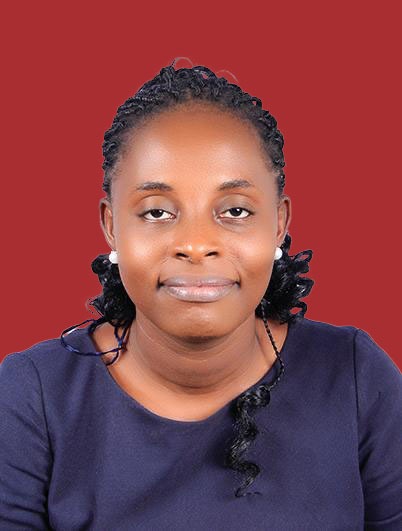
The researcher has conducted extensive medical studies focusing on integrating methodologies such as systematic reviews, case-control studies, and mathematical modeling to address various aspects of healthcare. Their work spans a broad range of topics including immune system research (e.g., antierythropoietin antibodies), cardiovascular diseases, neurological disorders, and nutritional conditions. The researcher's approach is interdisciplinary, applying these methods across diverse patient populations such as children, young professionals, and the elderly, reflecting a comprehensive exploration of healthcare systems and their applications in different demographics.

Department of Medical Diagnostics
This researcher has focused on exploring the complex interplay between early-onset developmental processes and neurobiological changes associated with aging. Their work integrates insights from developmental psychology, neuroscience, and biopsychology, utilizing advanced neuroimaging techniques to study brain structure and function across diverse age groups. By examining how biological markers of cognitive decline correlate with maturation, their research contributes to a comprehensive understanding of the neural mechanisms underlying lifespan development, bridging developmental and neuroscientific perspectives.
Department of Medical Diagnostics
The researcher investigates Malaria Research and Control within Health Sciences, focusing on two key themes: clinical investigation methods for detecting malaria infection detection and the development of advanced imaging techniques like SPECT and PET. Their findings highlight improvements in detection accuracy in clinical settings but also emphasize the need for better methodological practices to minimize false-positive rates associated with poor staining practices. These advancements in imaging methods are critical for enhancing malaria control strategies, suggesting ongoing research will refine methodologies further to improve detection efficiency.
Department of Medical Diagnostics
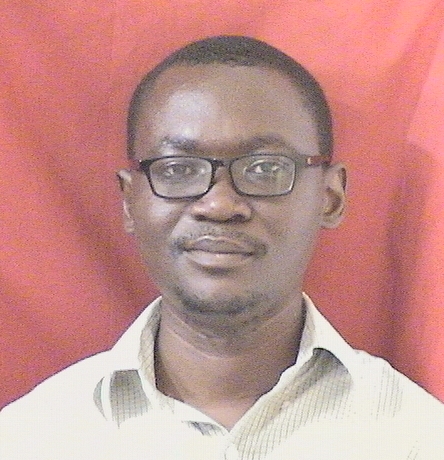
The researcher's comprehensive research focuses encompass a broad spectrum of COVID-19-related and related studies, including animal virology, SARS-CoV-2 research, bacterial infections, immunological investigations, and public health strategies. They have made significant contributions across various domains such as human betacoronavirus 2c viruses, respiratory viral infections, Salmonella and campylobacter epidemiology, HIV/AIDS research, Hepatitis B Virus Studies, and Reservoir testing for COVID-19. Their work highlights a holistic approach to understanding and addressing the spread of COVID-19 through prevention, diagnosis, immunological studies, and public health measures, demonstrating a commitment to advancing knowledge and improving global health outcomes.
Department of Medical Diagnostics
The researcher has a broad focus in optimization methods, encompassing numerical solutions for multi-objective problems, constrained deep learning models for inverse problems, hybrid algorithms for power system state estimation, adaptive robust distributed optimization techniques, and distributionally robust optimization methods with applications spanning engineering, data science, and control systems.
Department of Medical Diagnostics
The researcher's work focuses on advancing computational methods in medical imaging, particularly integrating radiomics with machine learning techniques across various domains such as colorectal cancer management, liver disease diagnosis, and systemic sclerosis. Their research emphasizes the use of deep learning for analyzing medical images to develop non-invasive biomarkers, improve diagnostic accuracy, and enhance the understanding of complex medical conditions.
Department of Medical Diagnostics
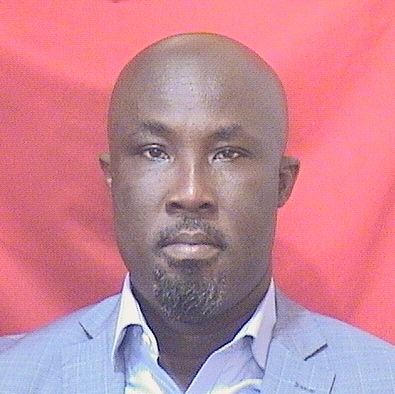
The field of health sciences is deeply engaged in addressing various critical areas that impact societal well-being. A primary focus within this domain is health inequalities and interventions, where efforts are made to improve access and outcomes for marginalized communities. Highlighting themes such as Malaria Research, Sexual Function and Dysfunction Studies, HIV Research and Treatment, Hepatitis B Virus Studies, Diabetes, Cardiovascular Risks, Lipoproteins, Monoclonal and Polyclonal Antibodies Research, Pregnancy and Preeclampsia studies, and others, demonstrates a comprehensive approach to understanding and addressing diverse health challenges. These studies often involve innovative methodologies, such as reference intervals, biomarkers, and clinical laboratory practices, aimed at enhancing healthcare quality and outcomes. By integrating insights from infectious diseases, nutritional disorders, cardiovascular issues, and other areas, the research contributes toward creating more equitable healthcare systems that prioritize health and well-being for all individuals.
Department of Medical Diagnostics
Her research is interdisciplinary, focusing on neurochemical pathways, computational modeling, biologically inspired algorithms, and neural dynamics. Her work integrates computational modeling with experimental data in neuroscience, developing a framework for biologically inspired algorithms that govern brain function. She also conducts theoretical studies on neural computation, analyzing how brain regions compute information through neural interactions, while contributing to our understanding of cognitive processes at the intersection of neuroscience and computational biology.
Department of Medical Diagnostics
The researcher's work focuses on the relationship between cardiovascular health, diabetes-related complications, adherence to treatment, metabolic disorders, and the importance of educating individuals about diabetes management. Their research explores how these areas intersect, particularly examining circulant issues that may contribute to cardiovascular disease risk factors.
Department of Medical Diagnostics
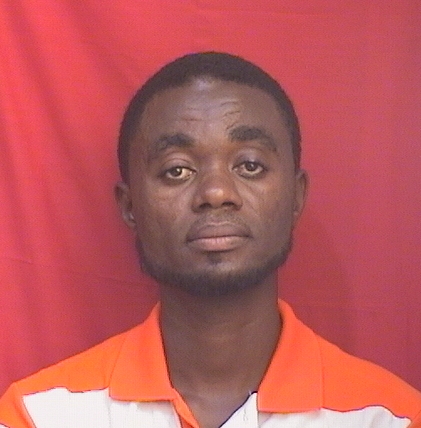
The researcher's work focuses on a comprehensive study of multiple health-related topics that impact cardiovascular health, metabolic disorders, immunological issues, and their management across diverse domains. This includes examining factors contributing to hemochromatosis, evaluating metabolic complications such as hyperlipidemia and antithyroidism, studying immune and infectious disease dynamics, and exploring the management of chronic conditions like acute kidney injury and diabetes. The research aims to uncover commonalities in these areas and develop strategies for effective treatment and management across various health challenges.