Beta Testing
KNUST Research Atlas is currently in active Beta. Report bugs or suggest features to help us improve!
KNUST Research Atlas is currently in active Beta. Report bugs or suggest features to help us improve!
KNUST Research Atlas is currently in active Beta. Report bugs or suggest features to help us improve!
Search, discover, and connect with over 1,800 researchers, faculty members, and scholars across all departments of KNUST.

Department of Eye, Ear, Nose and Throat
The researcher has made significant contributions to the field of artificial intelligence through advancements in neural networks, deep learning applications, and optimization techniques. Their work emphasizes the development of efficient algorithms and hardware for improved computational performance while addressing ethical concerns and model interpretability. They explore generative models, explainable AI, and data-efficient methods, contributing to broader trends toward scalable and trustworthy AI systems.

Department of Eye, Ear, Nose and Throat
The researcher has developed a novel framework for modeling complex systems, integrating multi-scale physics approaches with deep learning techniques to analyze patterns in brain networks and behavior across diverse fields such as climate science and healthcare. Their goal is to enhance predictive capabilities for real-world phenomena through this integrated approach.
Department of Eye, Ear, Nose and Throat
The researcher's work centers on the public health and global impact of healthcare systems, particularly focusing on surgical interventions in diverse regions. Their studies span several specialized areas, including the use of foreign body diagnostic tools in low-resource settings, advanced surgical procedures such as head and neck surgeries and airway management, and treatments for thyroid cancer under local anesthesia. The researcher's research integrates innovative approaches like domestic radiology tools and medical innovations to address challenges faced by individuals from resource-limited areas.

Department of Eye, Ear, Nose and Throat
The researcher's work focuses on the interplay between hearing loss, particularly tinnitus in chronic kidney disease patients, with genetic and neural factors influencing cognitive decline. Their research investigates how genetic variations modulate neural mechanisms affecting hearing and how these processes contribute to brain function and cognitive development. By combining empirical findings with computational modeling, they aim to elucidate the biological underpinnings of hearing impairment and its broader implications for health and disease progression.

Department of Eye, Ear, Nose and Throat
This researcher focuses on three main aspects of animal behavior and ecology: (1) the impact of organic and insect-based feed on bird populations in Ghana, particularly using termite treatments as a sustainable alternative to conventional feed; (2) the role of black soldier fly larvae as a protein supplement for ornithological studies, examining their effects on egg characteristics, growth performance, and physiological indices; and (3) the metabolic dynamics of broiler chickens, including how flock age influences egg shape, hatchability, and growth rate. Their work bridges ecological integration with nutritional strategy to provide insights into bird productivity, energy demands, and food source availability.
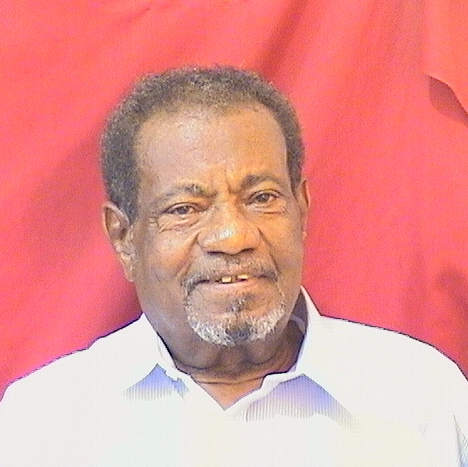
Department of Eye, Ear, Nose and Throat
A researcher has conducted extensive research across multiple domains, focusing on vaccination coverage and hesitancy in sub-Saharan African nations, issues related to Hepatitis B Virus studies and rabies epidemiology, global maternal and child health challenges, Adolescent sexual and reproductive health concerns, viral gastroenteritis, and other infectious diseases. Their work highlights the importance of vaccine delivery strategies, immunization training for healthcare professionals, and addressing public health crises such as polio eradication efforts. The researcher emphasizes the need for improved healthcare infrastructure, community engagement in vaccination programs, and addressing the stressors faced by healthcare professionals, particularly in rural and low-income settings.

Department of Eye, Ear, Nose and Throat
The researcher's work focuses on integrating insights from voice and speech disorders in urban Ghana with gender studies in Ewe language within the health sciences domain. They examine self-reported voice reports across diverse social contexts in Ghana, while also investigating the gendered patterns of first words when learning Ewe among children. This dual focus highlights a comprehensive approach to understanding both social and linguistic dynamics, contributing to broader research on mental health through improved mental health services for women affected by voice-related conditions.
Department of Eye, Ear, Nose and Throat
The researcher has made significant contributions to the interdisciplinary field of molecular biology, particularly focusing on cancer metabolism and immunological responses. Their work integrates systems-level approaches in bioinformatics with experimental studies, bridging molecular mechanisms with cellular processes across diverse biological contexts. This integrative approach aims to elucidate complex biological questions by analyzing metabolic pathways and immune system dynamics simultaneously.
Department of Eye, Ear, Nose and Throat
The researcher investigates the role of genes in influencing the performance of evolutionary algorithms, particularly in scenarios where environment dynamics and system complexity require tailored optimization strategies.

Department of Eye, Ear, Nose and Throat
The researcher employs structural equation modeling (SEM) as a central analytical tool across multiple domains, integrating theoretical frameworks to develop comprehensive models in fields such as organizational behavior, customer satisfaction, and longitudinal relational analysis. Their work emphasizes the evolution of constructs over time while applying these methodologies to address complex relationships within diverse contexts.
Department of Eye, Ear, Nose and Throat
The researcher examines diverse fields such as financial inclusion, educational innovations, agricultural practices, nonprofit sectors, motivated teachers, agronomy, and human health. These themes are interconnected across microfinance, cocoa/wheat farming for sustainable livelihoods, vascular malformations in healthcare, and broader social and health contexts.
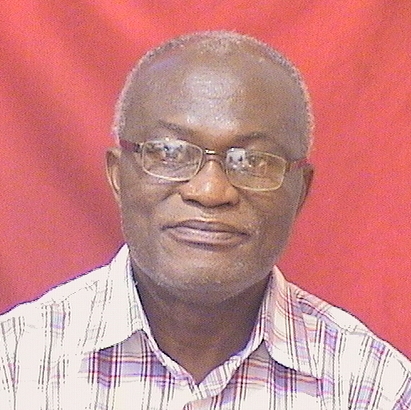
Department of Eye, Ear, Nose and Throat
The researcher's work is interdisciplinary, encompassing diverse areas of health sciences. Their research focuses on three primary themes: surgical simulation and training, medical education and clinical applications in areas such as surgical oncology, dysphagia assessment, and bacterial infections. They also explore neurodegenerative conditions like sinusitis through a clinical lens, while their expertise extends to infectious diseases, particularly those affecting specific populations. Their work bridges technical studies of rare diseases with educational efforts in medical simulation and training, reflecting a comprehensive approach to advancing medical knowledge and its practical applications.