Beta Testing
KNUST Research Atlas is currently in active Beta. Report bugs or suggest features to help us improve!
KNUST Research Atlas is currently in active Beta. Report bugs or suggest features to help us improve!
KNUST Research Atlas is currently in active Beta. Report bugs or suggest features to help us improve!
Search, discover, and connect with over 1,800 researchers, faculty members, and scholars across all departments of KNUST.
Department of Mathematics
The overall research focus is centered on the integration of advanced mathematical models and innovative analytical techniques to enhance our ability to understand and predict complex phenomena across various domains. Through a blend of theoretical advancements in areas such as fractional differential equations, image processing methodologies, and epidemiological studies, researchers aim to develop robust frameworks that can be applied to fields ranging from health sciences to environmental management. By leveraging cutting-edge approaches like modified semiseparation methods, Chebyshev wavelets collocation techniques, and network information criterion adjustments, mathematical models are increasingly used to address challenges in disease spread, ecological systems, transportation planning, and public health interventions.
Department of Mathematics
This researcher employs a multi-faceted approach, integrating disciplines such as life sciences, bioinformatics, and machine learning, to address challenges in bacterial infections, vaccination, genomics, and sustainable development. Their work combines computational tools with innovative strategies to tackle public health issues and advance technological solutions across various domains.
Department of Mathematics
The researcher's work focuses on the study of nonlinear photonic systems, solitons, and their applications across various fields, including biophysics, epidemiology, and fractional calculus. Their research encompasses collective coordinates in one-dimensional models, vacuum polarization energy studies, quantum effects in solitons, and the application of soliton models to diverse domains such as thin films, biophysics (family dynamics), nonlinear waves, and optimization techniques.

Department of Mathematics
The researcher's work centers on understanding human rights concerns stemming from displacement in Southeast Asia, particularly in contexts where urbanization has disproportionately affected indigenous communities and supported the rapid transformation of local environments. Their studies highlight the interplay between synthetic biology, theoretical computer science, molecular genetics, and agricultural practices to address global challenges in displacement, integration, and change across diverse scientific domains.
Department of Mathematics
The researcher's work focuses on integrating approximation theory across diverse mathematical domains such as Divisible Groups, Fixed Point Theorems, and Matrix Theory, with a particular emphasis on techniques like approximation and operator norms within finite-dimensional spaces. This interdisciplinary approach is driven by applications in physical sciences contexts.
Department of Mathematics
The researcher focuses on mathematical modeling of tumor-immune interactions in physical sciences, particularly examining spatiotemporal dynamics and optimal control strategies to better understand cancer progression and immune modulation.
Department of Mathematics
### Summary of Research Focus #### COVID-19 Research - **Stability Analysis**: Various compartments for COVID-19 models. - **Cost-Effectiveness Studies**: With delayed diagnosis analysis in Ghana. - **Viral Infections**: Including SARS-CoV-2, fractional-order TB and COVID-19 models. --- ### Mathematical Models and Differential Equations - Fractional differential equation solutions for Q fever, dengue fever, etc. - Modeling Ebola, Zika virus, etc., using different compartments and kernels. - Numerical methods and simulations for various disease transmission dynamics. --- ### Rabies Epidemiology and Control - Optimal control and cost-effectiveness analysis of rabies models with multiple classes. --- ### Virology and Vectors - Studies on bacterial infections (e.g., Q fever, monkeypox), viral vectors (e.g., trihybrid nanofluids). --- ### Chaotic Image/Signal Encryption - Multiplicative attributes from cyclic codes over Galois fields for encryption techniques. --- ### SARS-CoV-2 and COVID-19 Research - Fractional-order models and optimal control strategies for different diseases. - Includes dengue fever, HIV/AIDS, etc., with cost-effectiveness analysis. --- ### Poxviruses and Visceral Leishmaniasis (PLI) - Modeling PLI dynamics and fractional-order TB models in humans and animals. --- ### Vector-Borne Infectious Diseases - Studies on malaria, tick-borne diseases, etc., using various mathematical frameworks. - Includes dynamics with thermal radiation and stratification. --- This structure organizes the diverse research topics into relevant categories, ensuring clarity and conciseness.

Department of Mathematics
This researcher's work is a cross-cutting study that synthesizes global ecological shifts under climate change, employing novel analytical techniques such as multi-block data integration and glycans. Their research extends to diabetes biomarkers, where glycan studies contribute significantly to understanding health outcomes. Insect pest control strategies use headspace volatiles to enhance sustainability. Their work also delves into chronic disease management across multiple domains, including the COVID-19 pandemic's Hepatitis B spread in Ghana and a Sub-Saharan African setting. This interdisciplinary approach highlights their innovative methodology, integrating environmental science with public health applications, offering valuable insights for global ecological shifts and health outcomes.
Department of Mathematics
The researcher has made significant contributions across diverse domains within their academic specialties, focusing on the development and application of advanced computational models to address real-world challenges. Their work spans themes such as Complex Systems and Time Series Analysis in Social Sciences, Face and Expression Recognition in Physical Sciences, Fractional Differential Equations Solutions in Physical Sciences, Nonlinear Waves and Solitons in Physical Sciences, and various other areas reflecting their expertise in modeling complex phenomena across different fields. The overarching focus is on leveraging innovative mathematical techniques to enhance problem-solving capabilities in social sciences, infrastructure, and technology, demonstrating a comprehensive approach to both theoretical advancements and practical applications.
Department of Mathematics
This researcher focuses on a multifaceted approach to health research, integrating advancements in nutrition and microbiota studies with broader issues surrounding diet, nutritional interventions, and their impact on public health. Their work examines the interplay between dietary habits, microbial composition, and individual health outcomes, particularly in relation to depression and obesity, as revealed through systematic reviews. The researcher also explores the role of HIV care in addressing systemic disparities affecting individuals, employing mathematical modeling to understand tumor growth dynamics and developing innovative coding systems for improving healthcare data management. Their research underscores the importance of understanding nutritional health and its effects on both personal well-being and societal health, particularly emphasizing racial and contextual variations in outcomes tied to diet and health issues.
Department of Mathematics
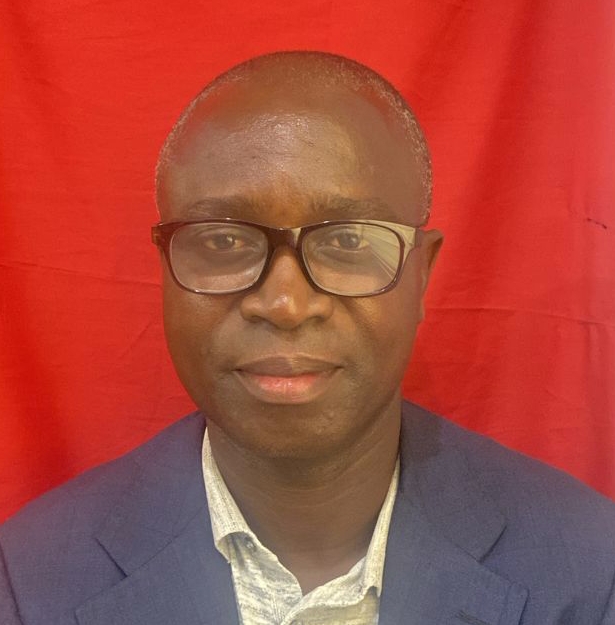
The researcher primarily investigates theoretical questions in quantum gravity, focusing on understanding spacetime at the most fundamental level.
Department of Mathematics
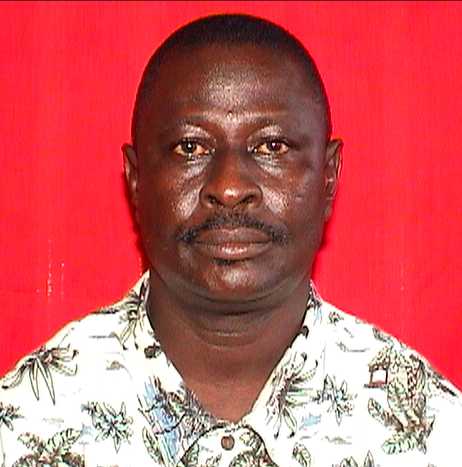
The researcher has conducted extensive research in the Physical Sciences domain, focusing on multiple interconnected areas such as complex systems and time series analysis (Social Sciences), solar radiation and photovoltaics (Physical Sciences), matrix theory algorithms (Physical Sciences), ECG monitoring and analysis (Health Sciences), chaos-based image/signal encryption (Physical Sciences), algebraic structures and combinatorial models (Physical Sciences), polynomial and algebraic computation (Physical Sciences), chaos control and synchronization (Physical Sciences), and advanced mathematical theories and applications (Physical Sciences). Their work spans diverse areas within physical sciences, including solar physics, matrix theory, ECG signal processing, encryption techniques, chaos research, computational methods, abstract algebra, and mathematical frameworks. This integrated approach reflects a comprehensive exploration across multiple domains.